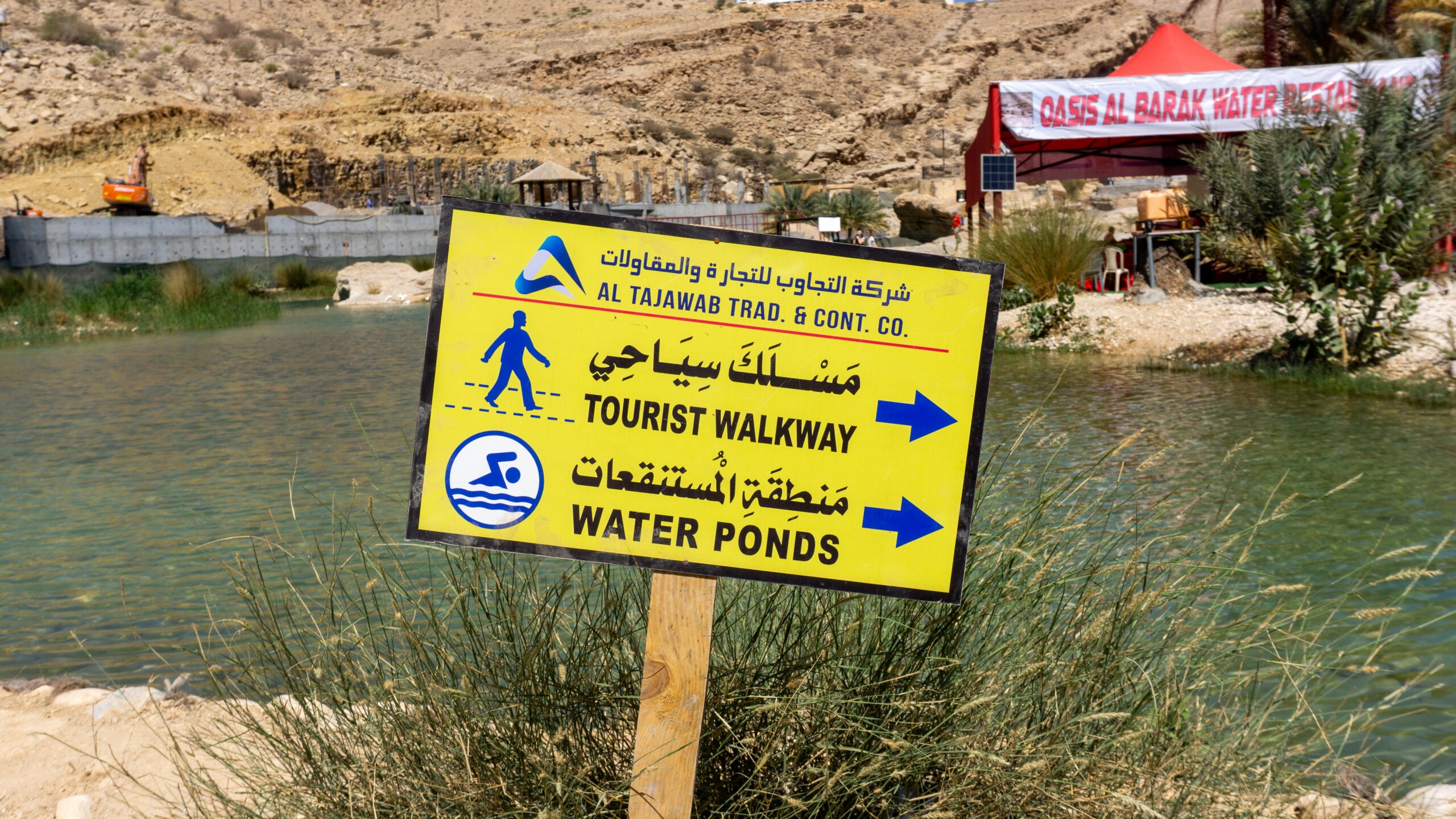
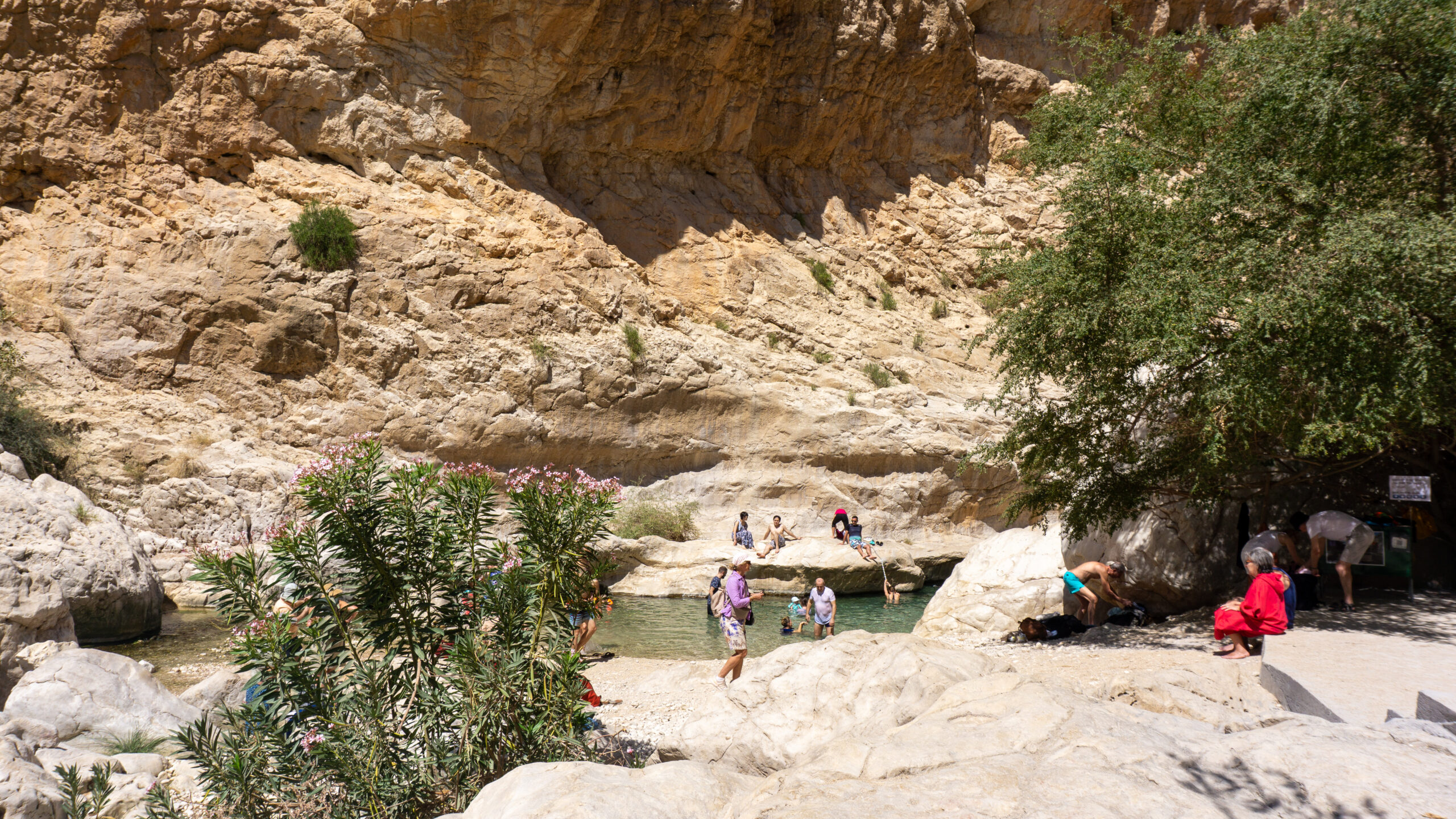
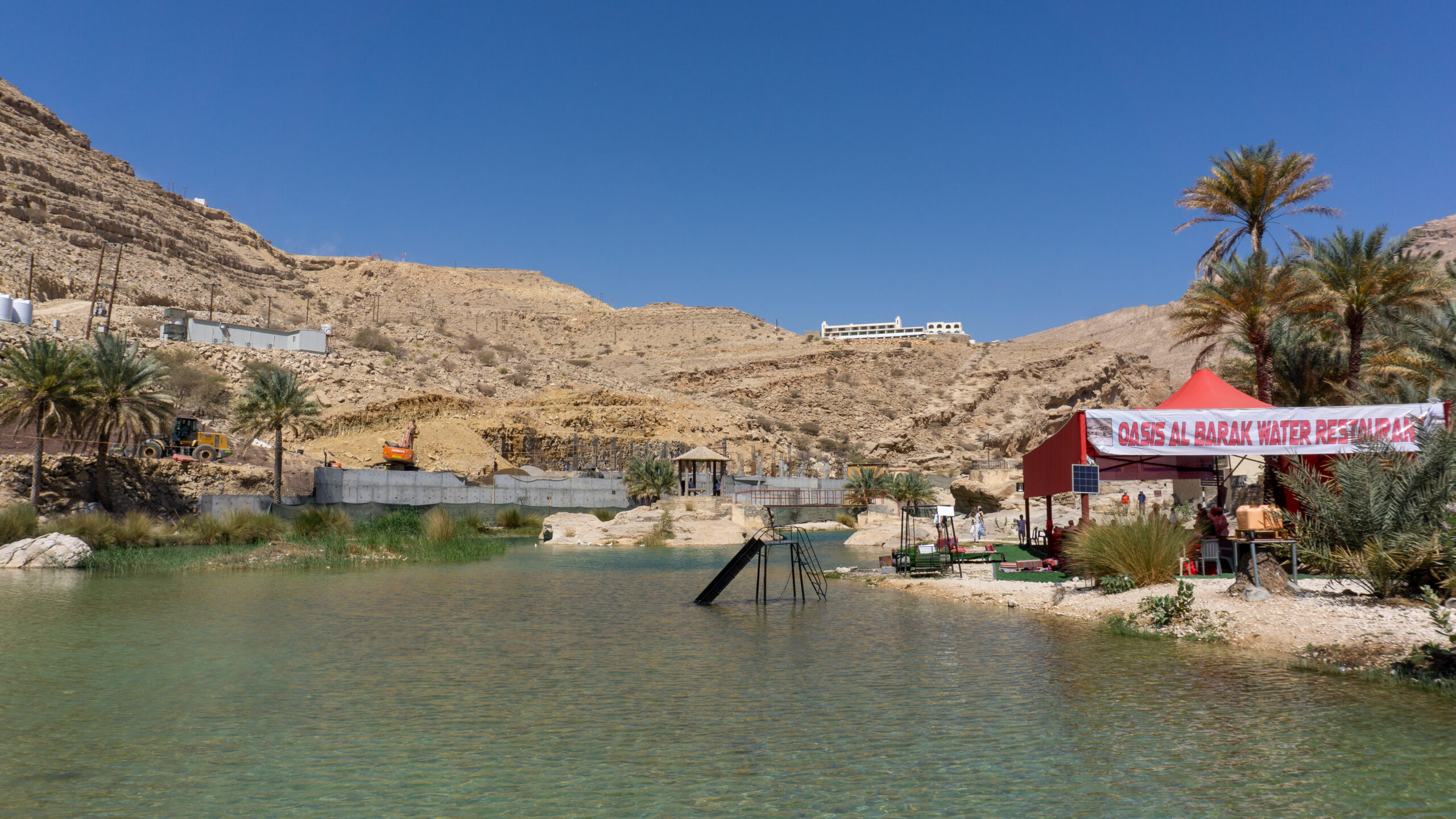
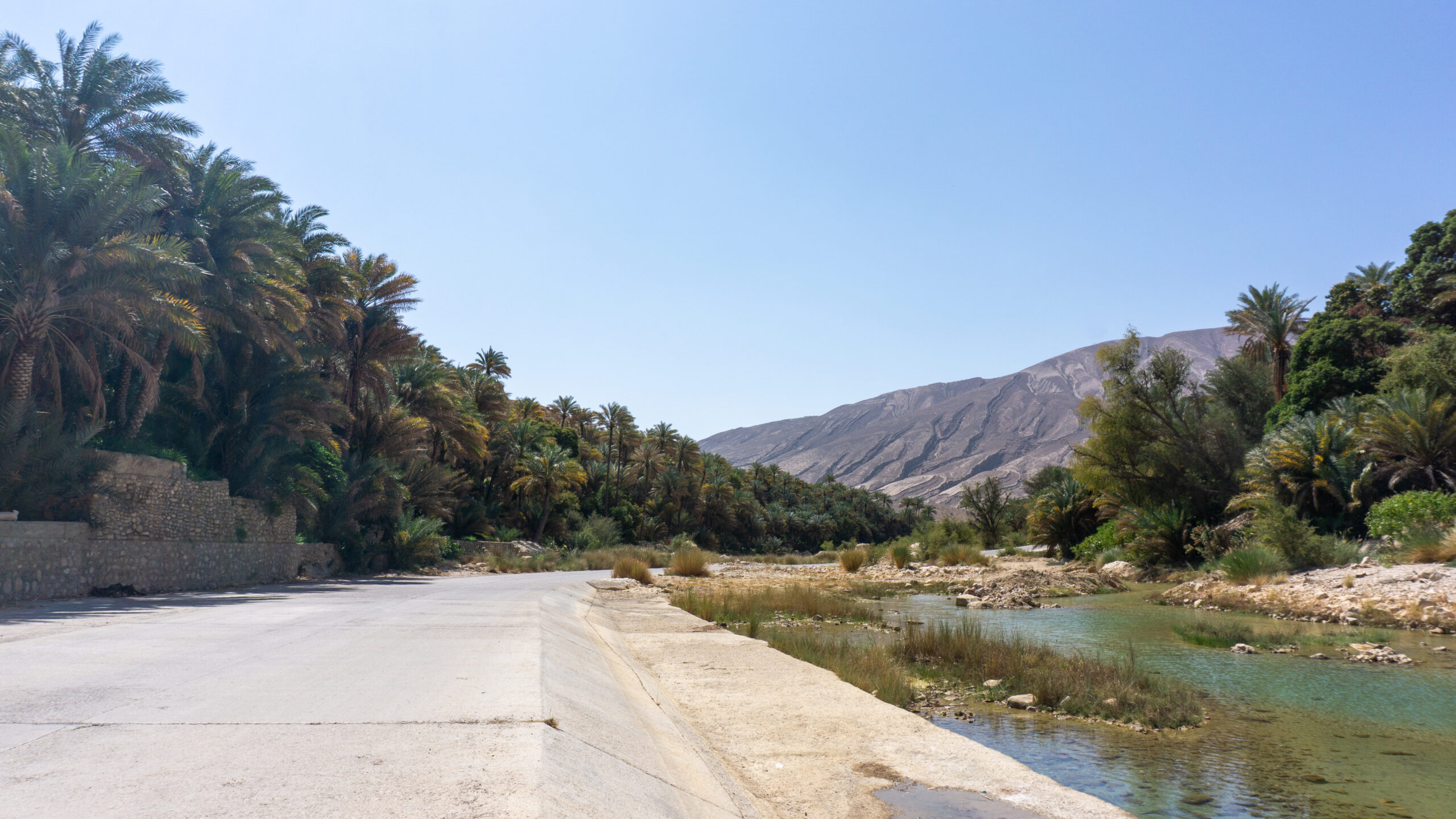
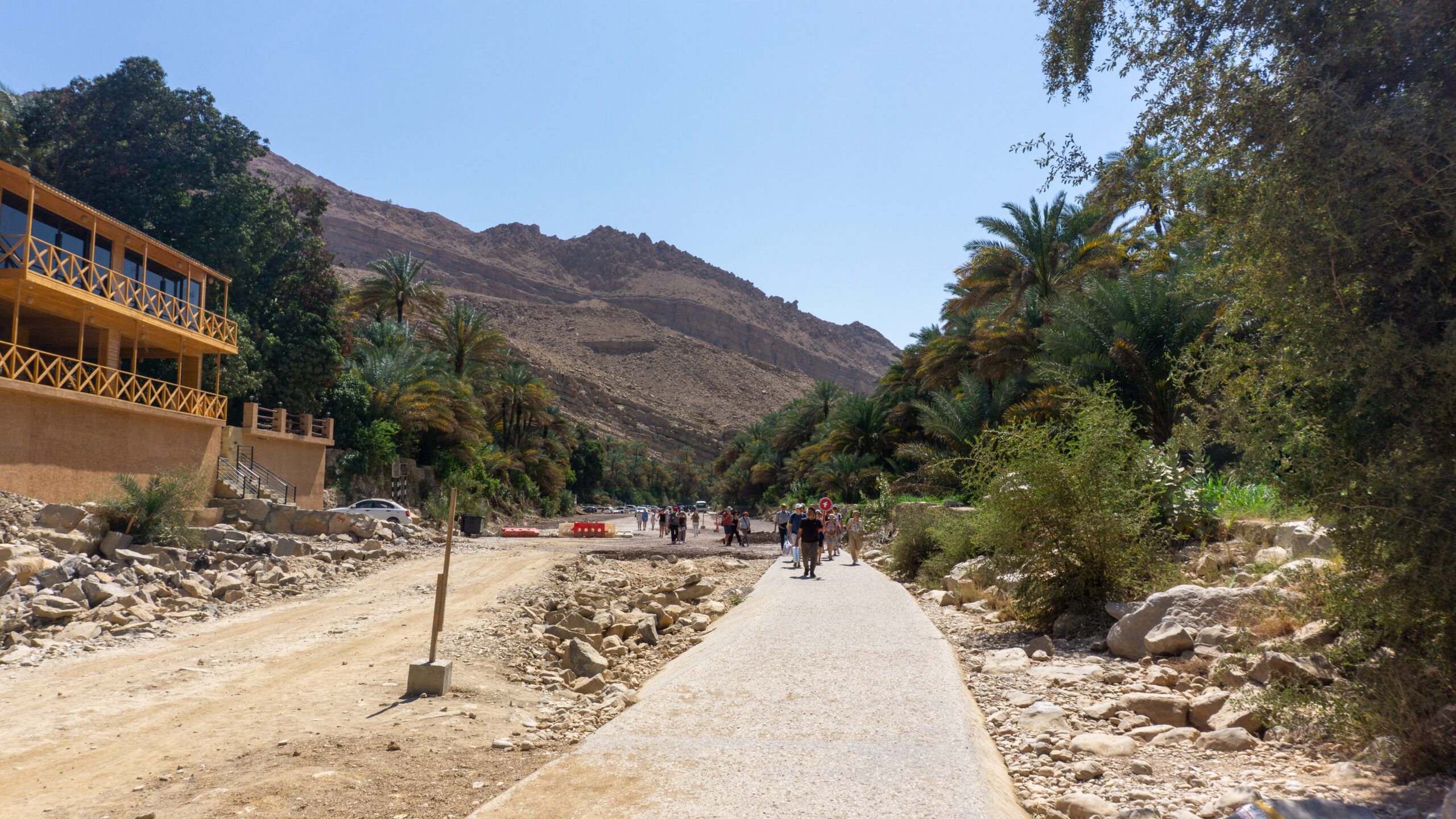
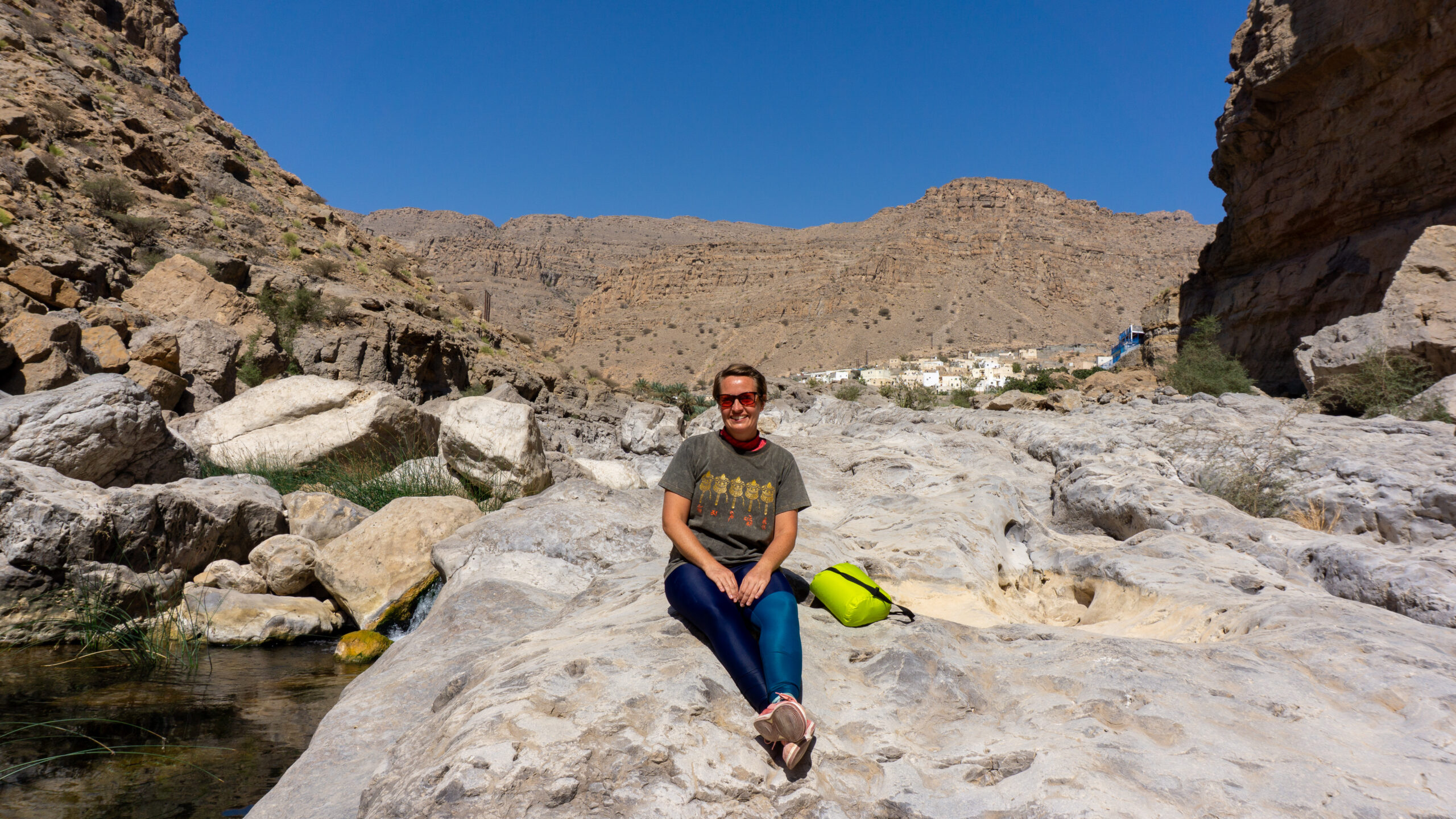
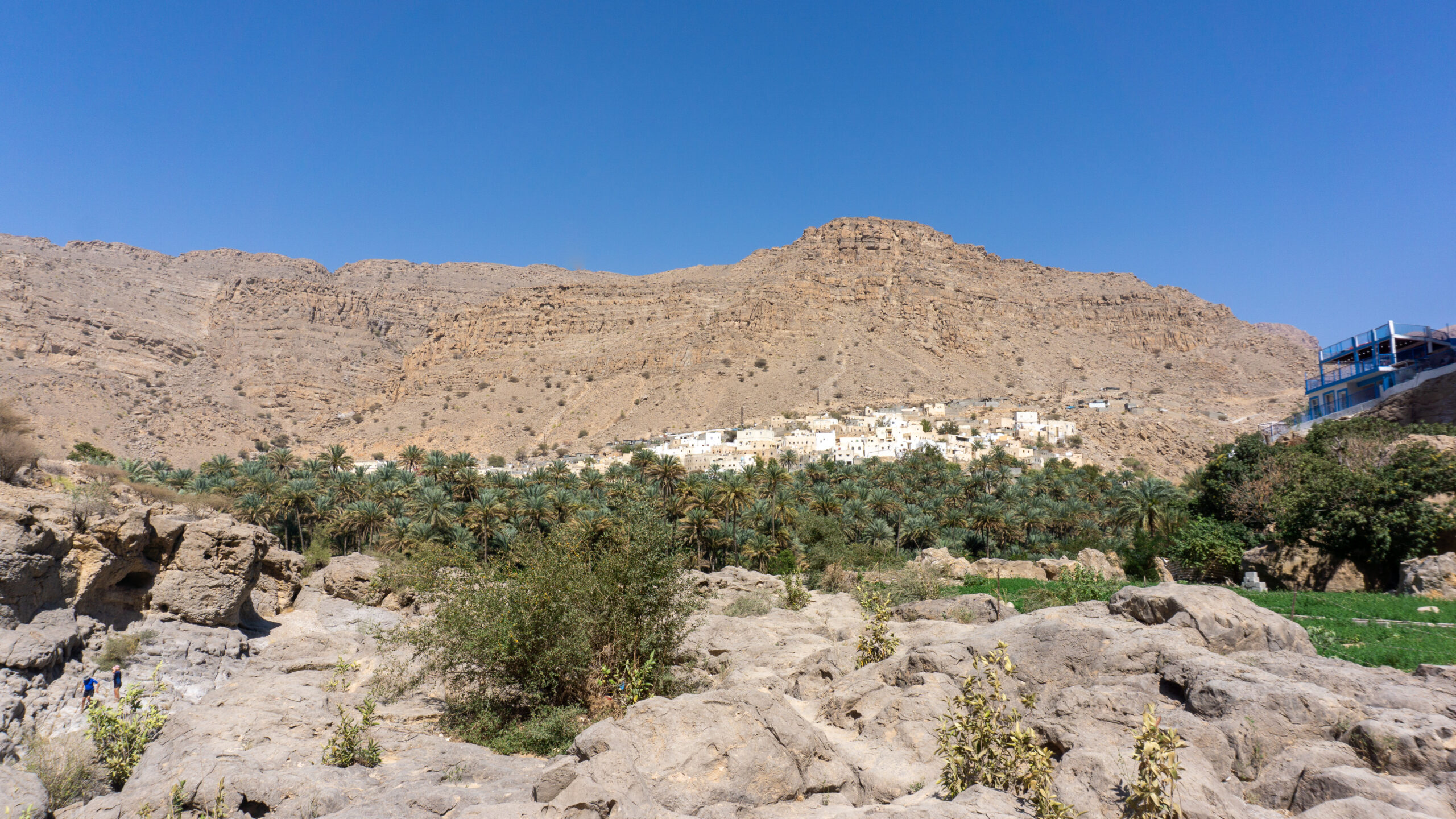
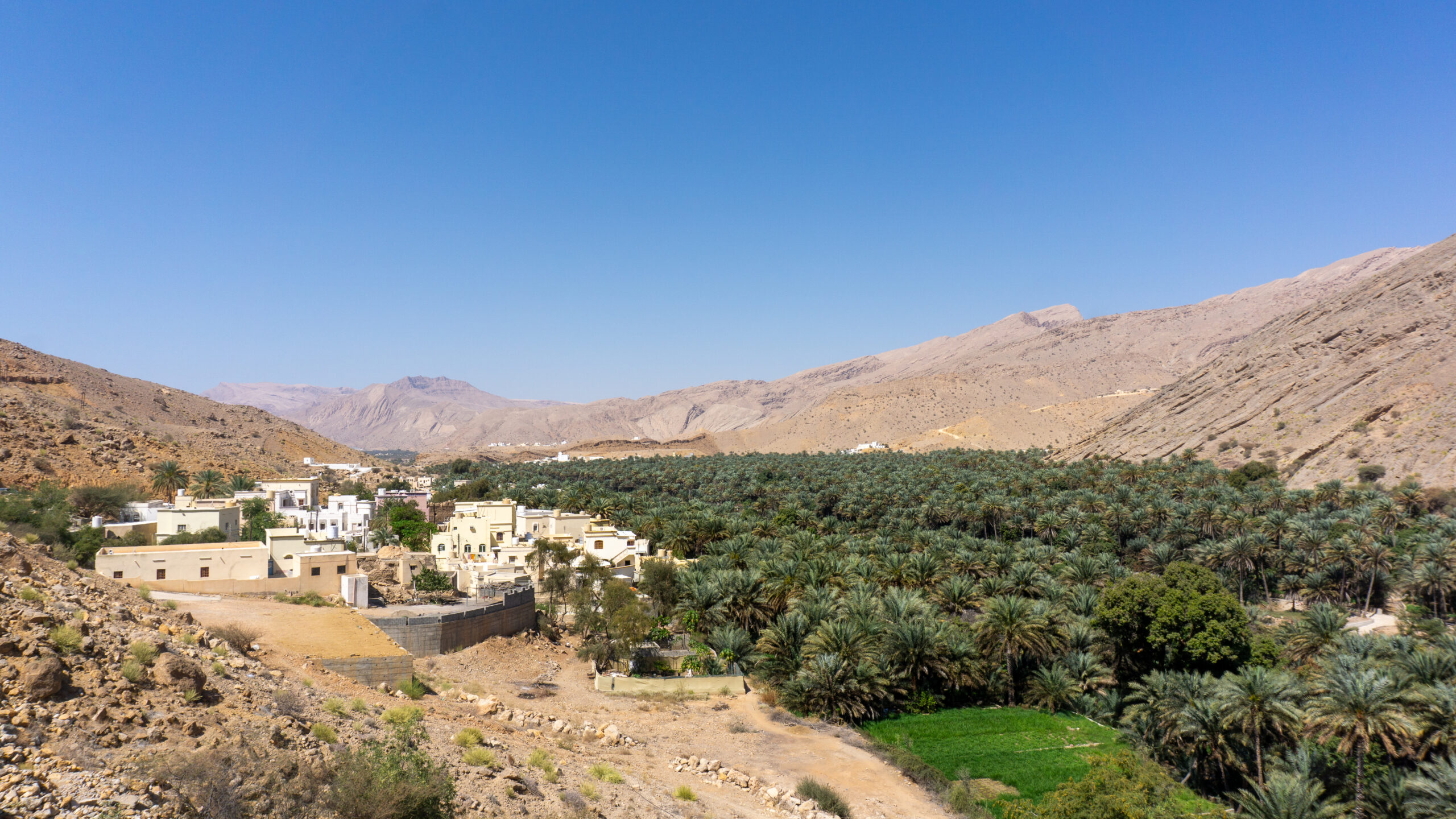
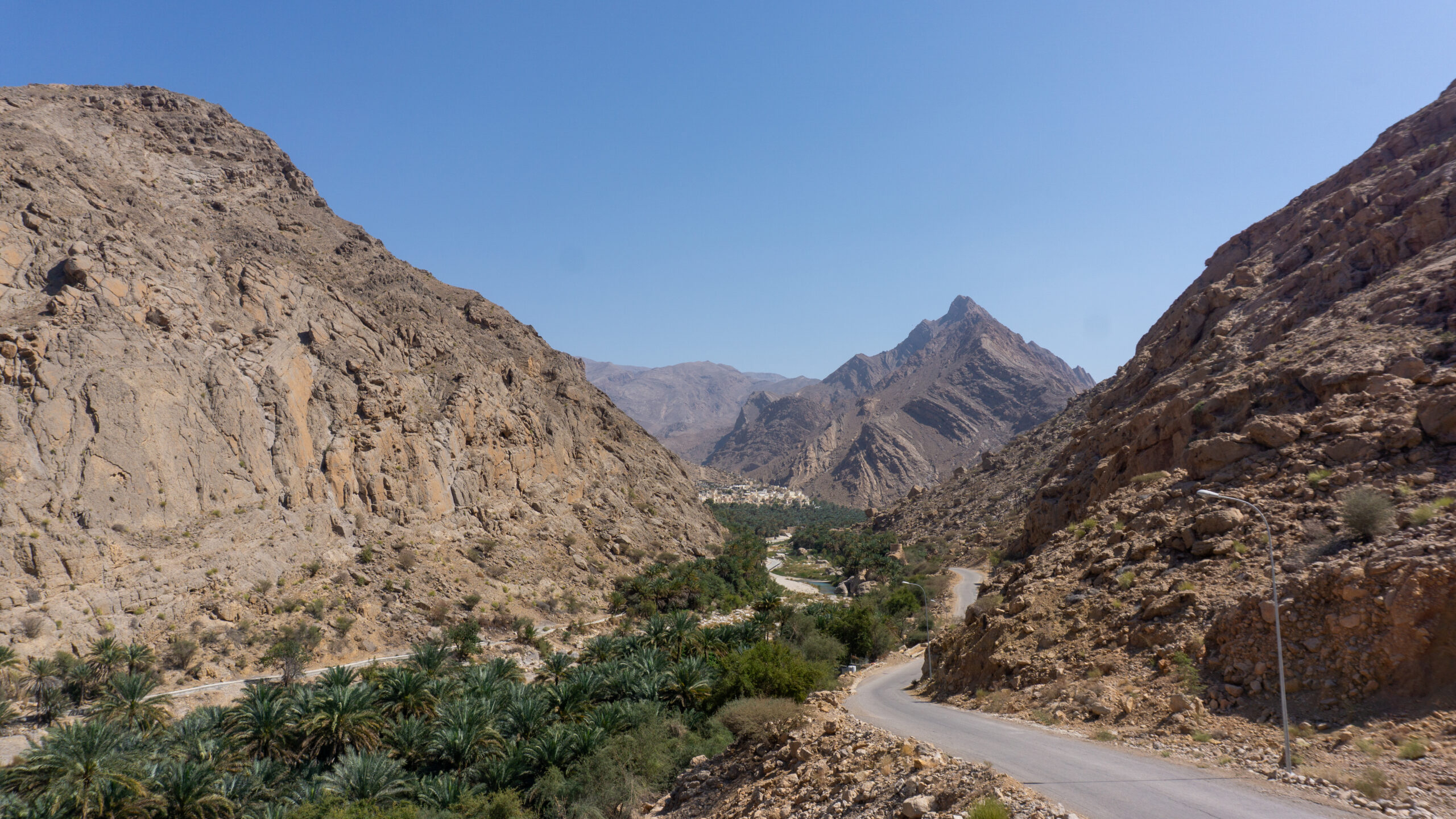
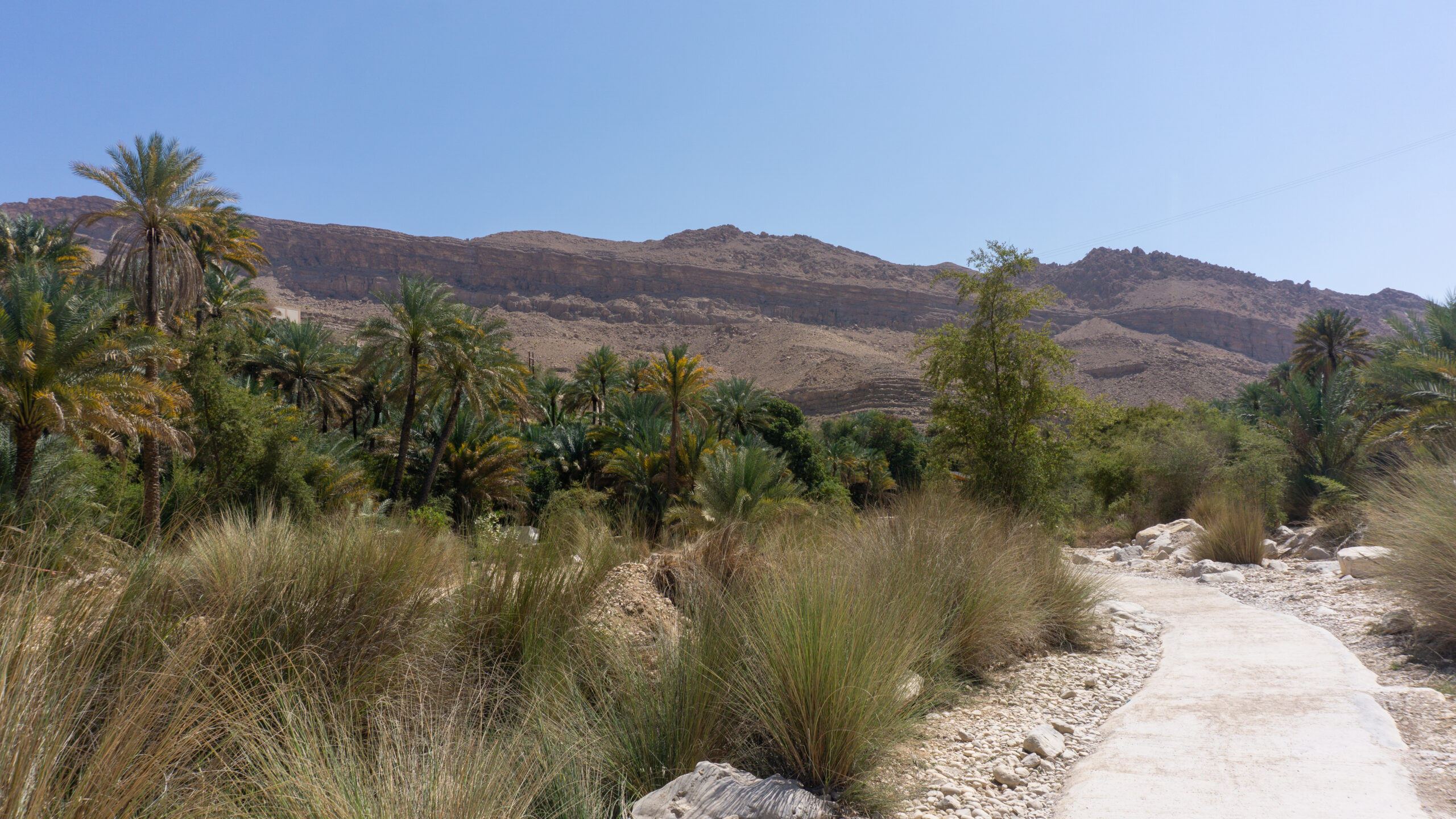
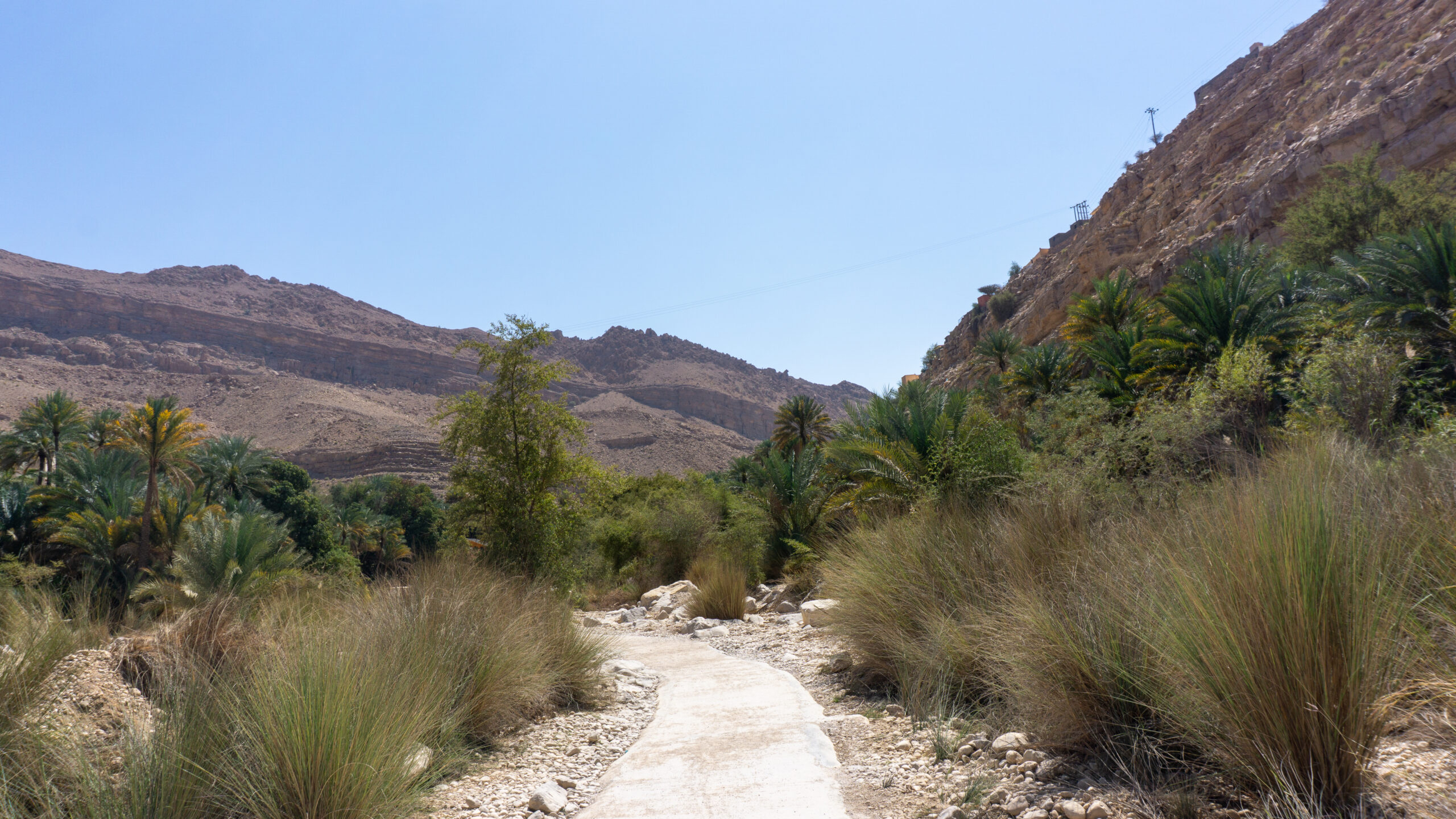
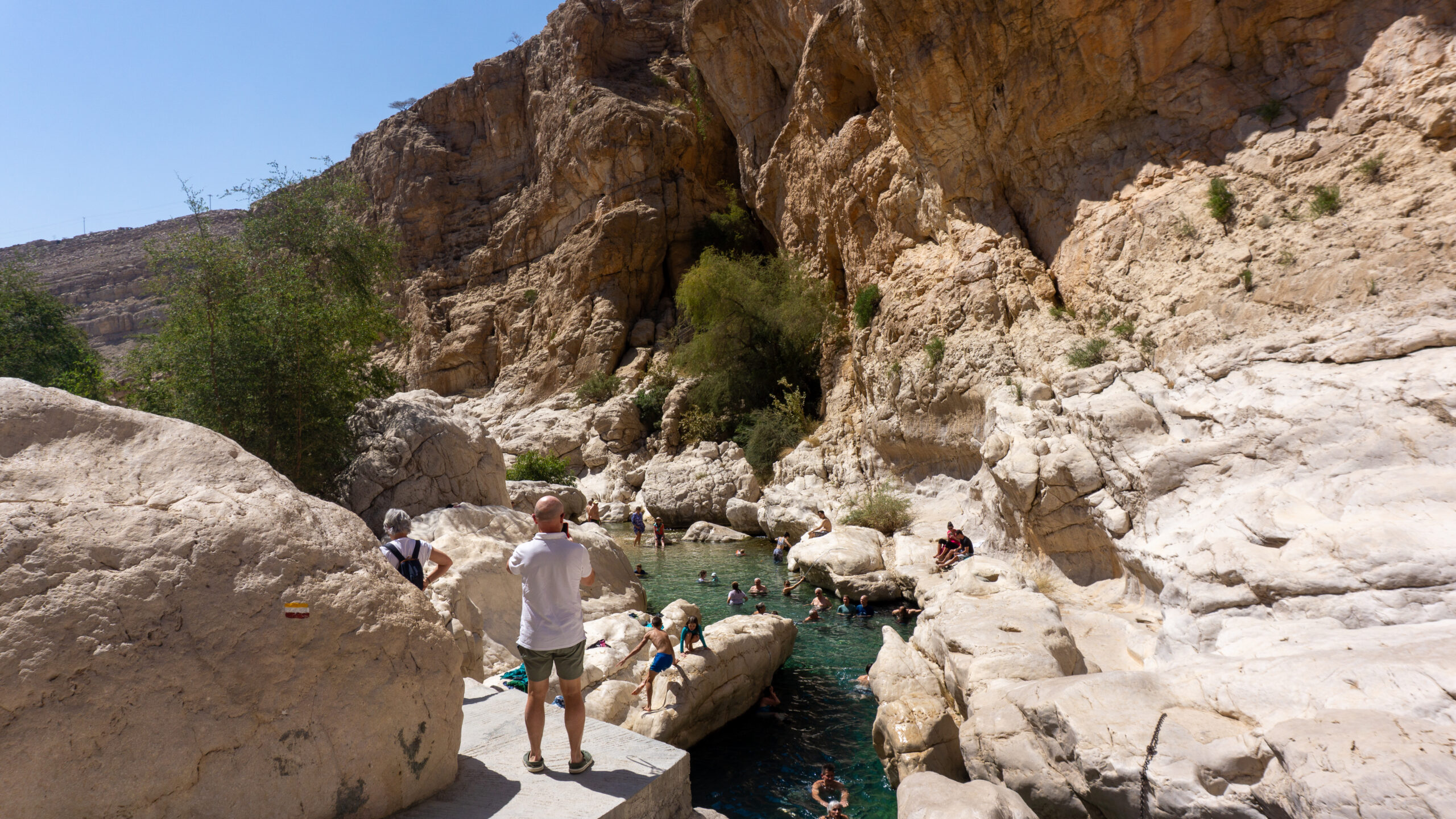
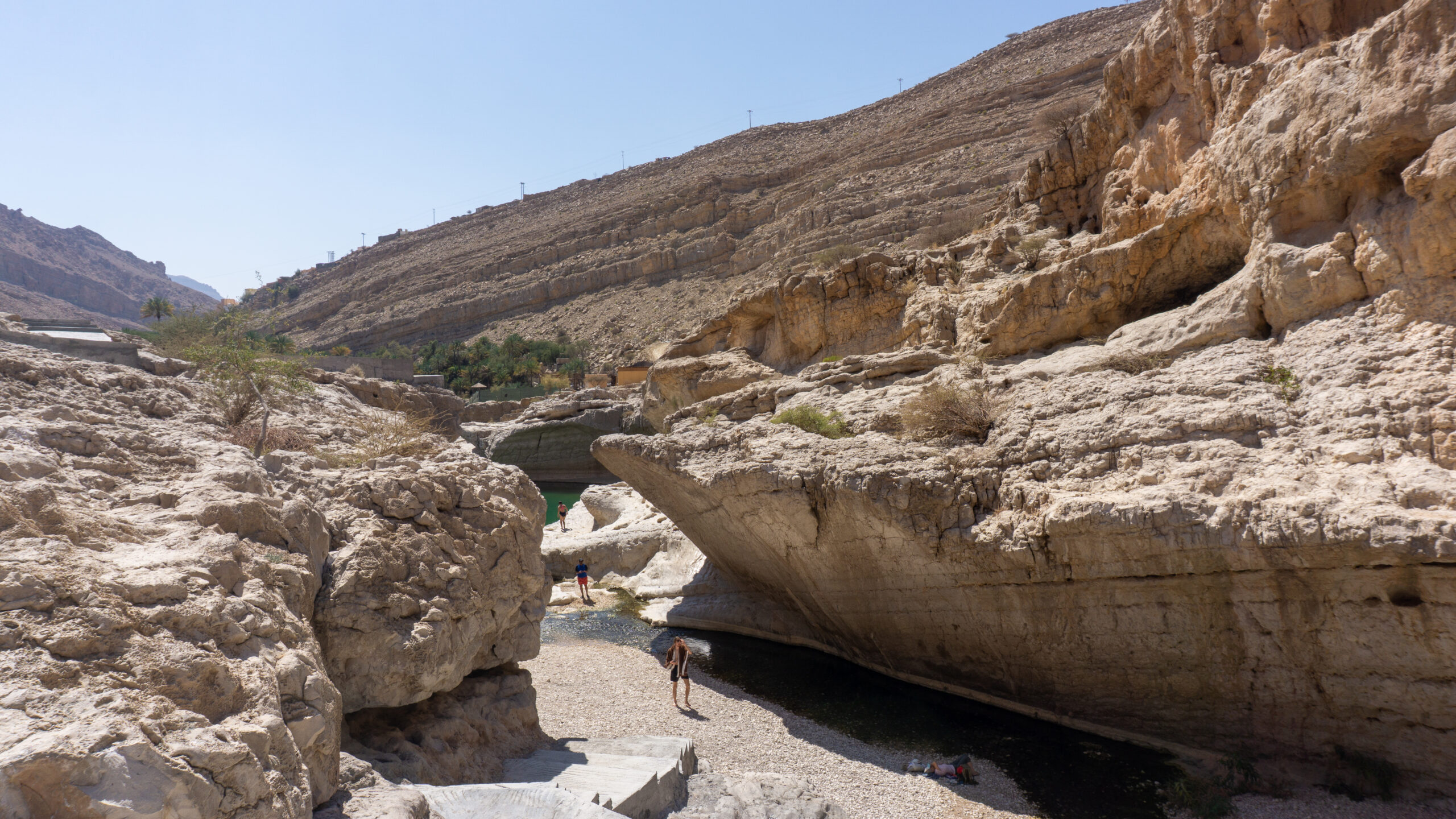
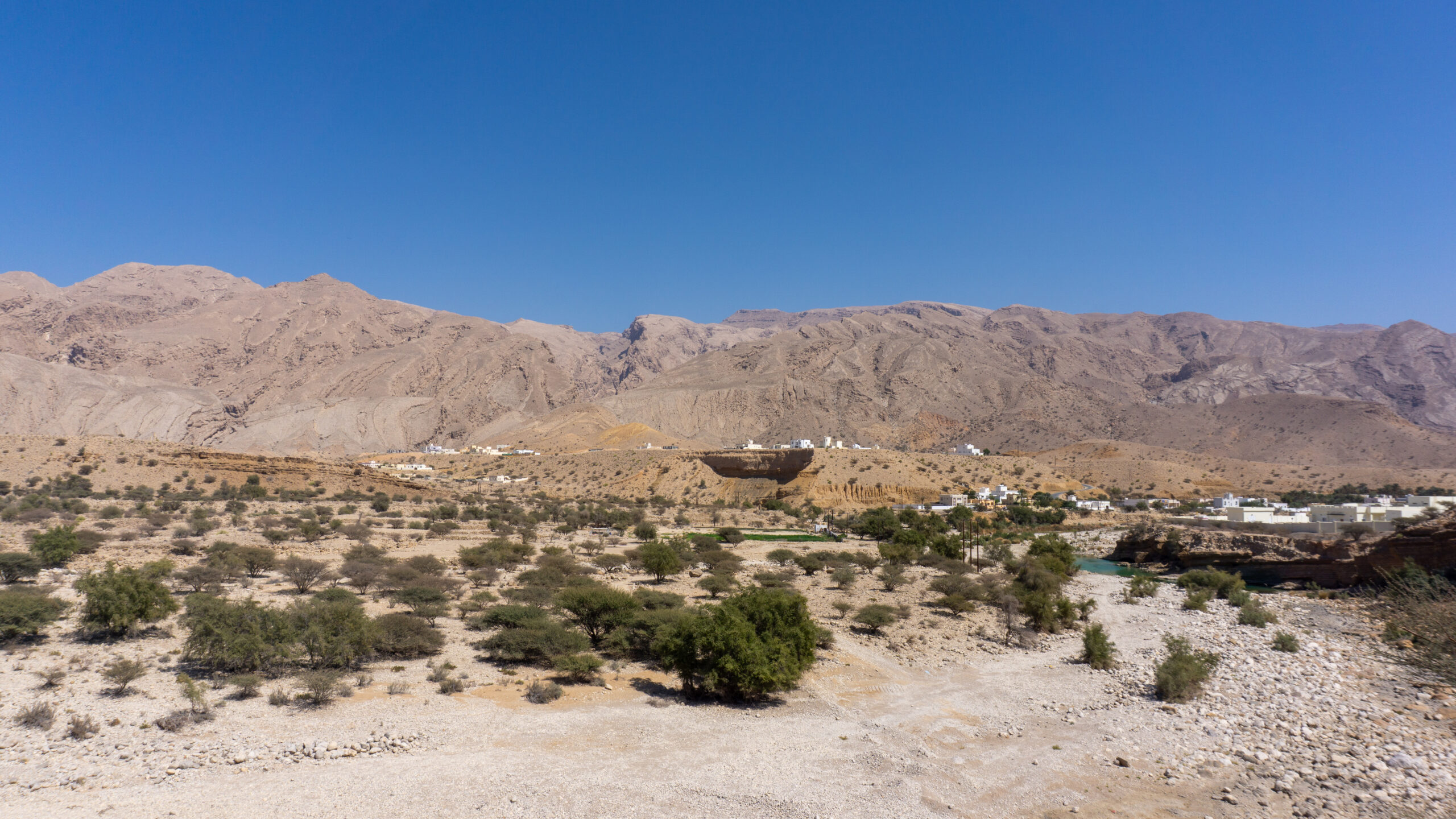
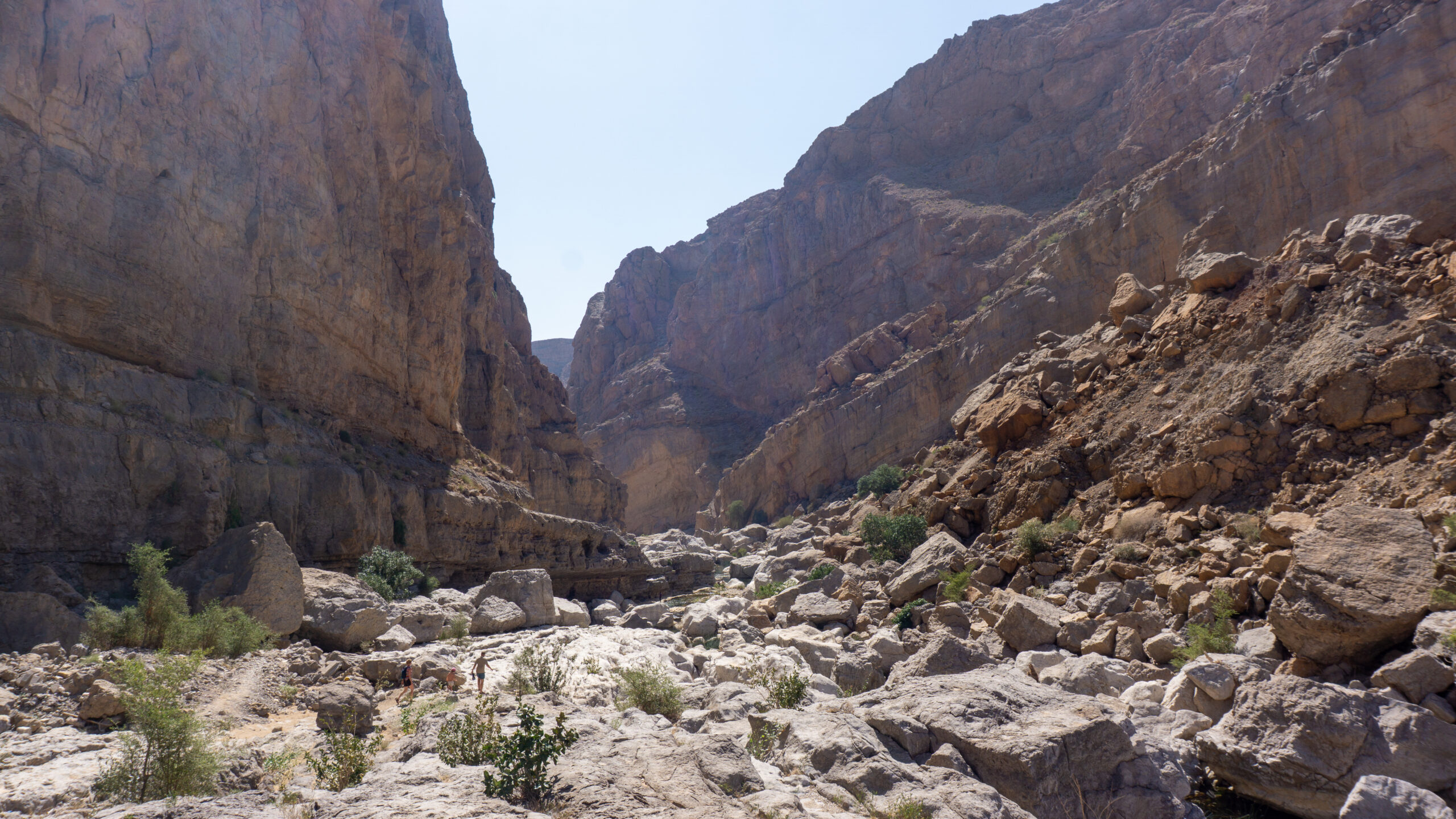
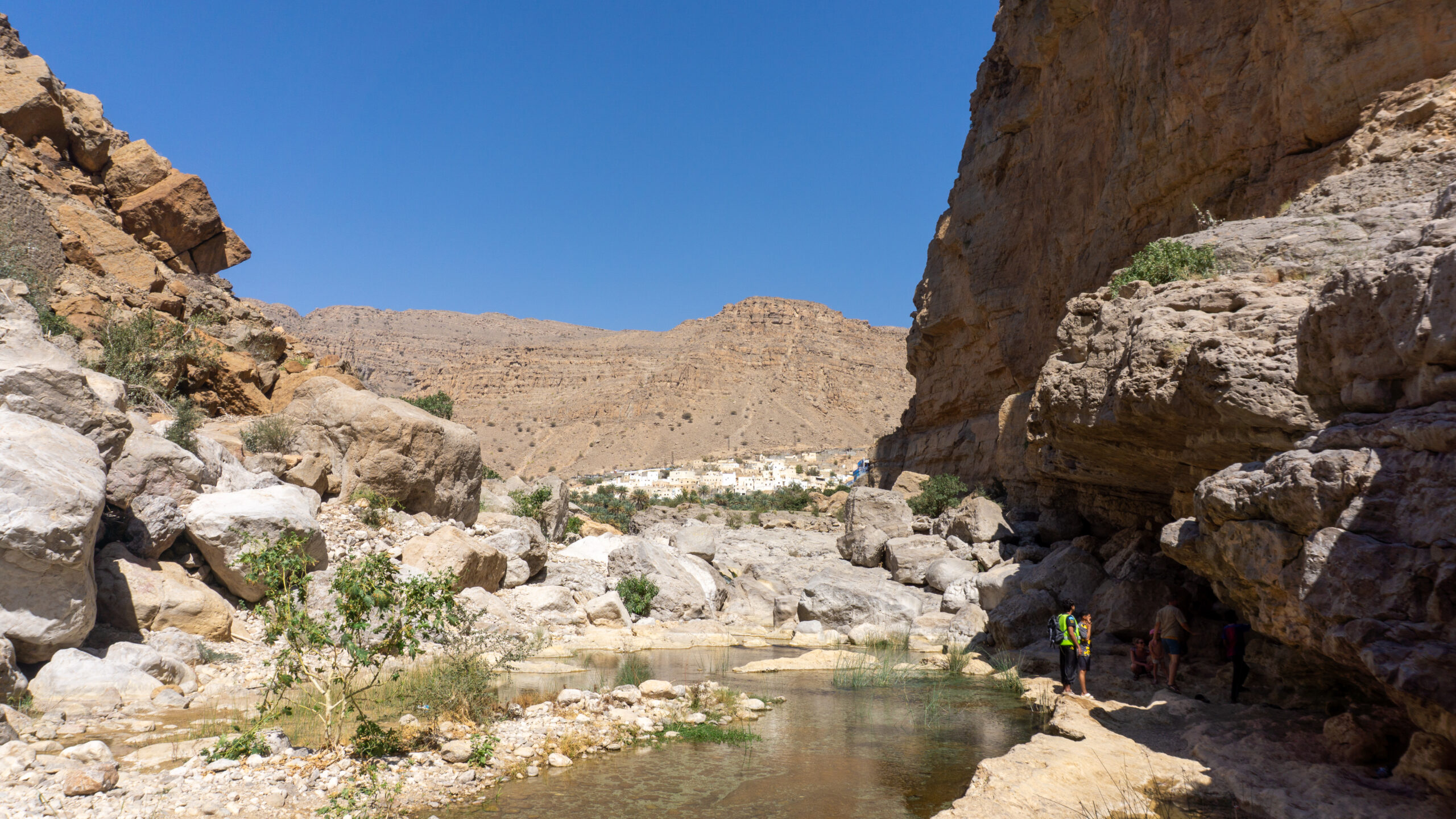
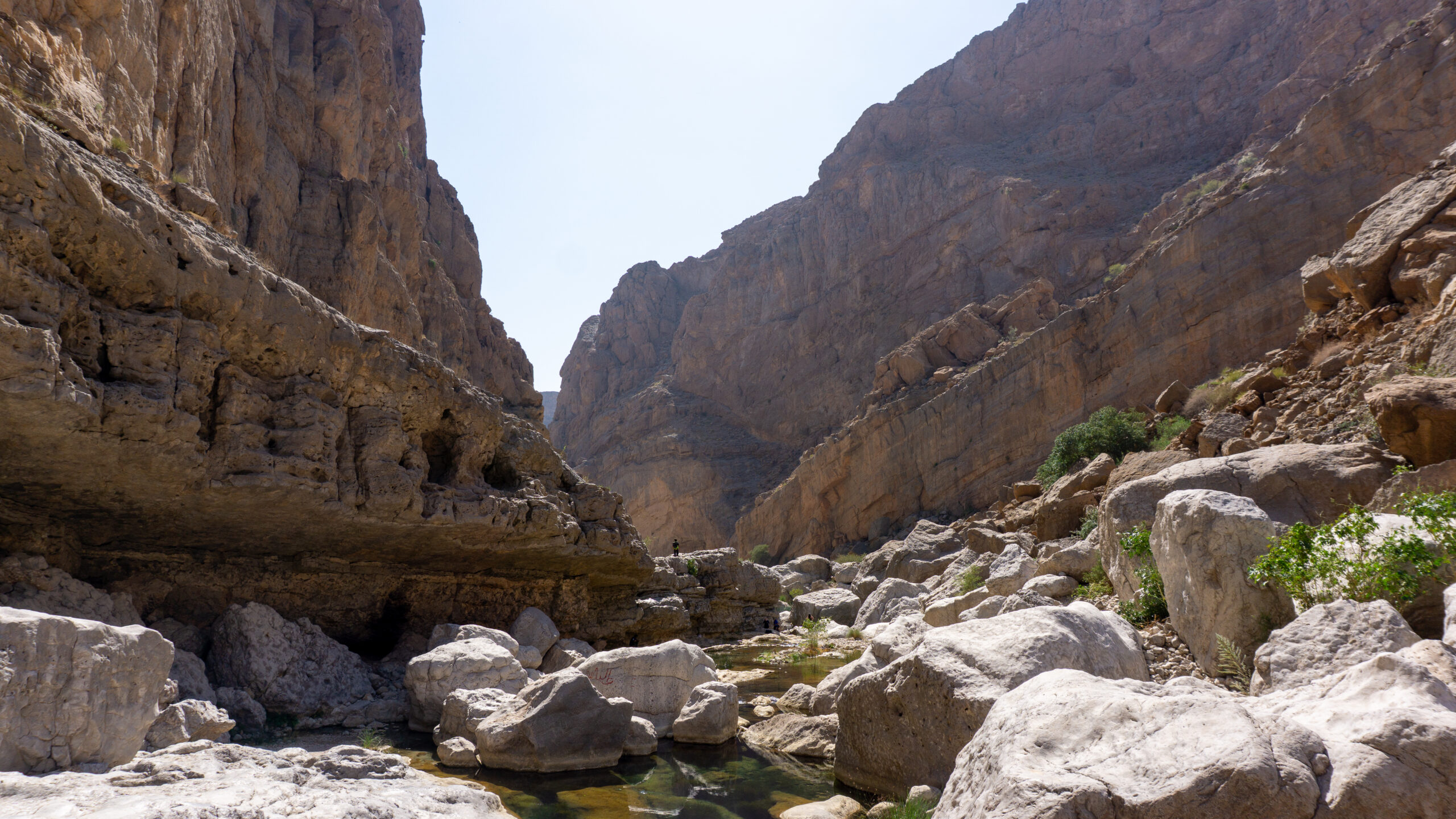
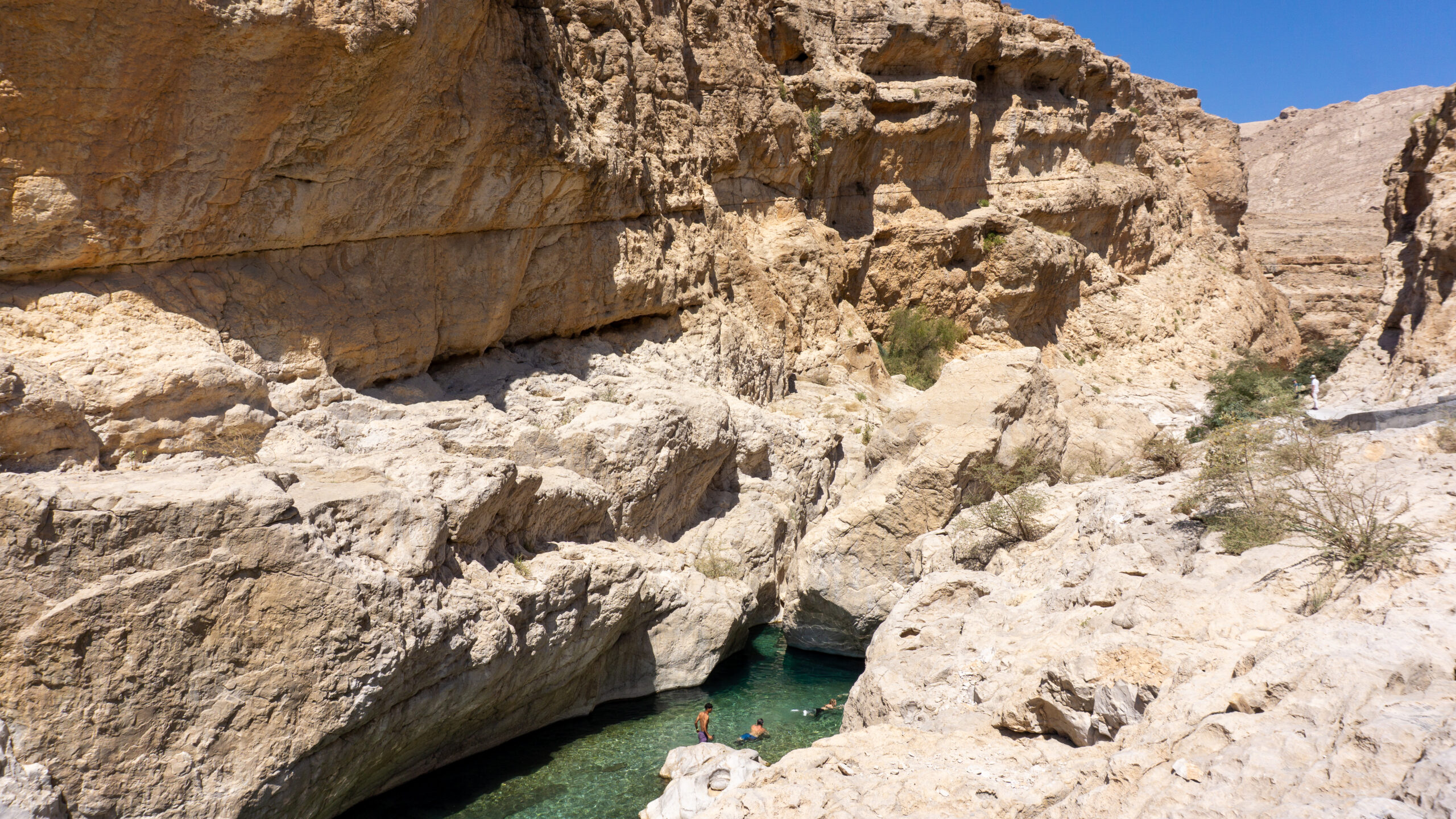
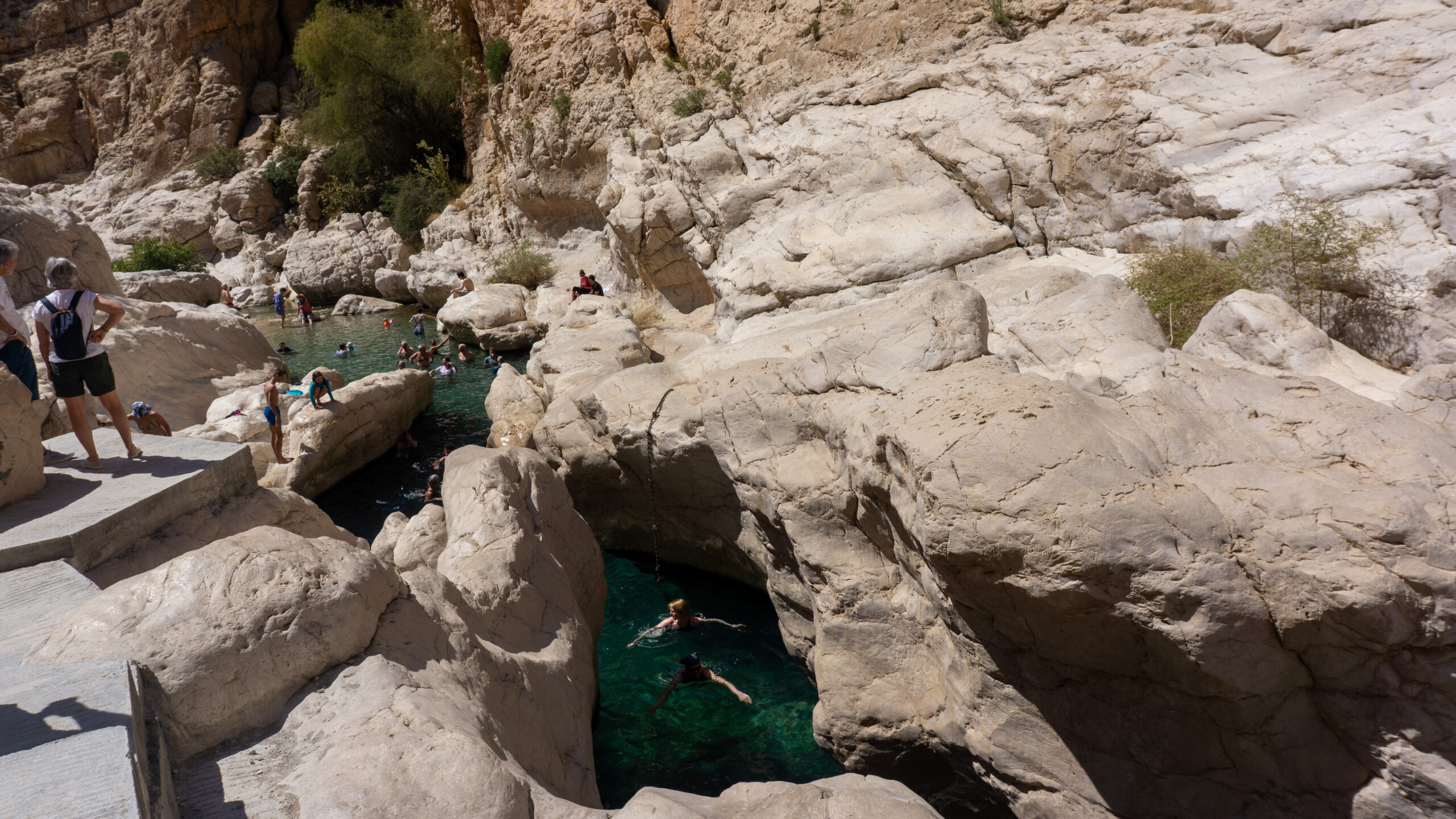
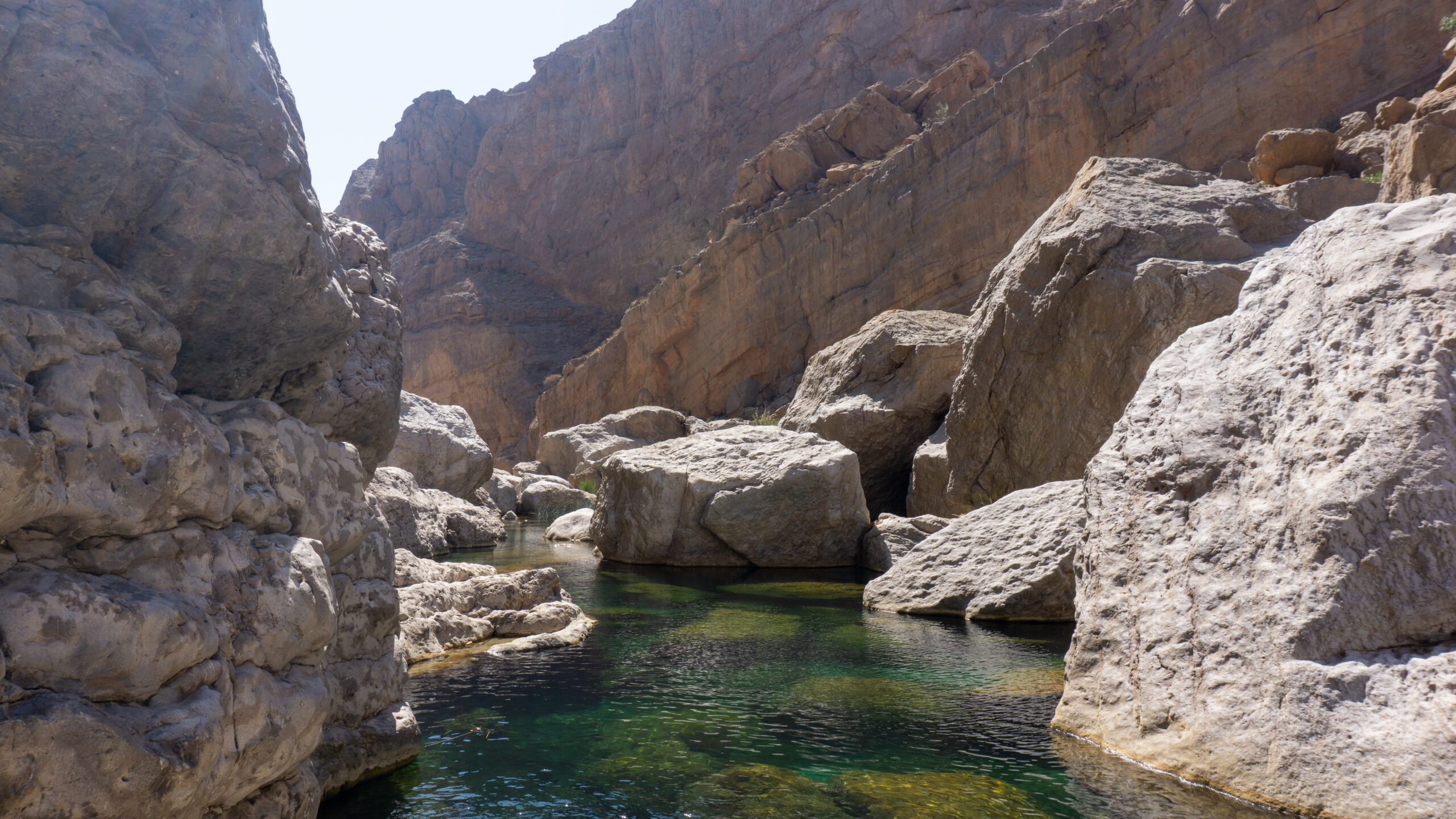
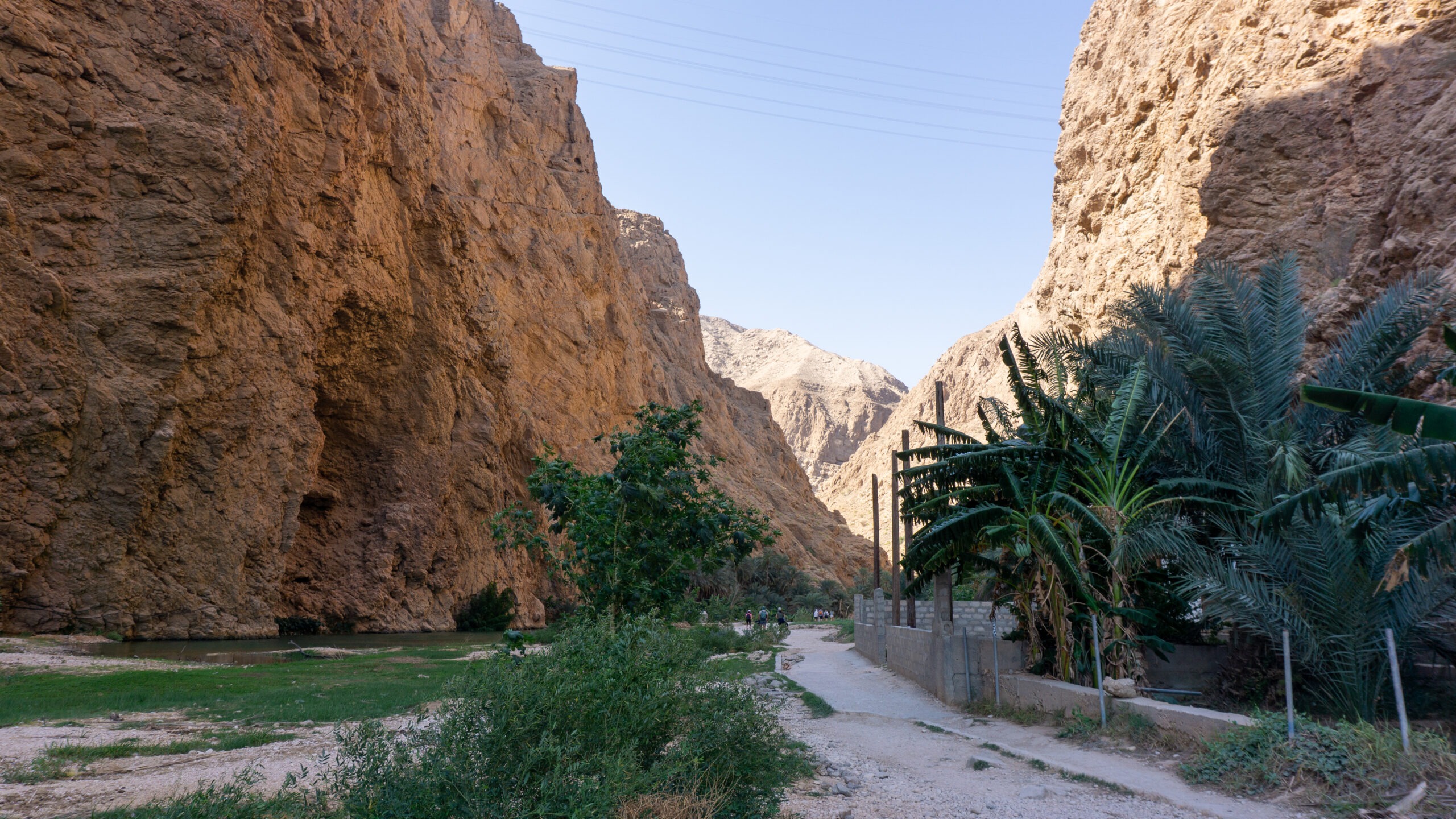
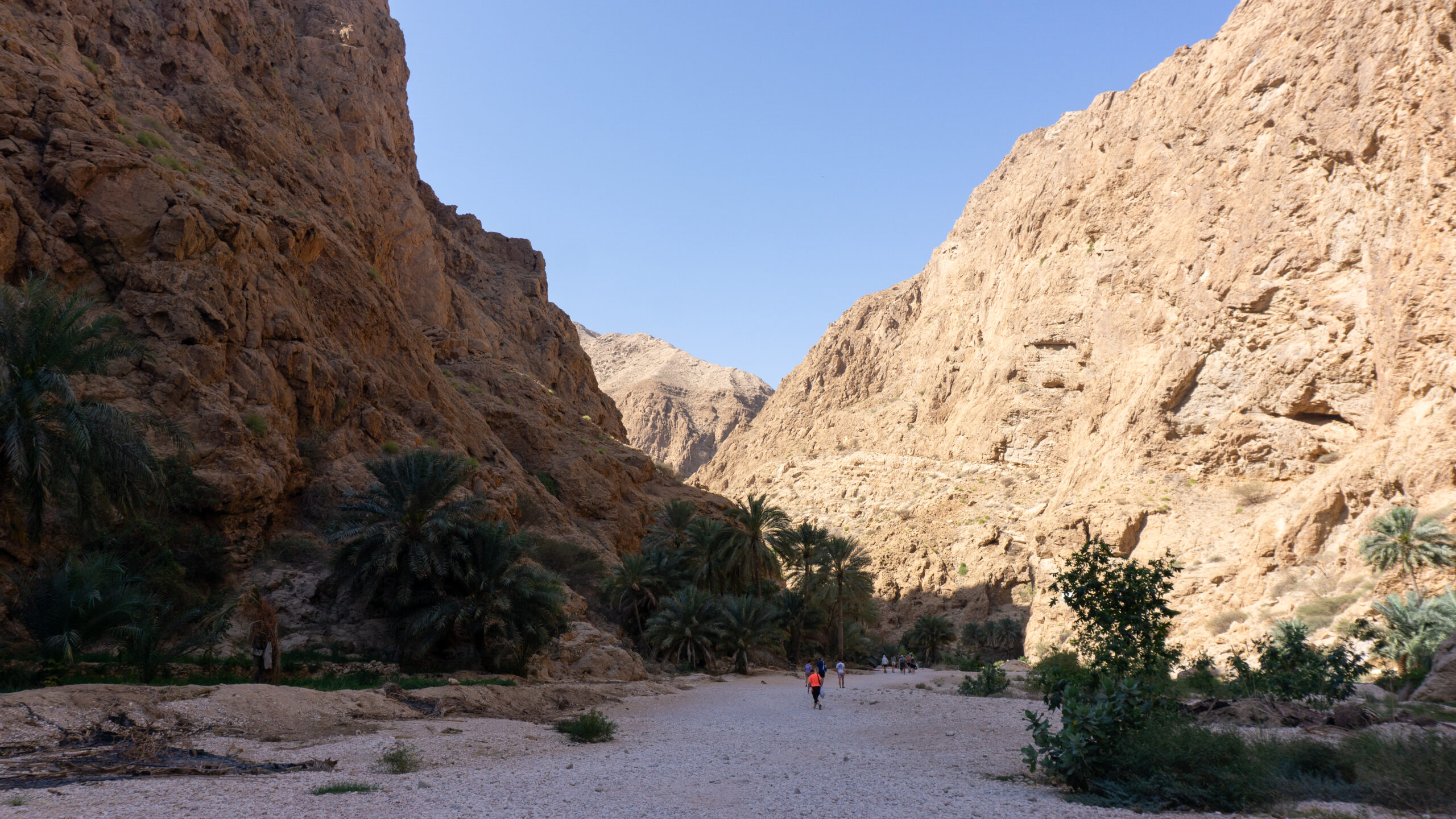
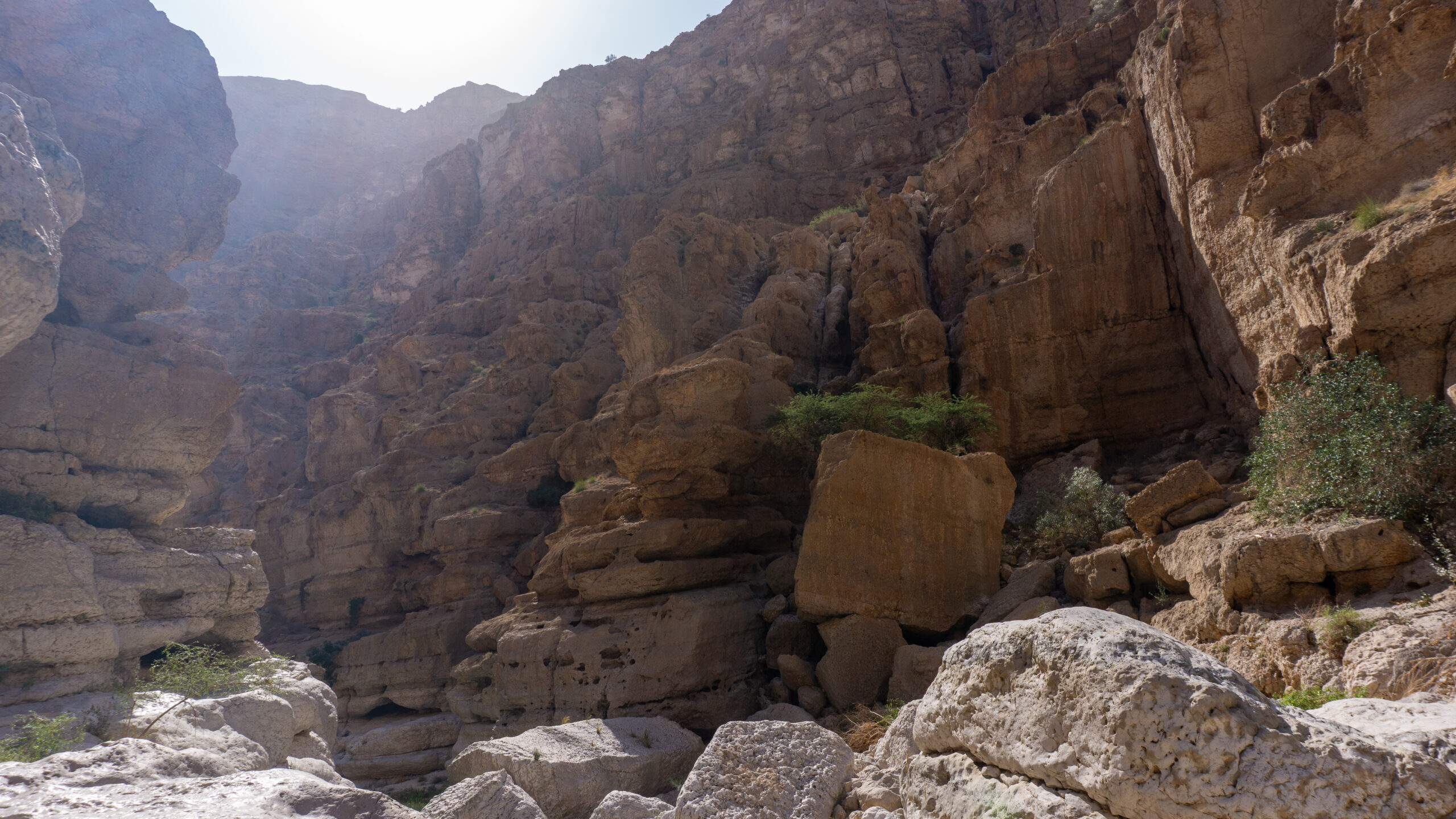
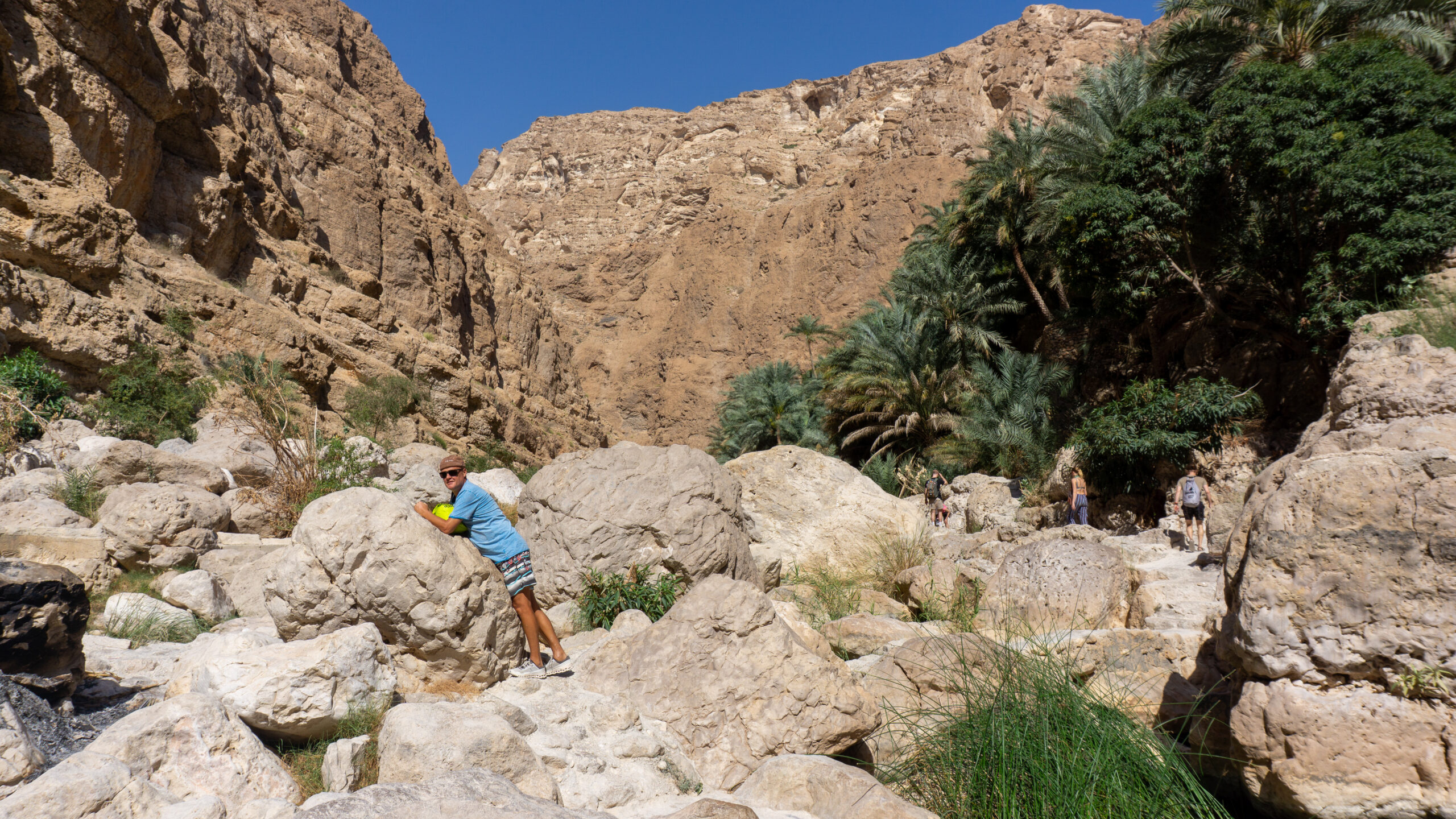
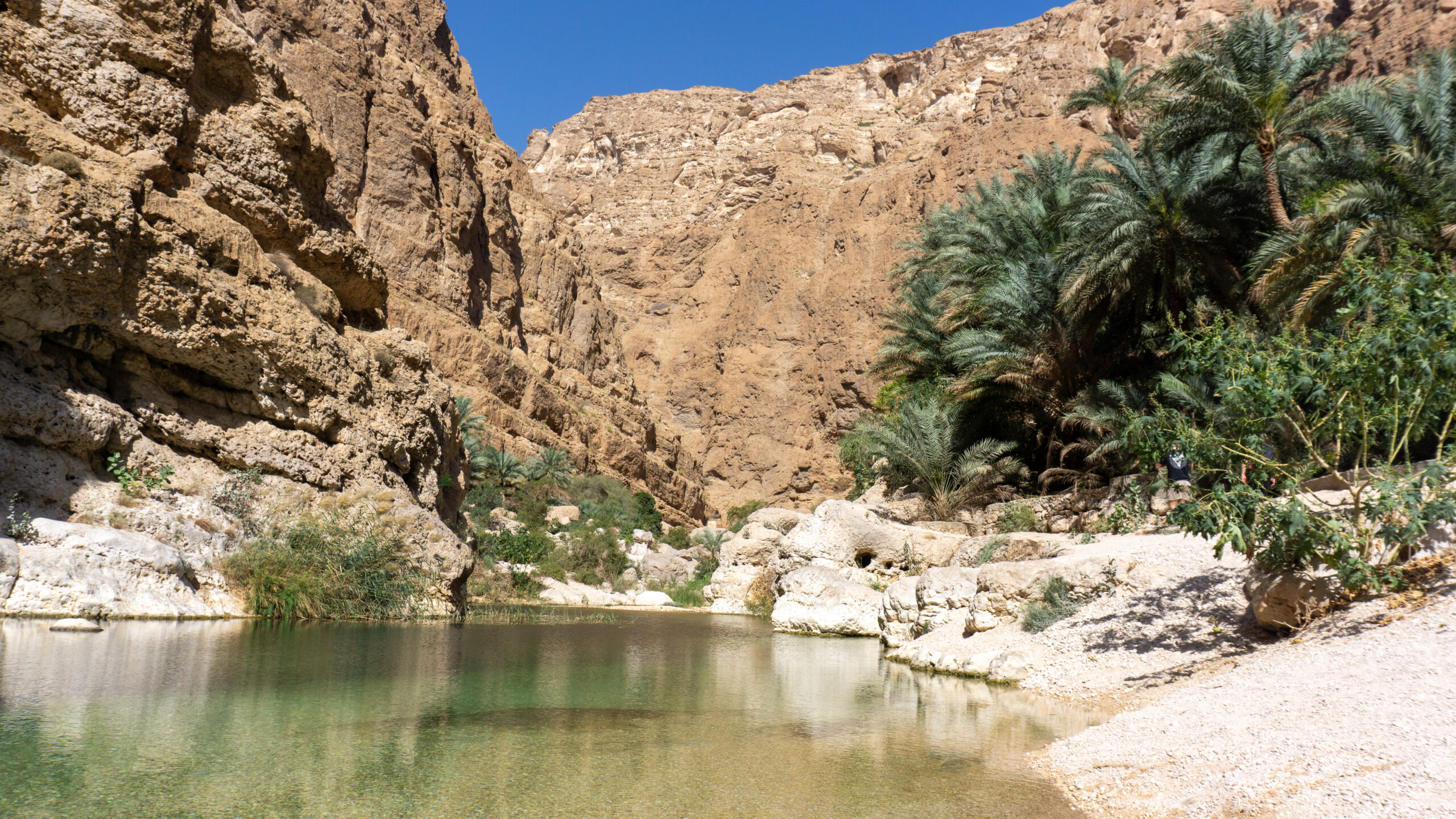
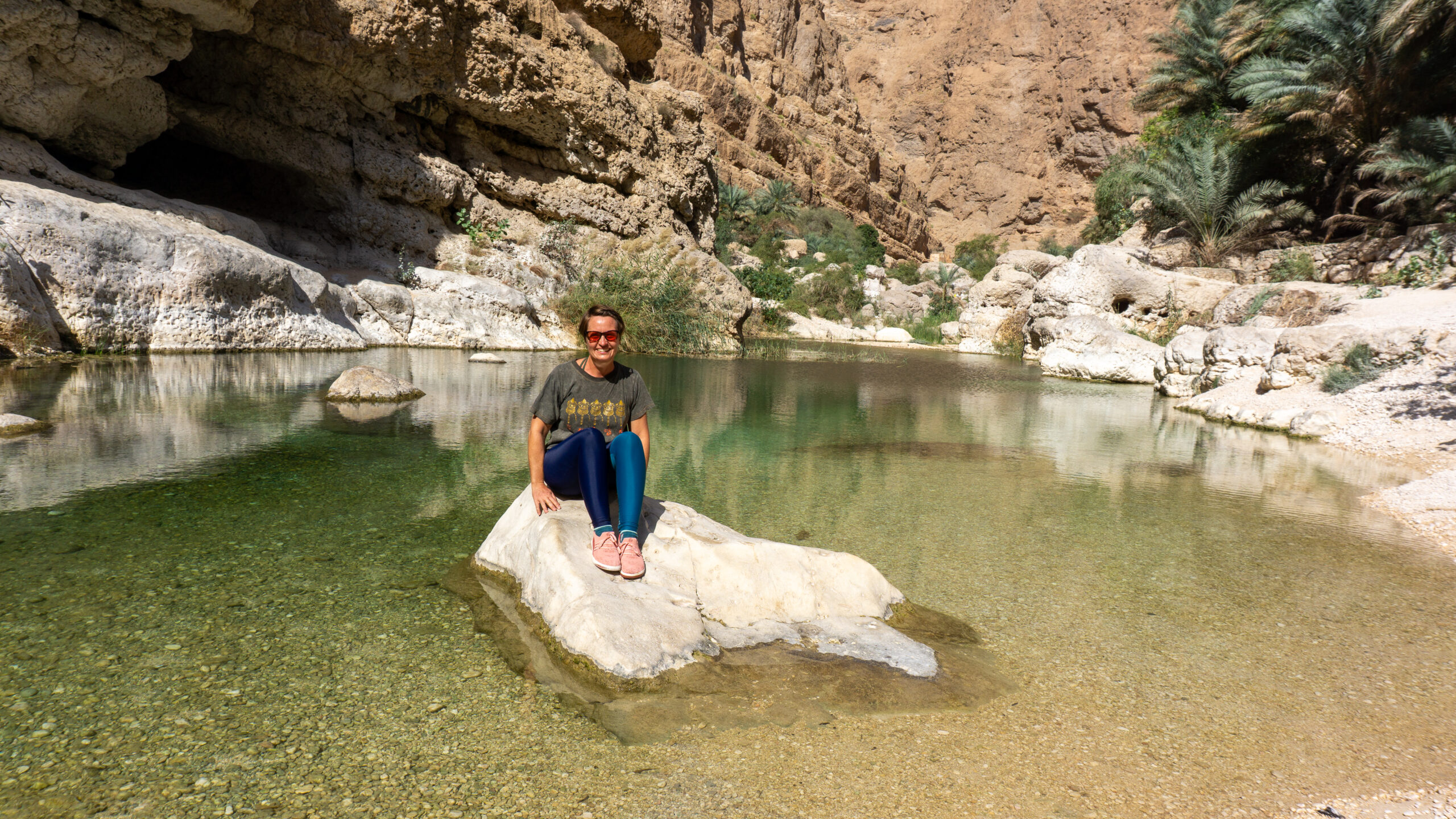
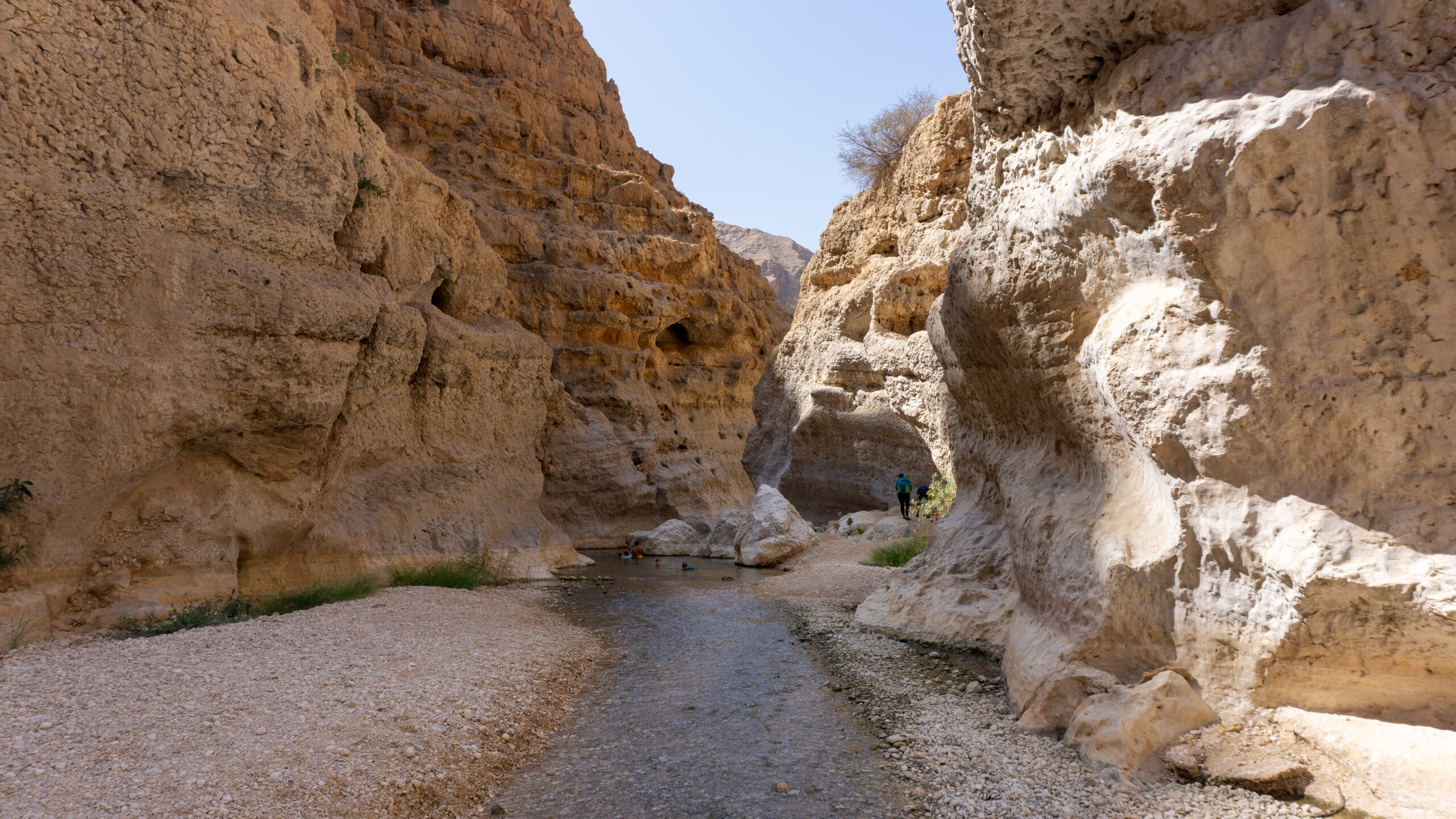
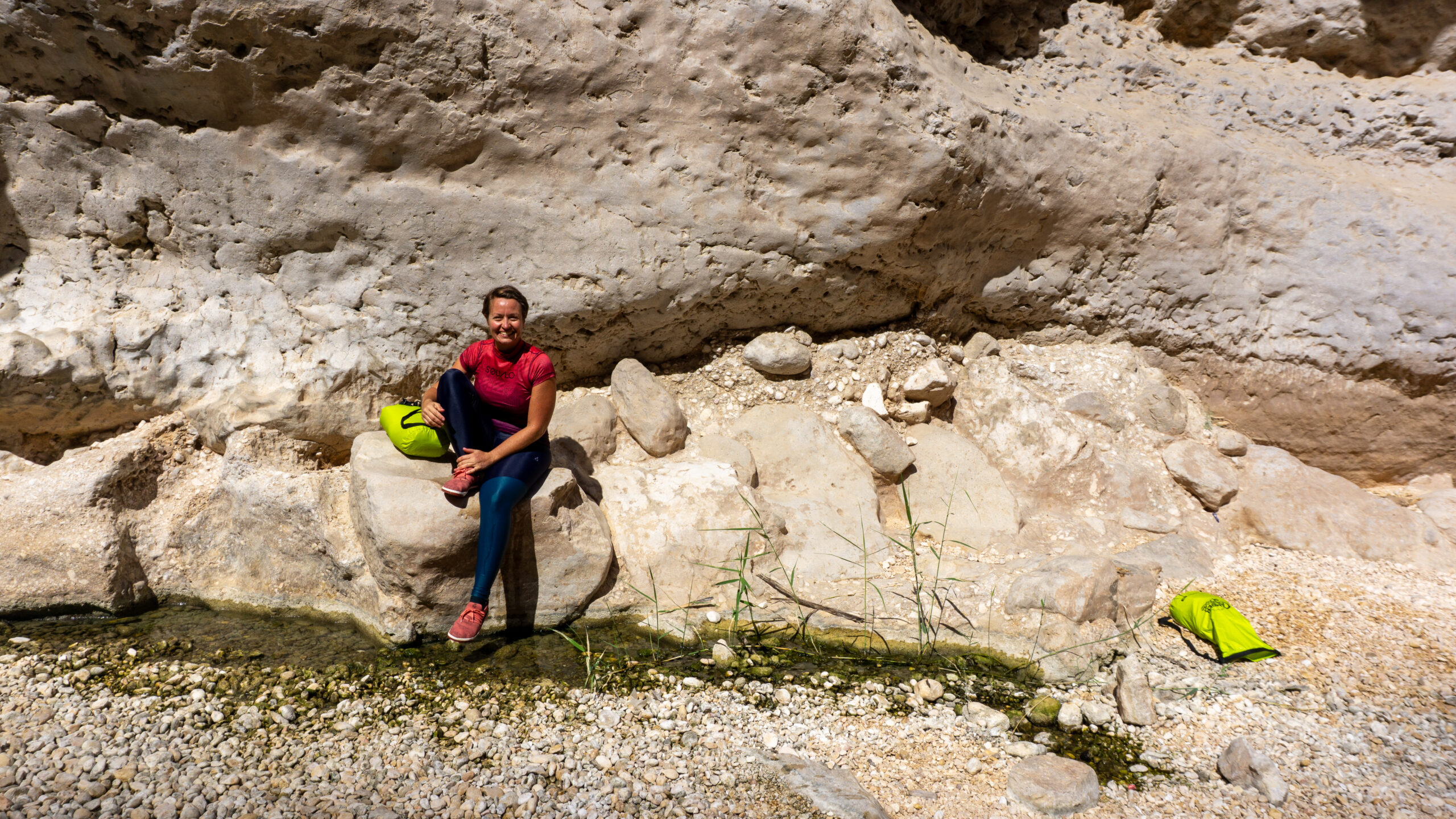
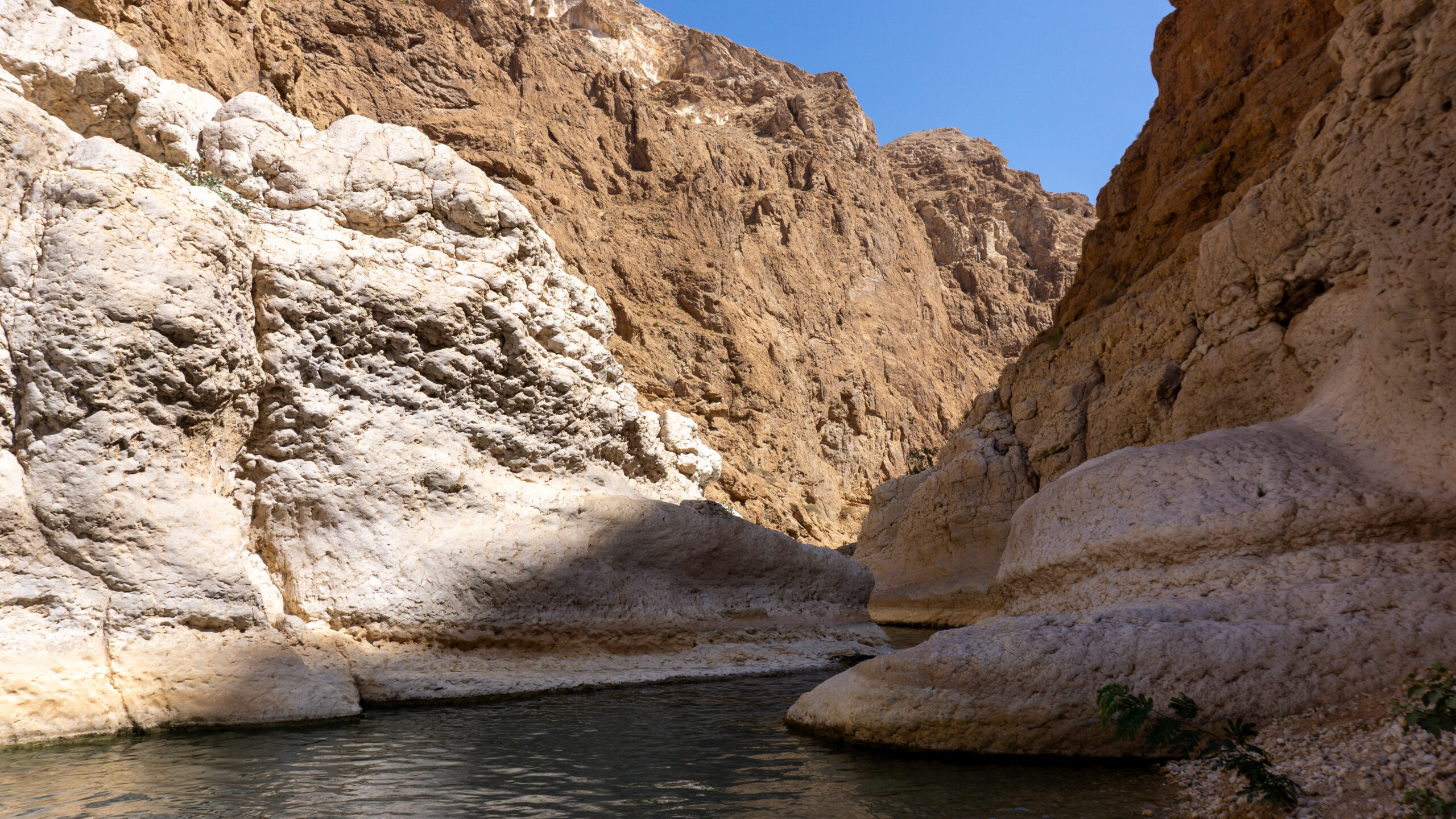
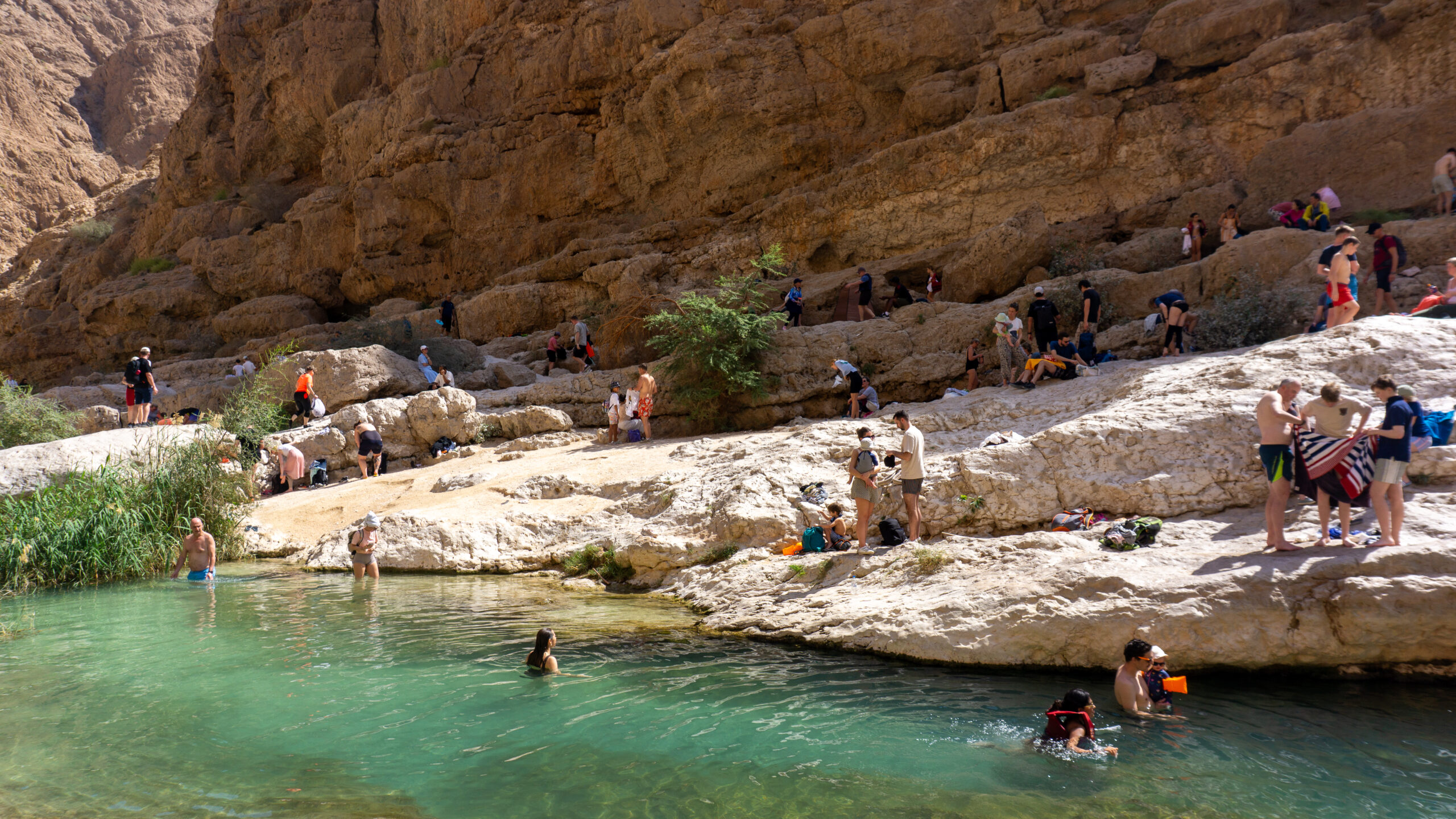
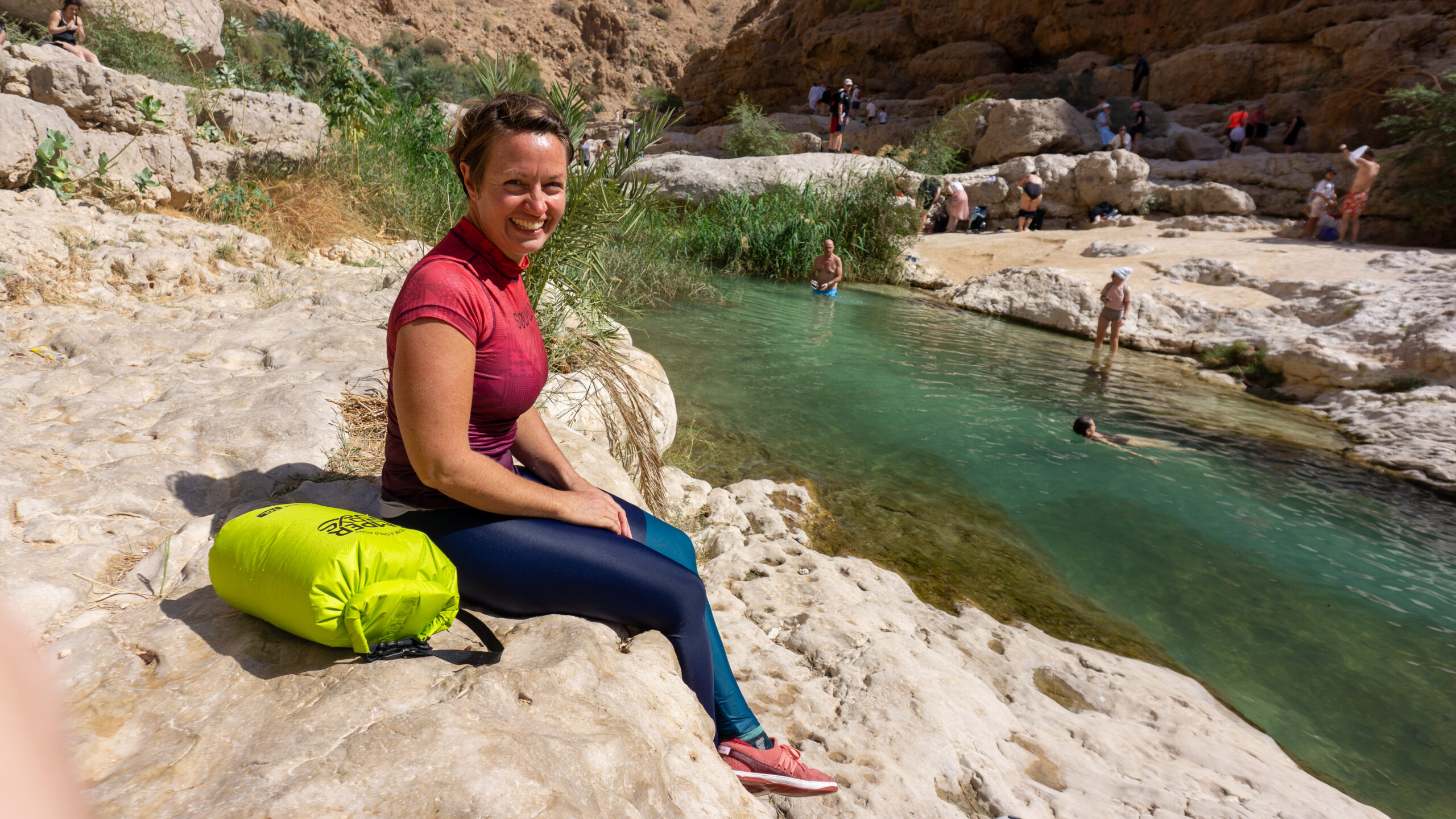
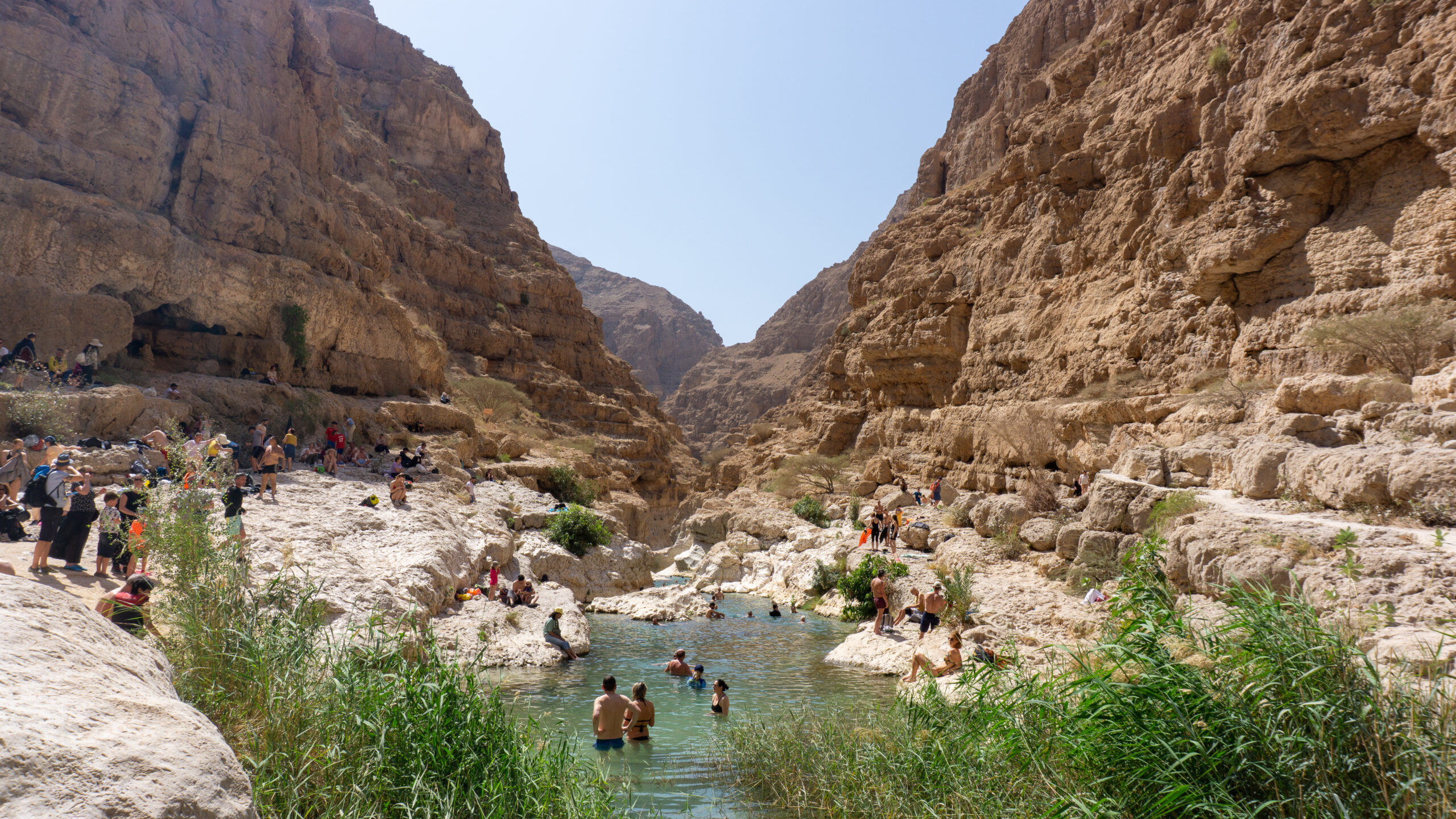
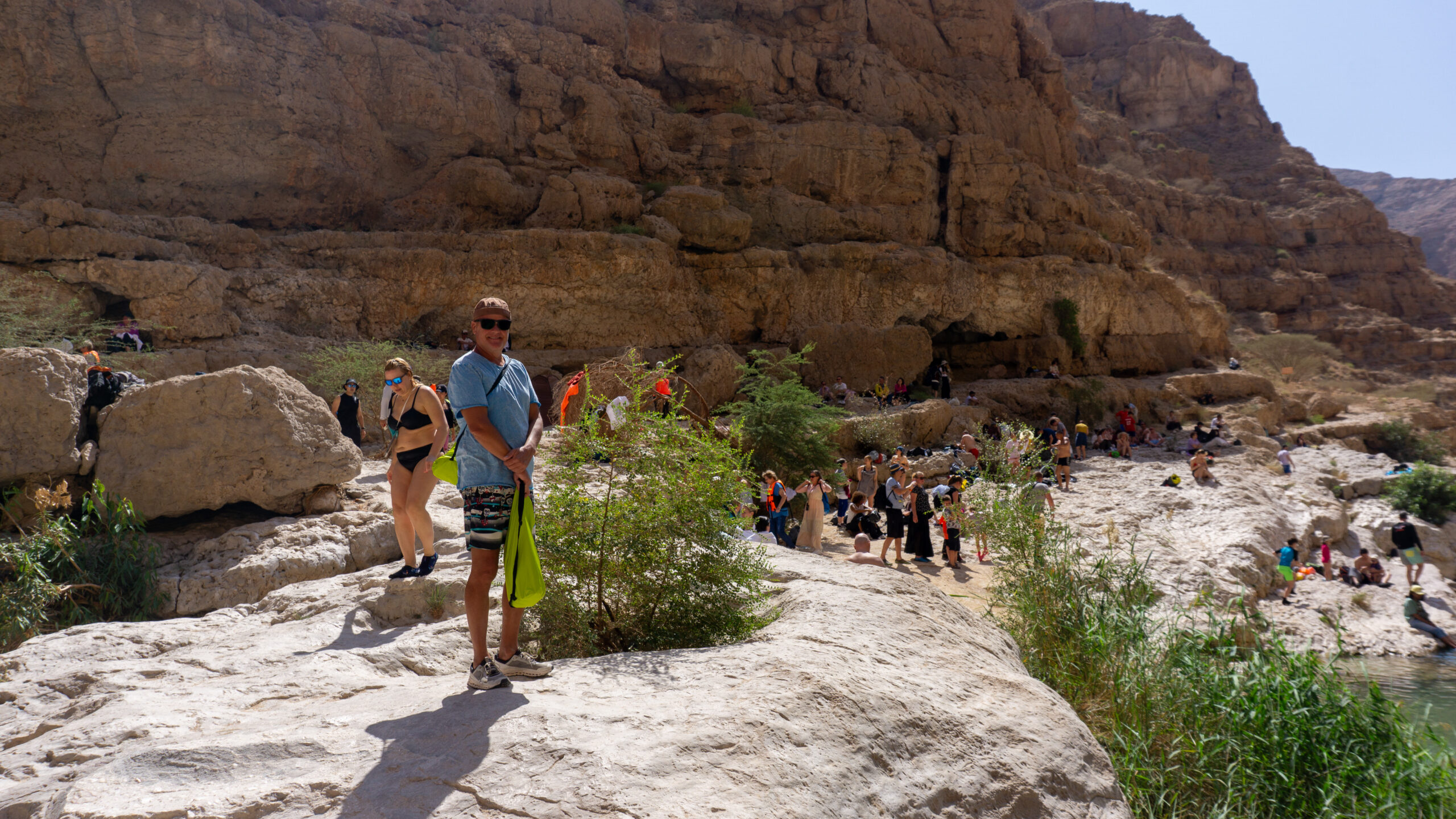
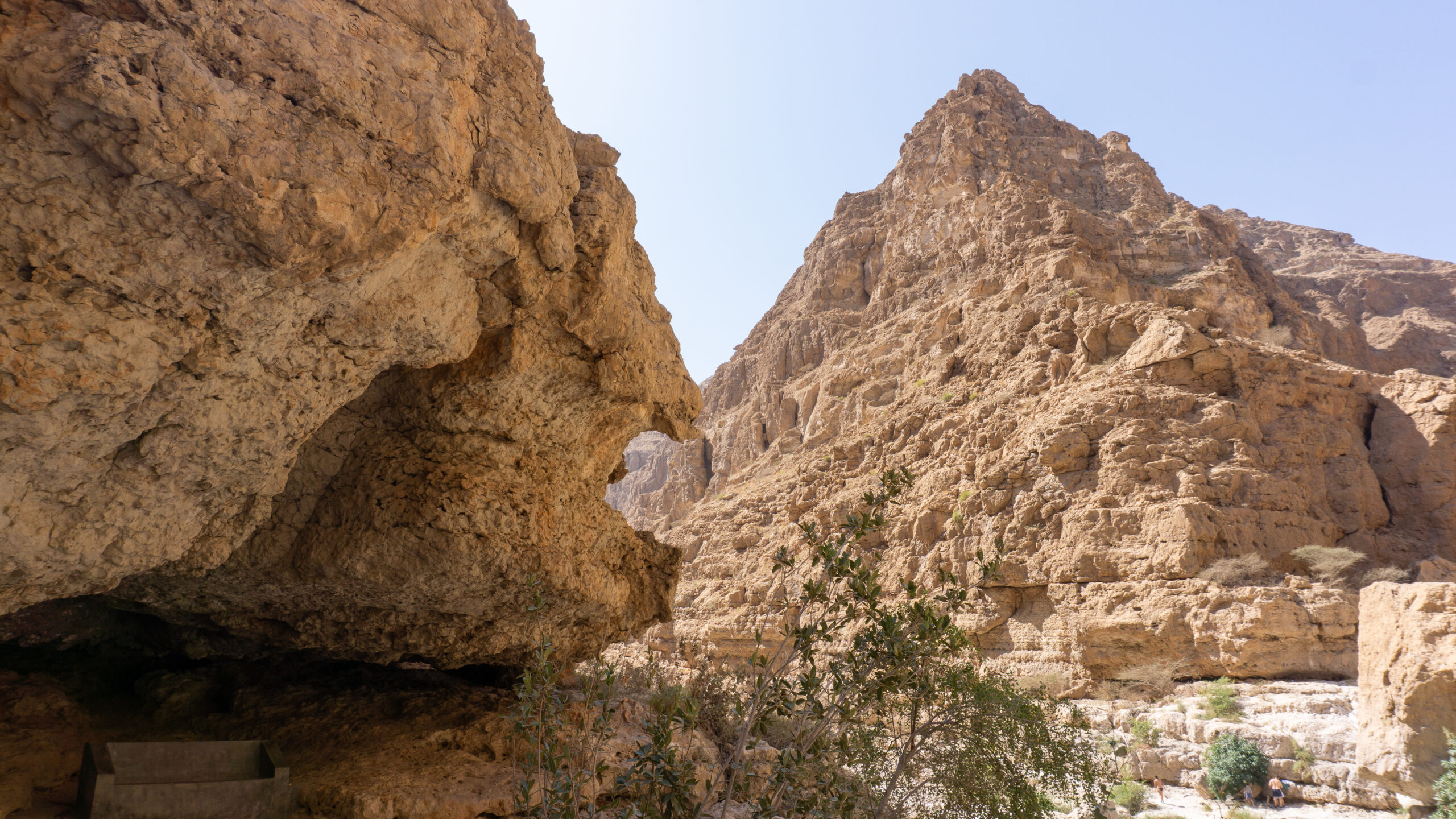
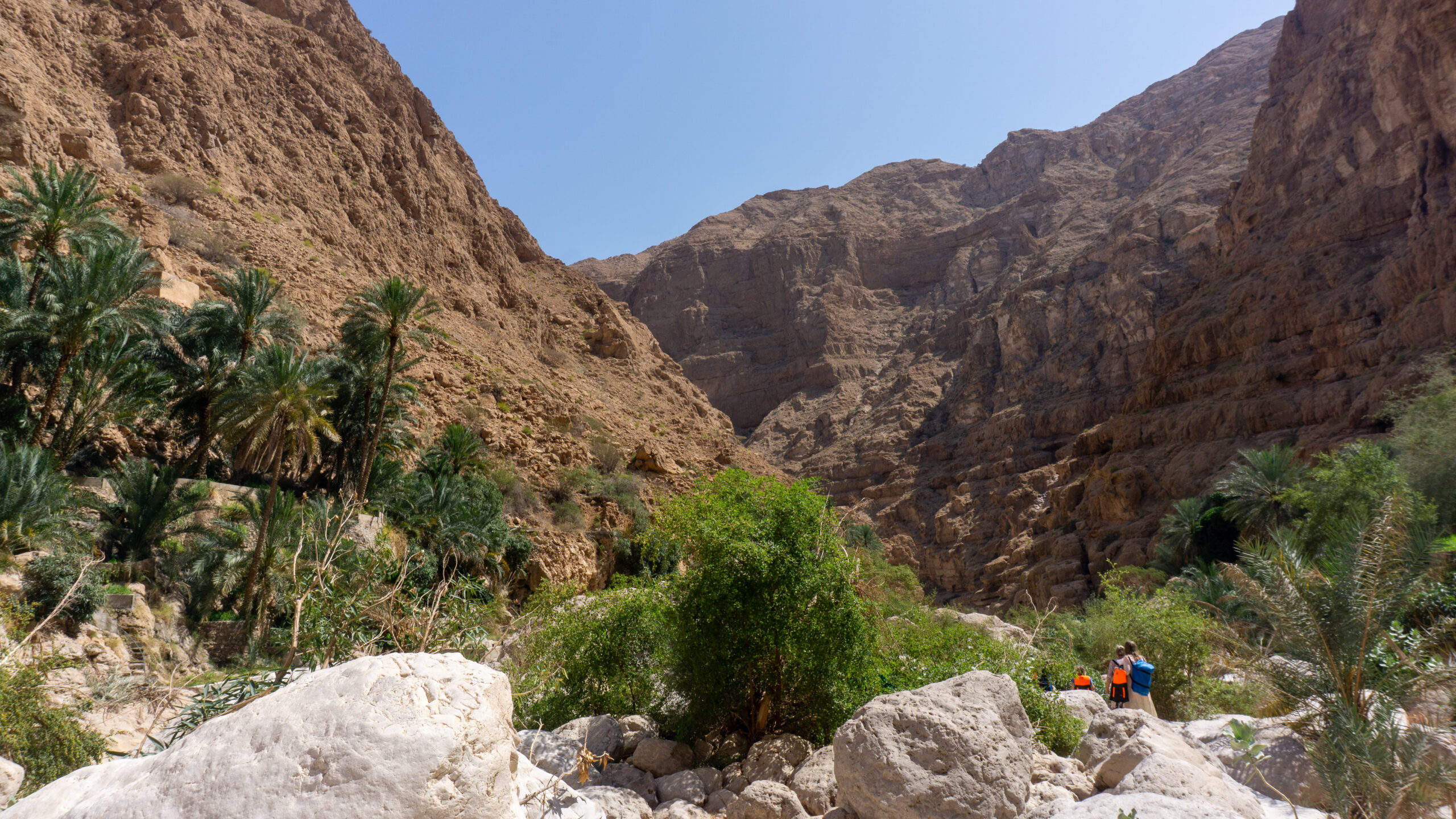
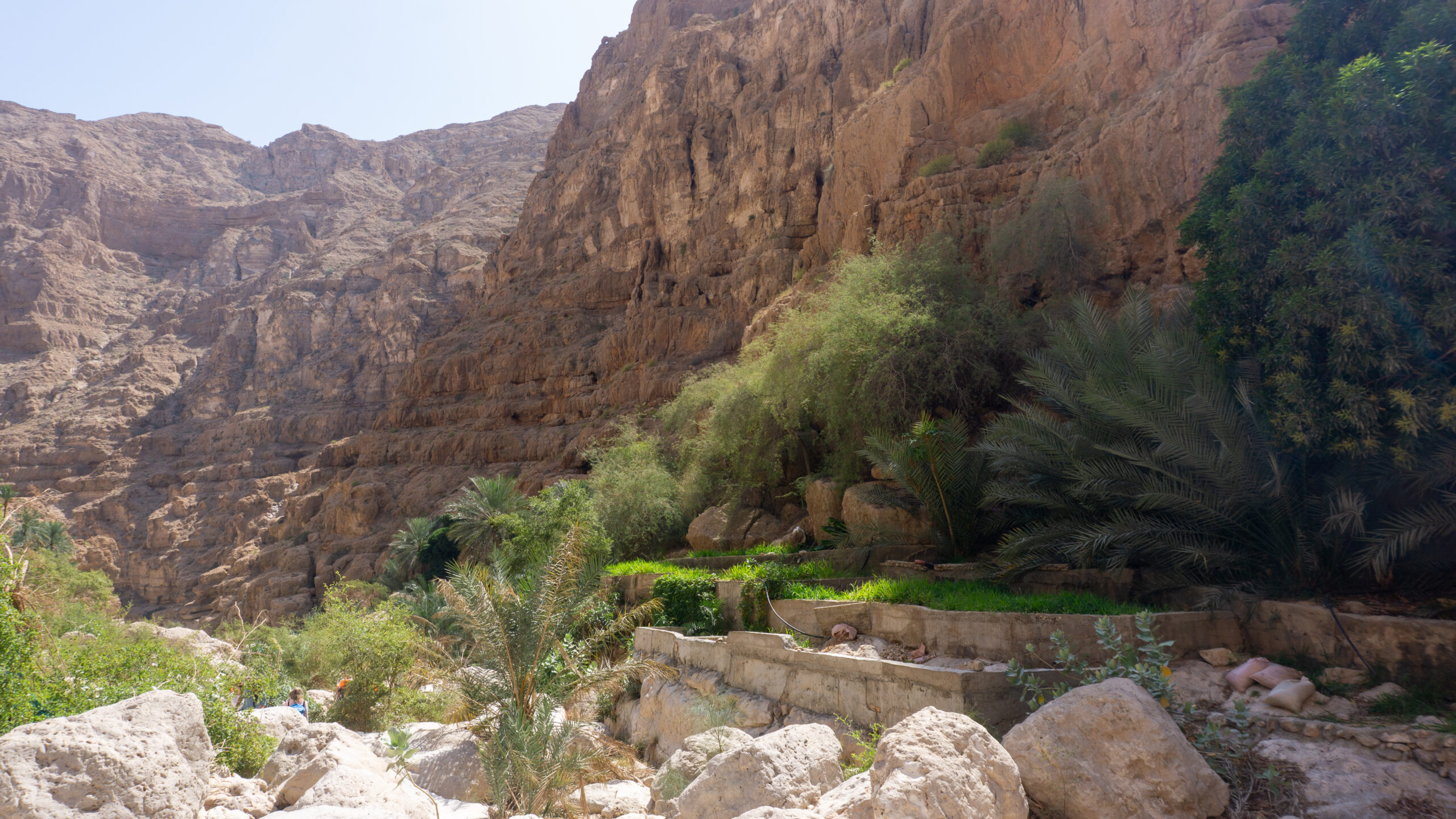
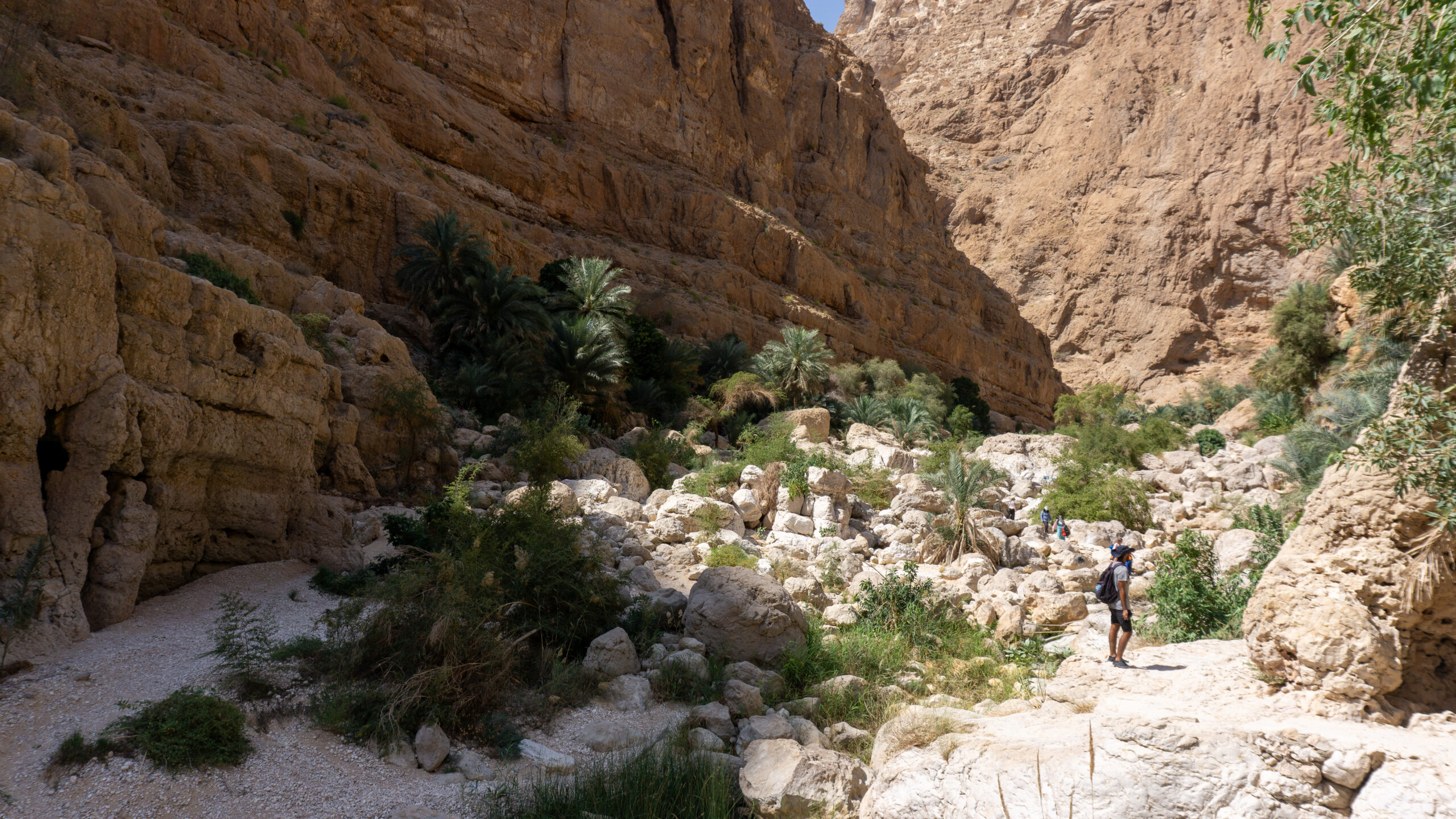
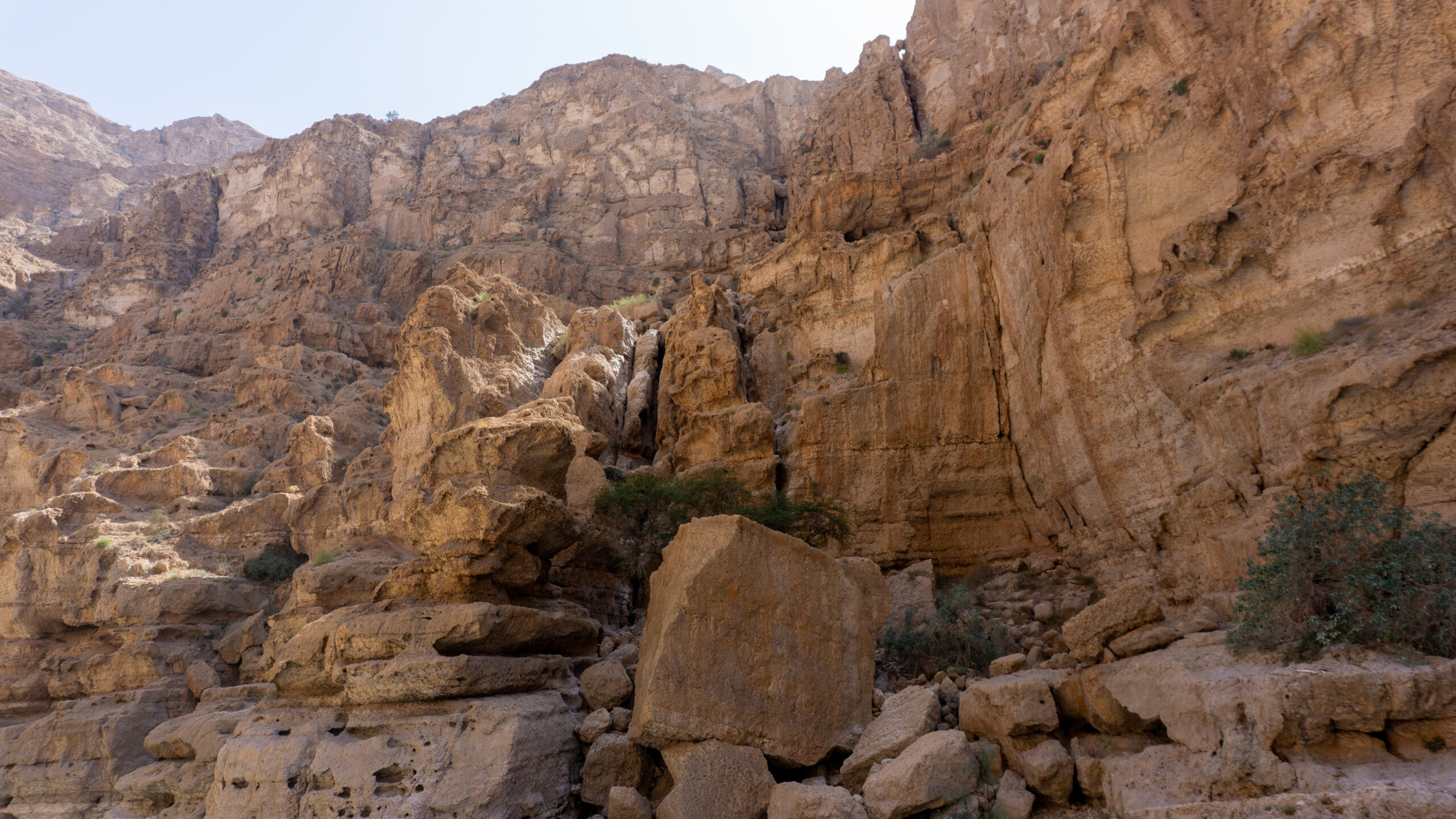
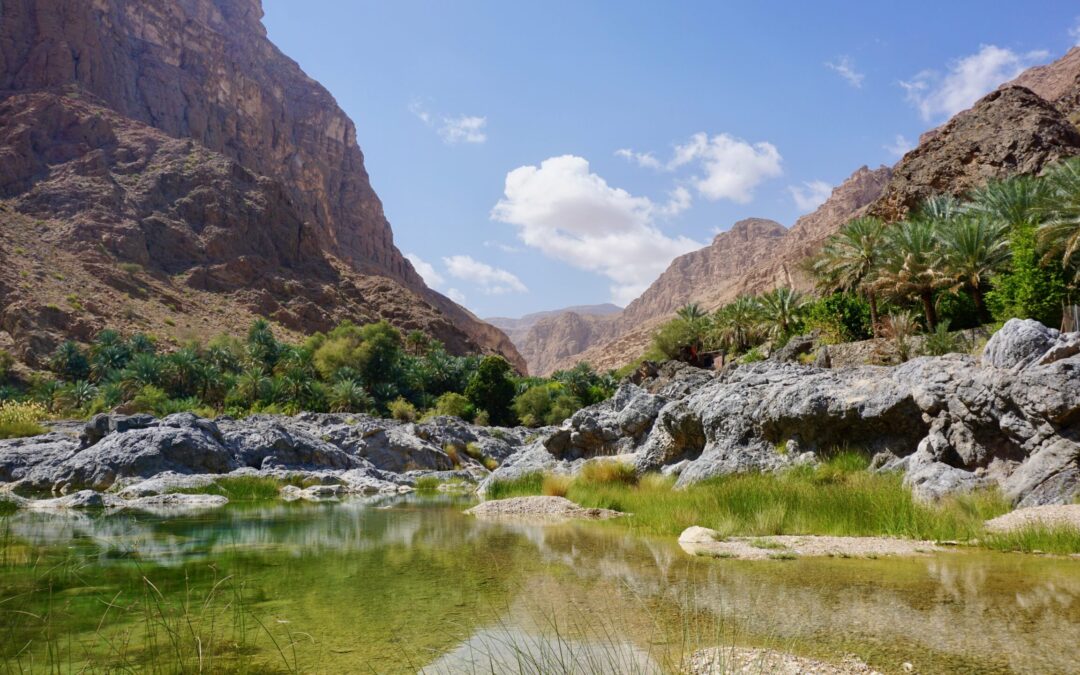
We leave our place early, because we have quite a bit on the list today. First up is Wadi Bani Khalid. The tour management (that’s us) had already warned: according to our research, Wadi Bani Khalid is supposed to be pretty touristy. Already on the drive to the car park, lots of signs suggested that this wadi probably isn’t our thing. Never mind, we’ll take a look for ourselves. Super infrastructure, and very easy to reach for families, older people (do I already count?) and people with disabilities. The path to the wadi doesn’t lead over slippery stones or rocks but along a concrete path and through a huge construction site. Stairs take you to the cool water without any further effort. In our opinion that has nothing to do with nature anymore – the scenery reminds us more of an amusement park or an outdoor pool. There’s construction everywhere, it’s loud and full of tourists. We’d love to jump into the water, but this isn’t for us. We set off for wadi number 2 (Wadi Hawer), only a few kilometres away. Here we find a completely different picture, even though it’s just around the corner from the previous wadi.
We park our car somewhere and walk the last few metres to the wadi. On the way we have a quick chat with a Czech family – the dad drove through Africa to Oman by car and the family is visiting him in Oman – and then we stroll on to the wadi. We spend some time by the water and enjoy the peace and quiet. Unfortunately we don’t have time to go further into the wadi. Hard to believe, but today we’re a bit pressed for time, because we have an appointment in the afternoon. Today we’re heading into the desert for two days. We decide to come back here after our stay in the desert.
We’ve booked 2 nights in the Wahiba Sands desert. Meeting point at 3:30 pm at the edge of the desert, because we don’t dare to do it without expert company. After all, it’s our first desert experience. At the meeting point we’re welcomed very warmly by an Omani and his helpers. Not for the first time – right after the friendly welcome – it’s straight on to the money. No problem, it reminds us of our time in South Korea. For better grip in the sand, air is let out of the tyres. The car then doesn’t drive but floats on the sand. We’re excited and off we go. Our “guides” drive ahead and we follow. An Italian group goes off the track and immediately gets stuck in the sand. We’d rather keep going and park a bit further on firm ground. The Italians get freed by the “guide” and on we go to the desert camp “Desert Wonder”. We’re welcomed very warmly and get tent number 14. Very spacious, a big bed, and the bathroom is a cut-to-size steel OT (“open top”) container (stargazing while you’re on the loo…). In front of the tent there are chairs, a table and cushions, all on a flying carpet – great here. In the mega cosy common room there’s tea and other refreshments. Ramadan is suspended in the desert (at least for tourists). We settle in, relax and look forward to our first walk in the desert – at sunset. It’s great and really fascinating here, MEGA. In the evening a great dinner, and afterwards sitting by the campfire. The full tourist programme, but it’s world class. Photos and video of our stay in the desert: see the separate post “Wahiba Sands” – Good night, John-Boy.
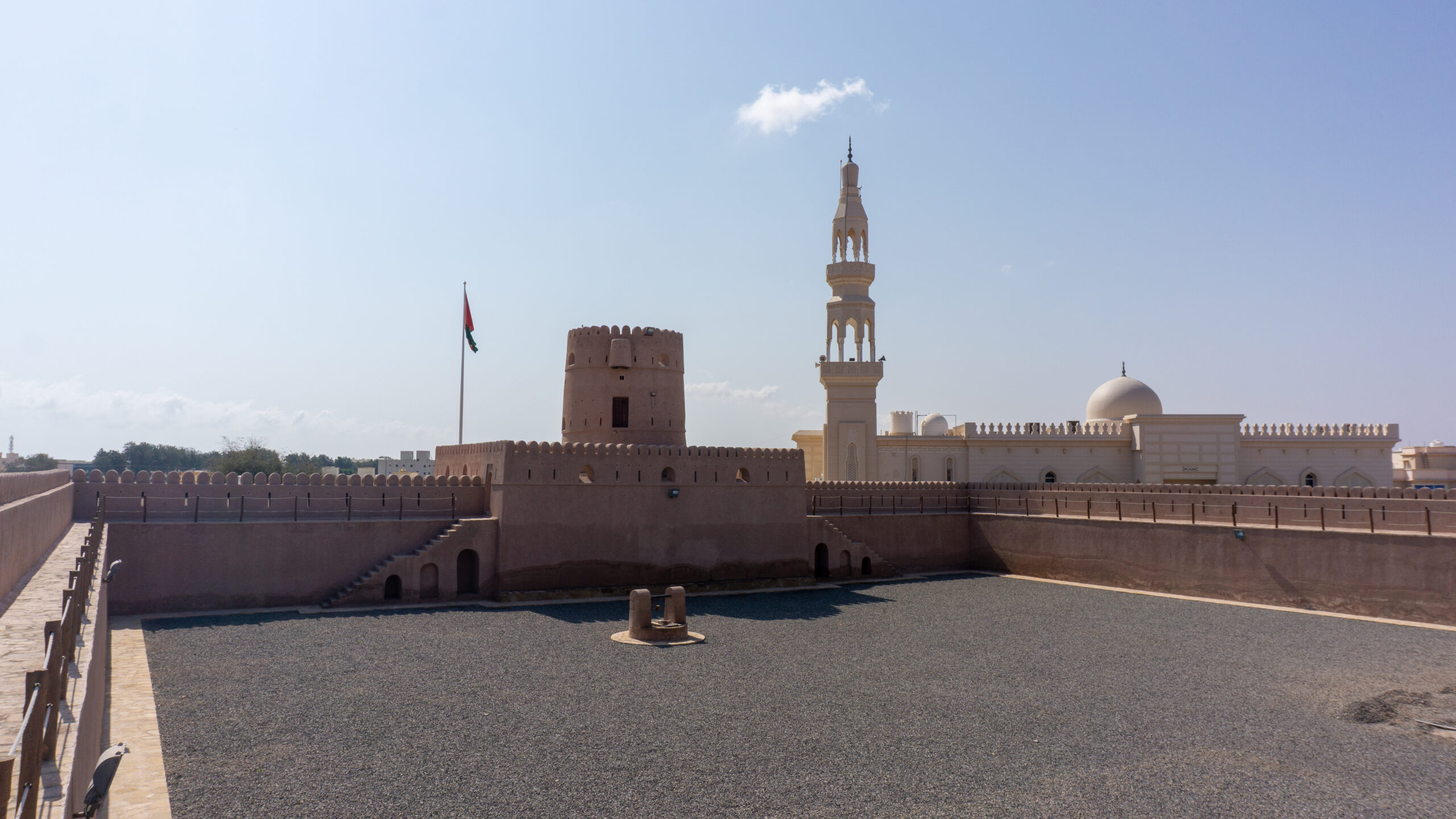
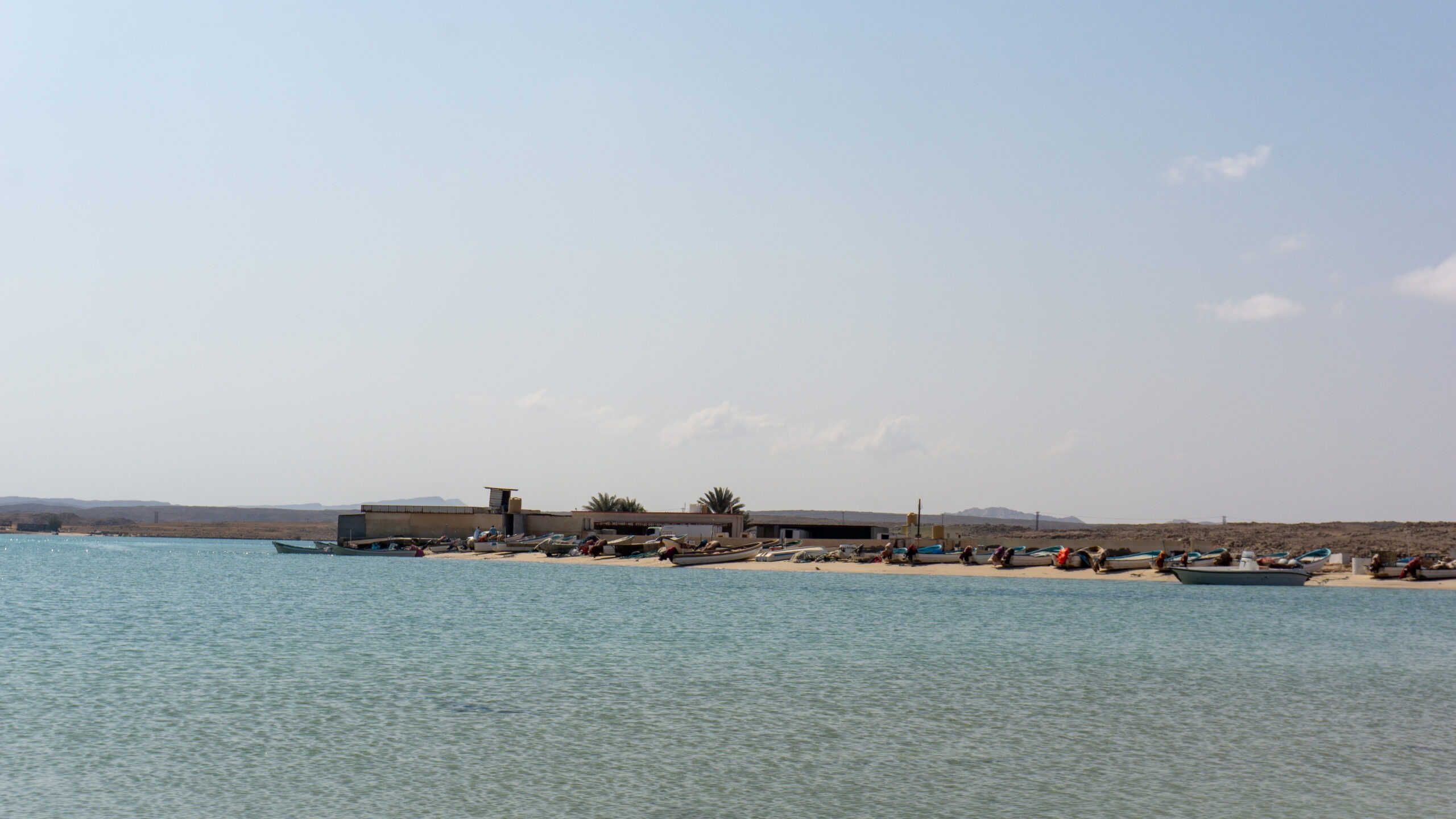
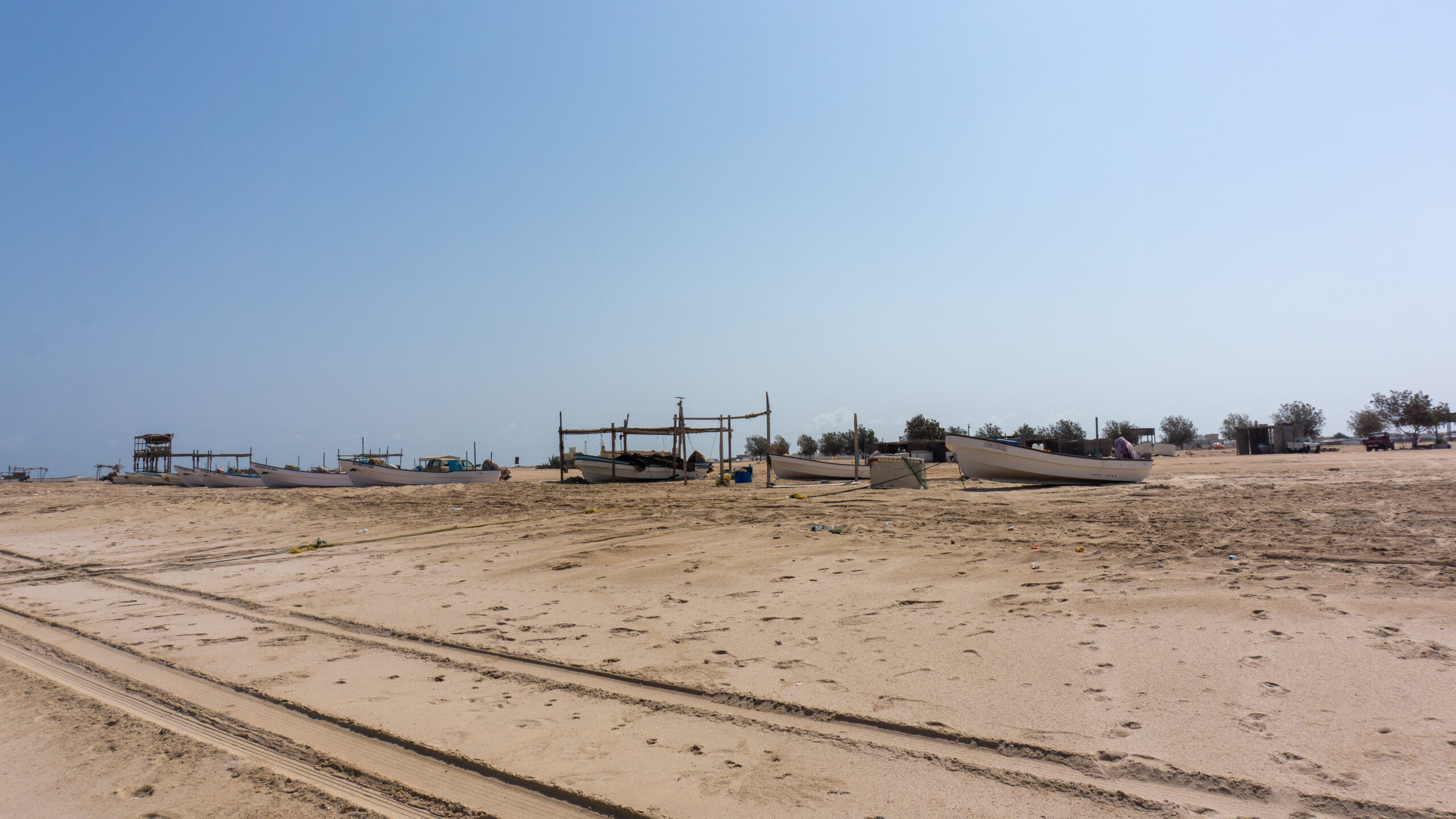
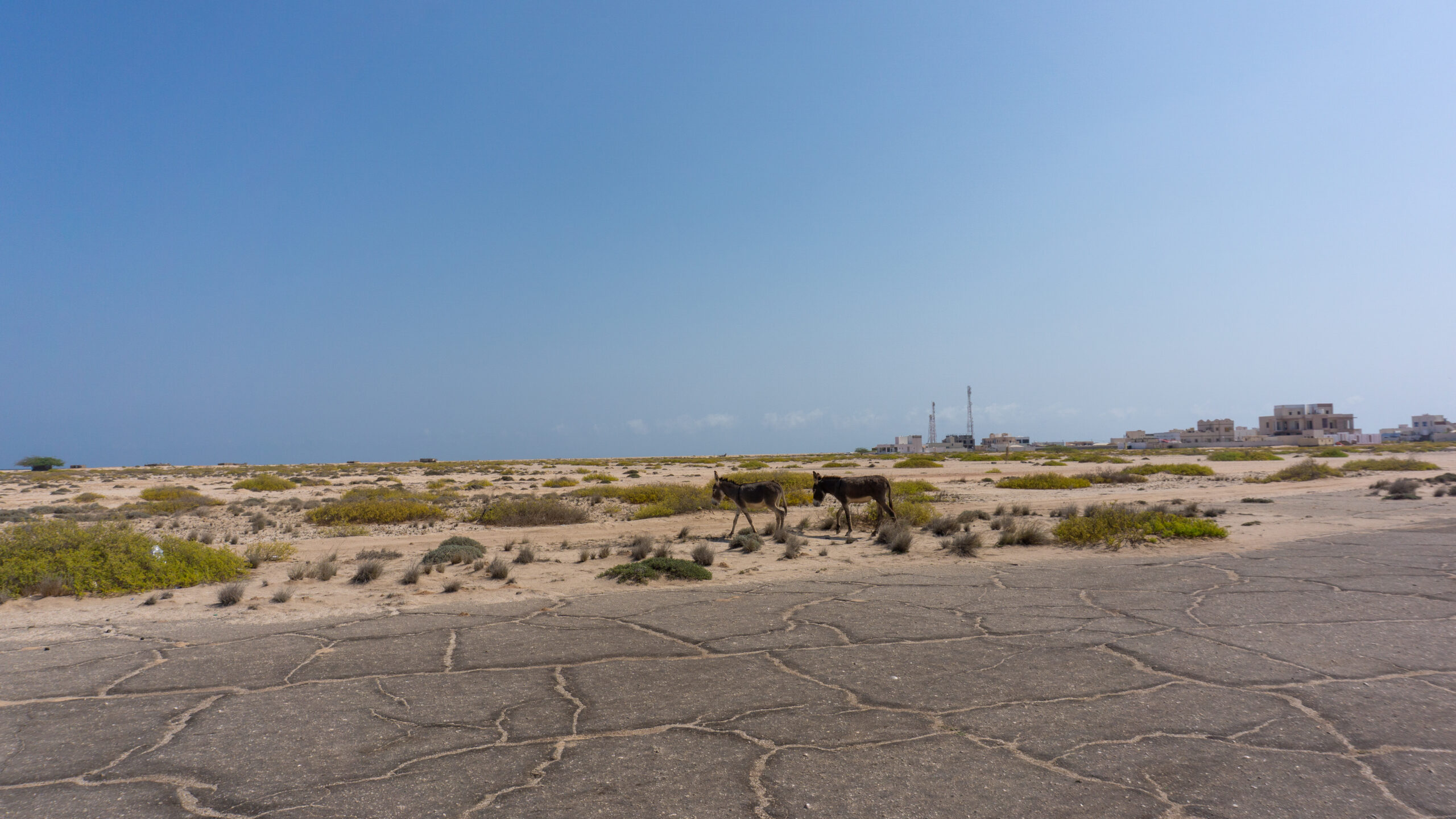
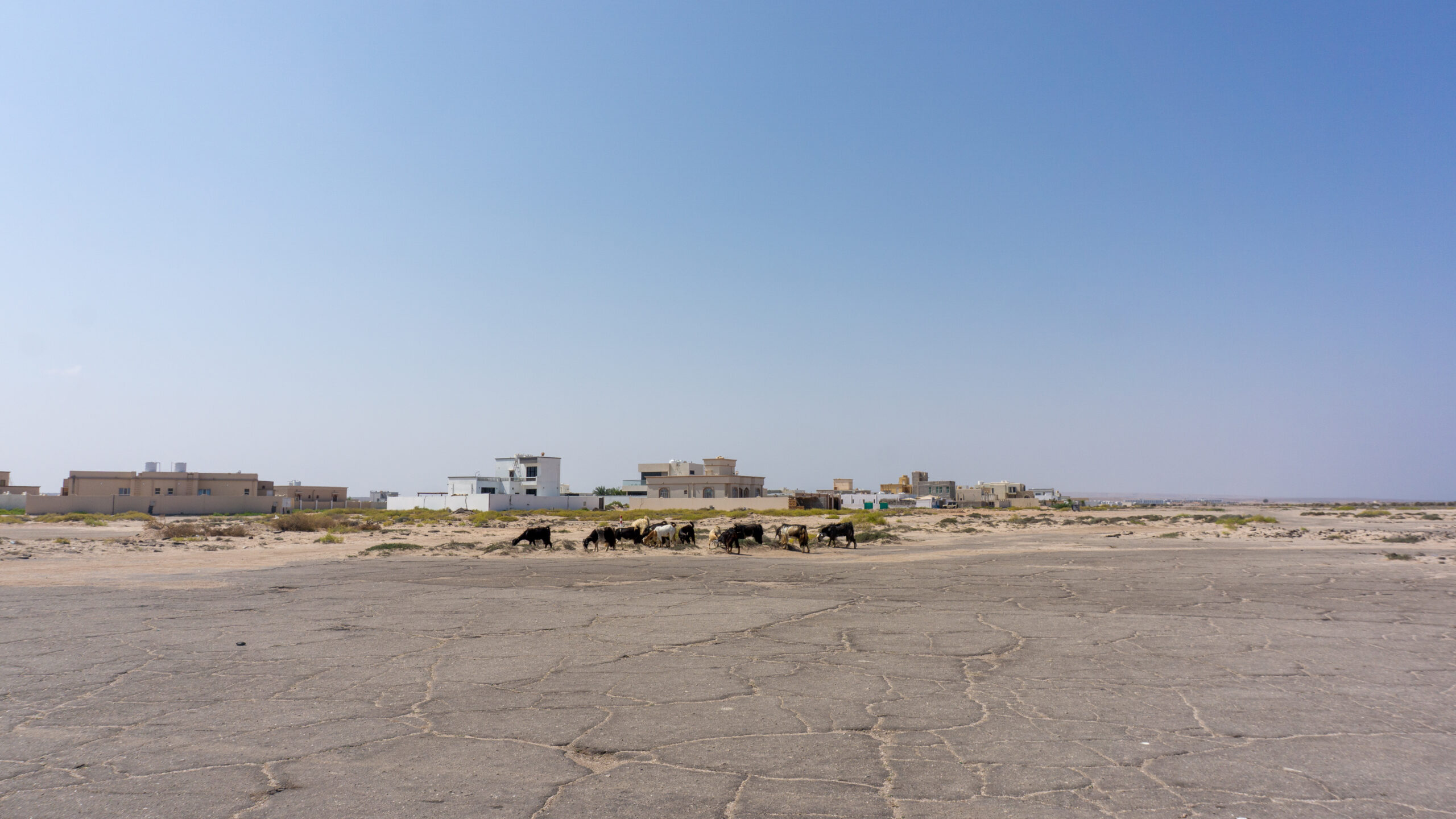
Ras al-Hadd, at the easternmost point of Oman, is a charming fishing village known for its unspoilt beaches, the famous Ras al Jinz Turtle Reserve for watching green sea turtles (especially June–Oct.) and the historic Ras al Hadd Fort. It offers a calm atmosphere, ideal for relaxing, diving, snorkelling and stargazing at night.
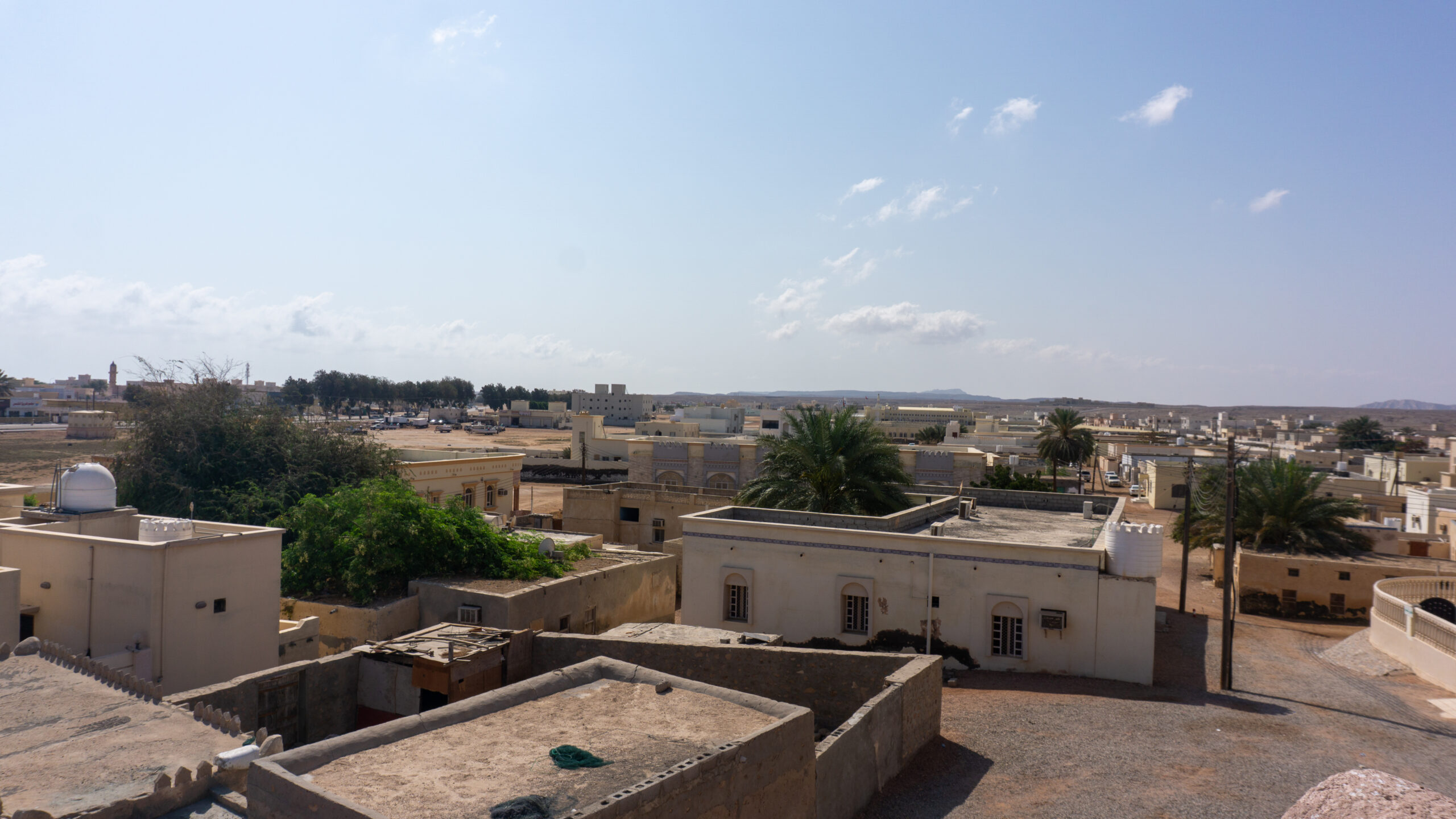
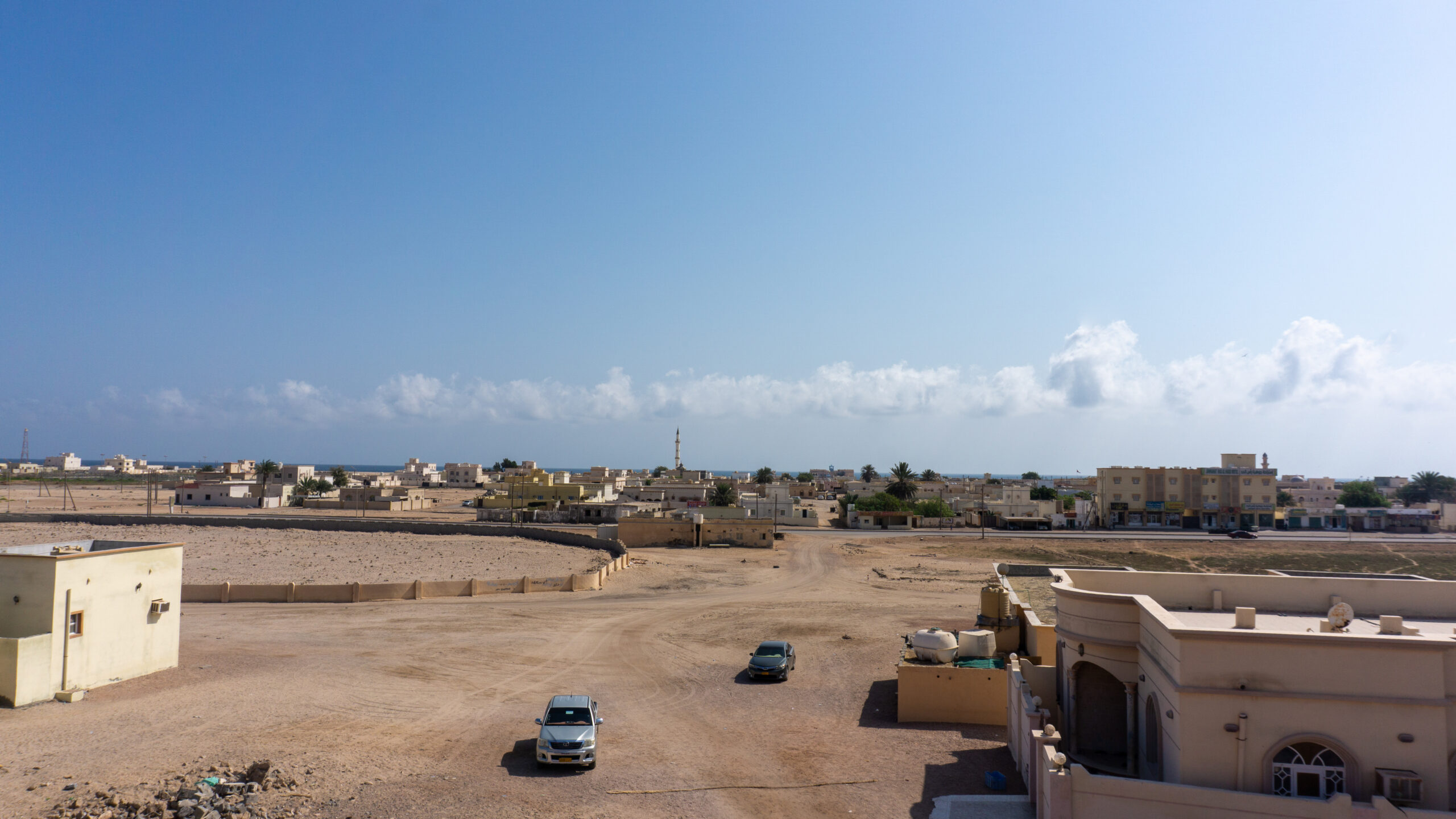
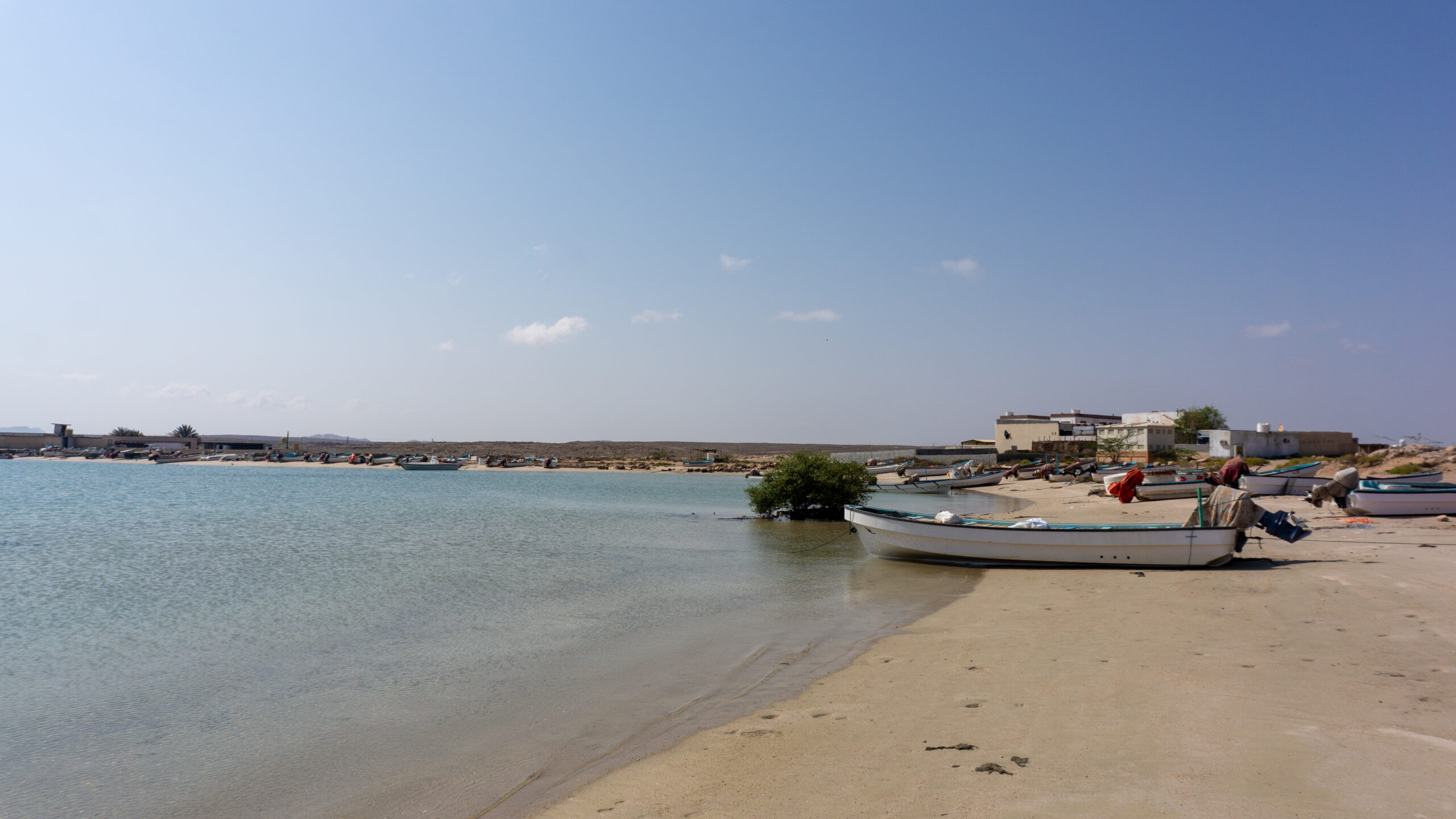
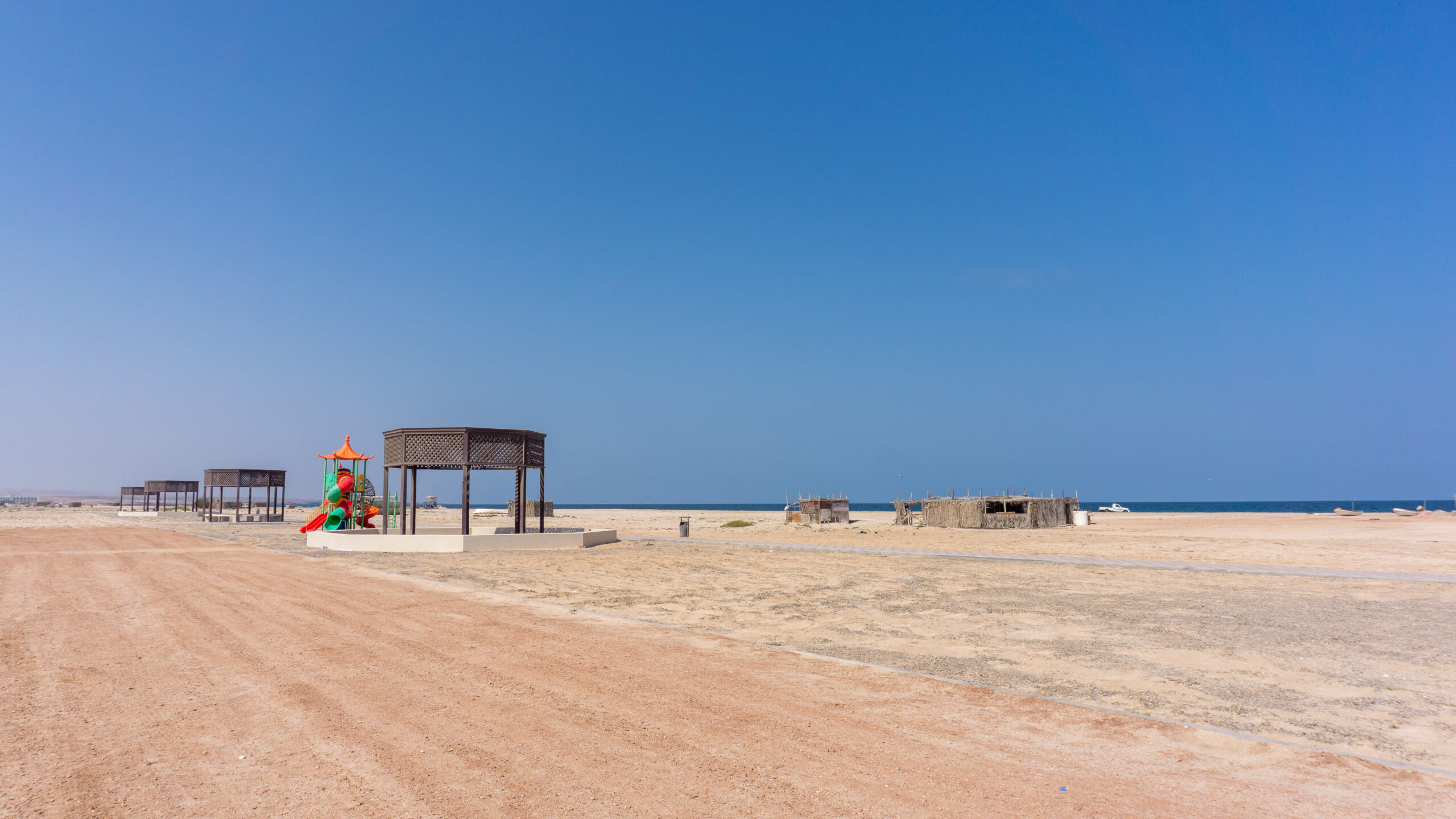
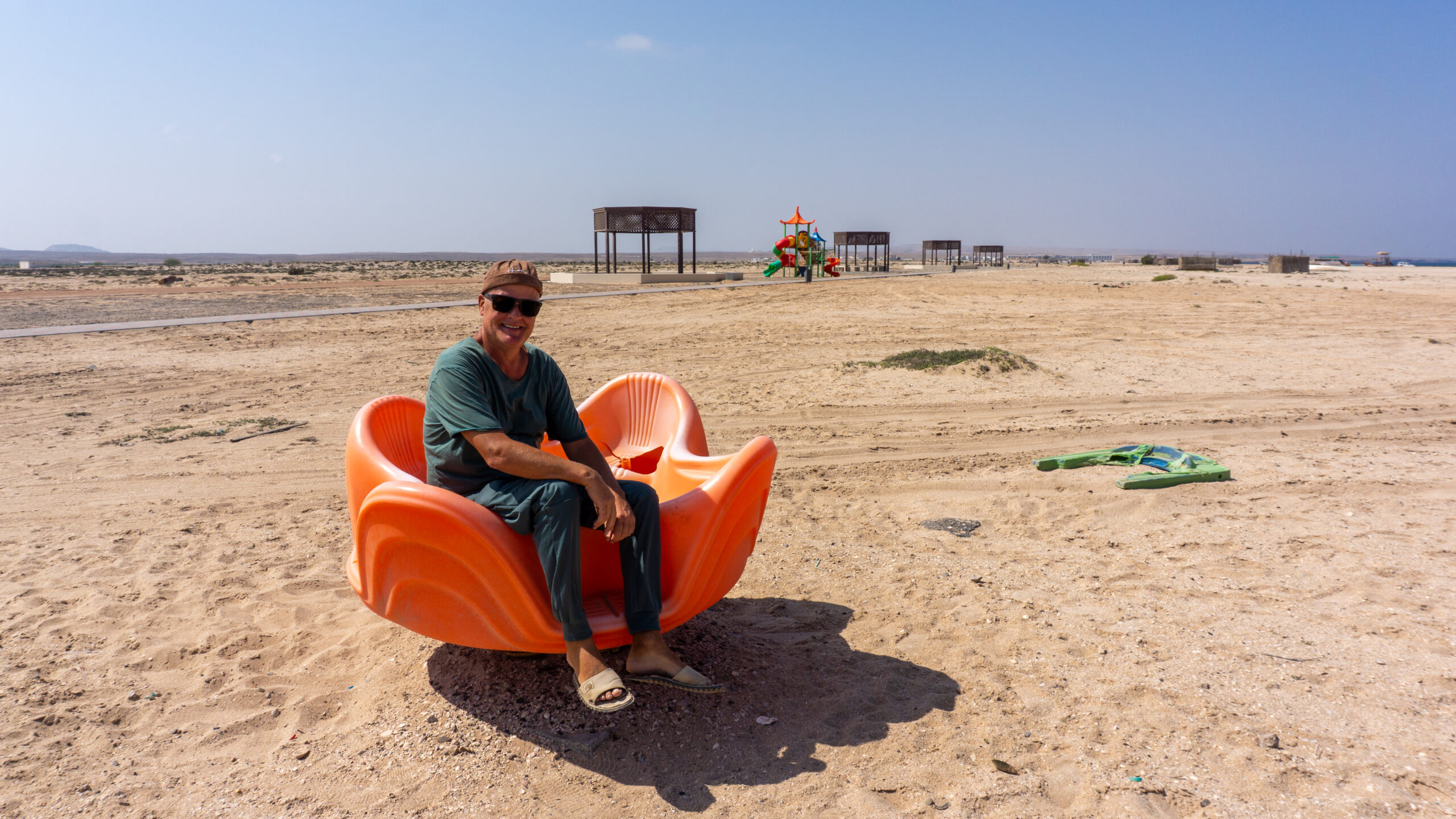
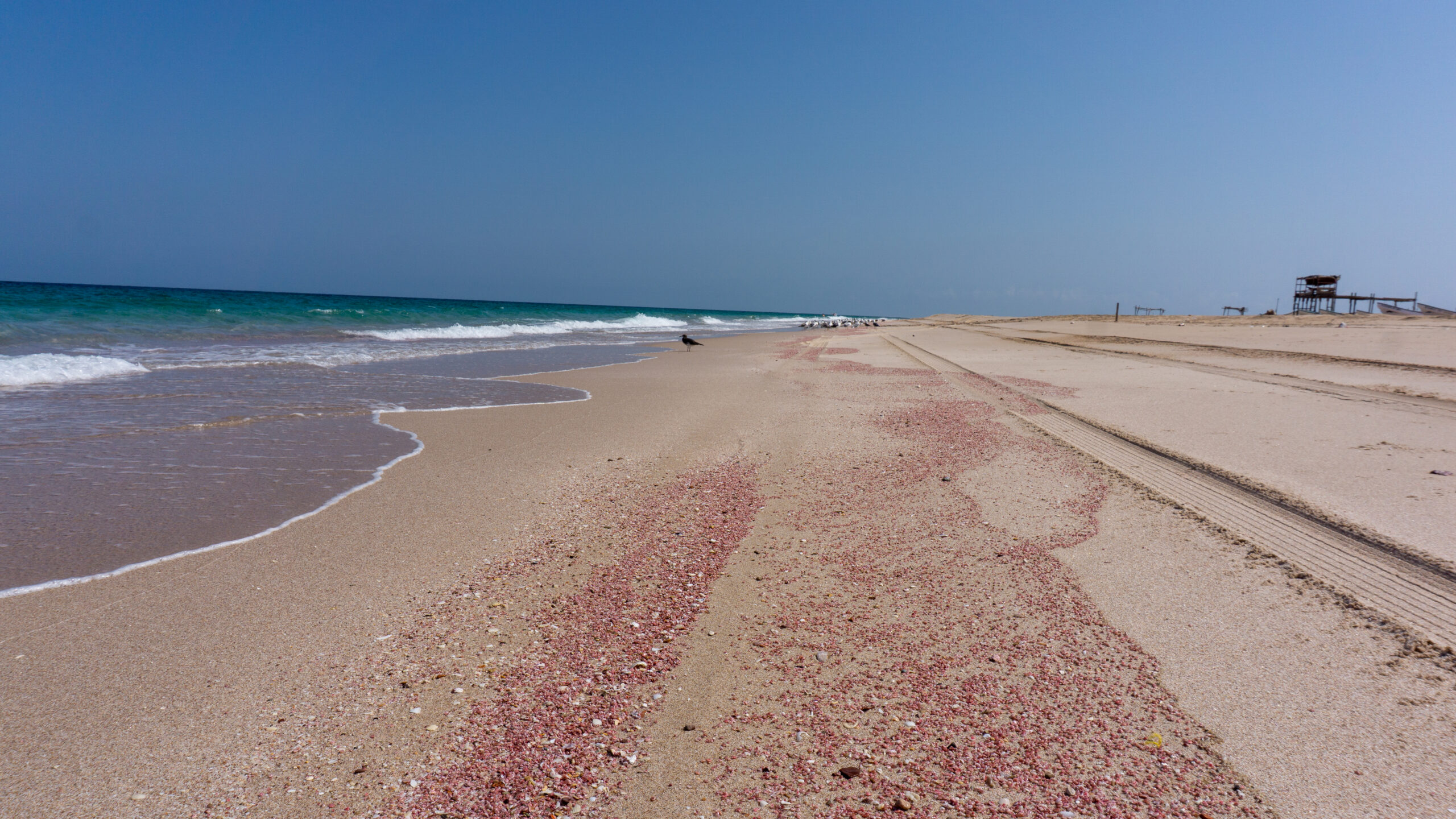
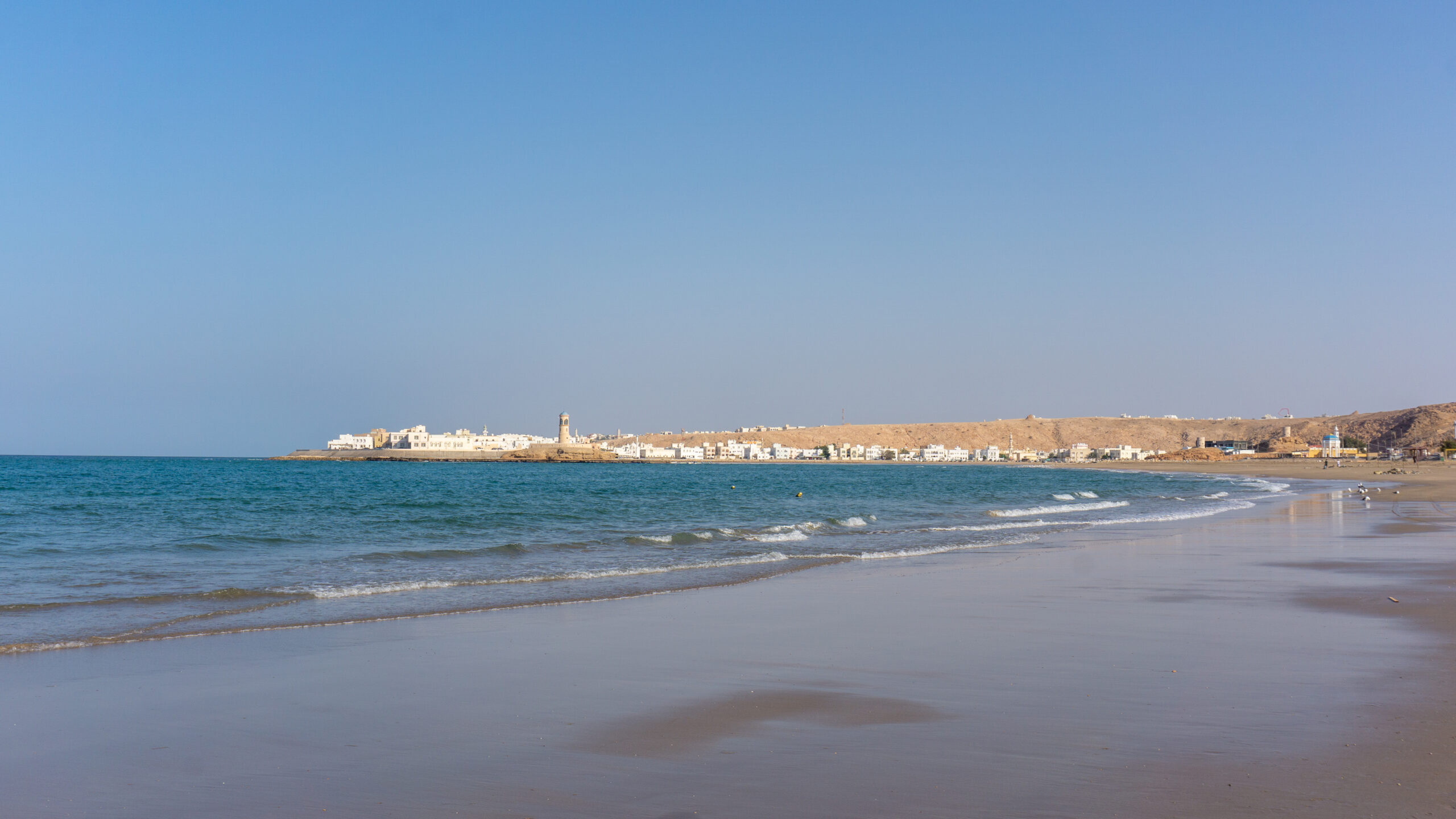
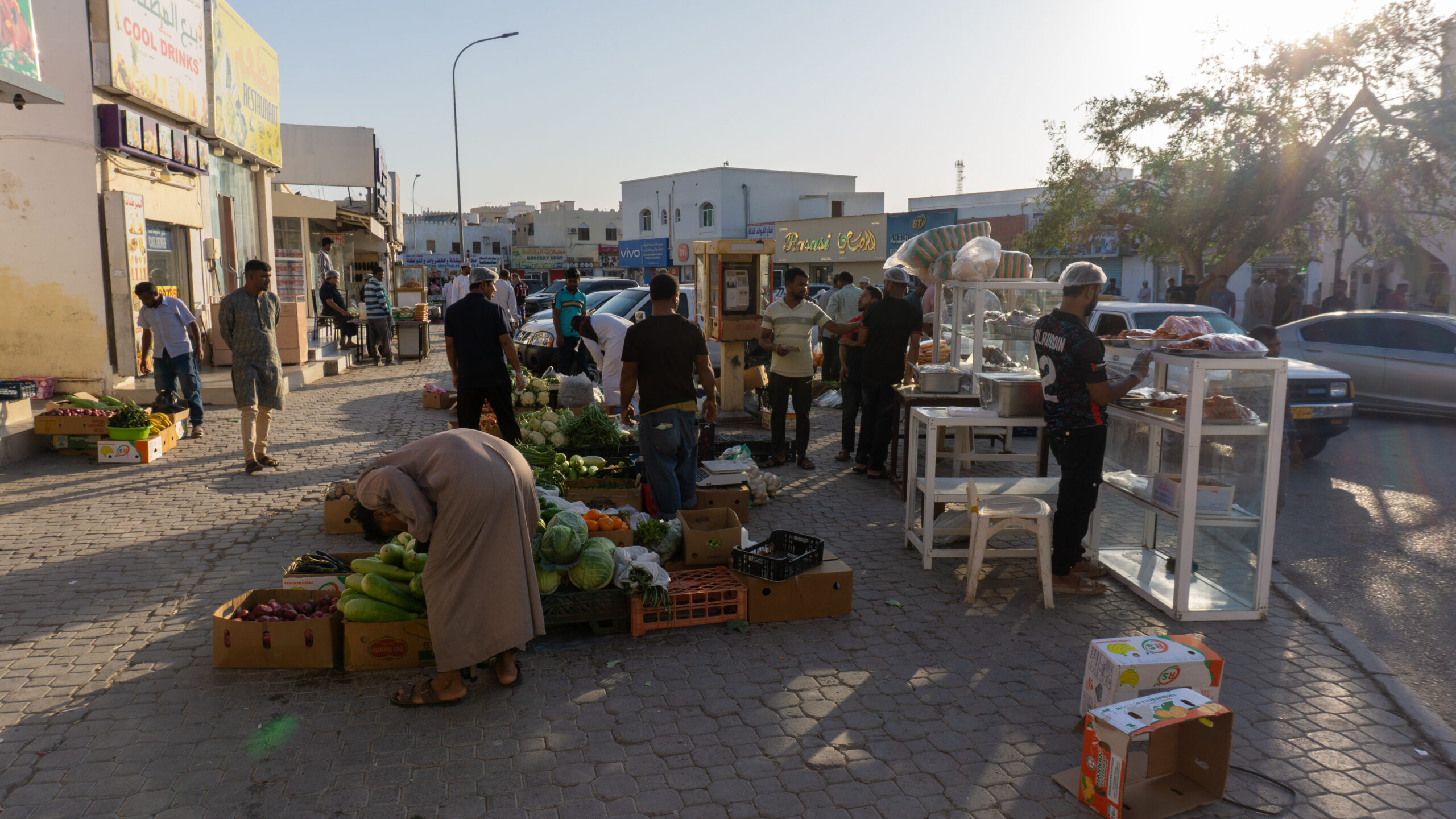
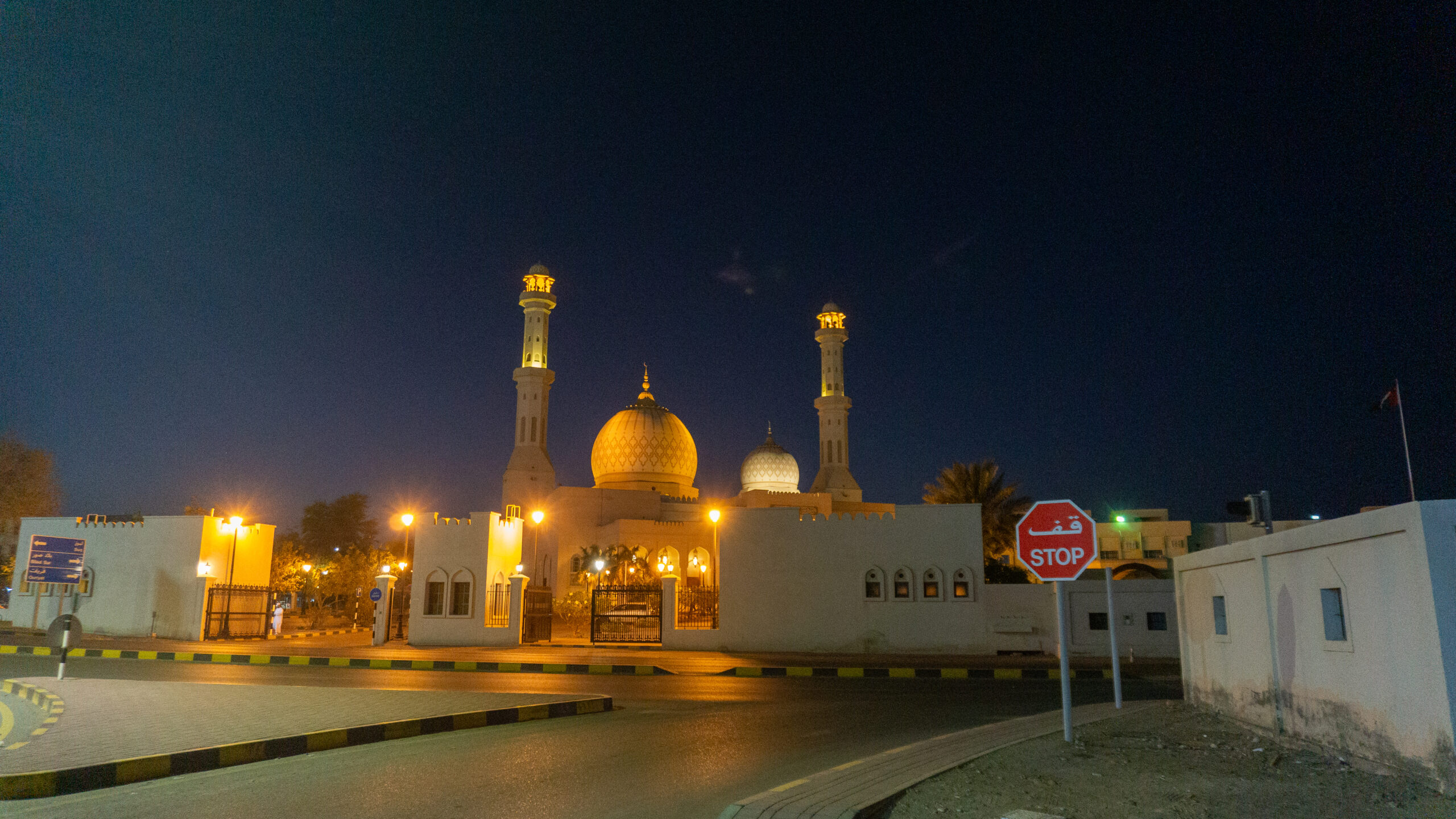
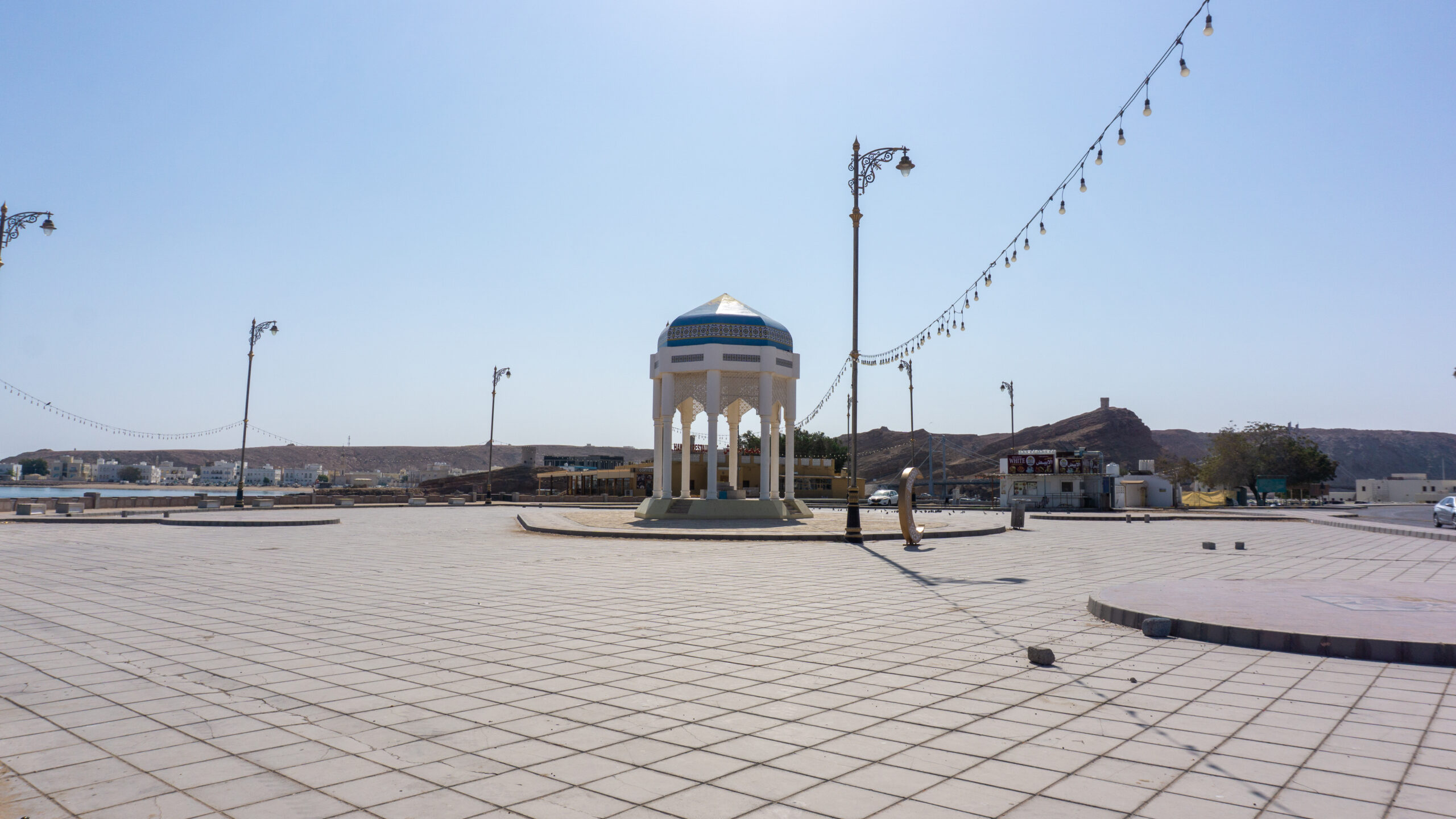
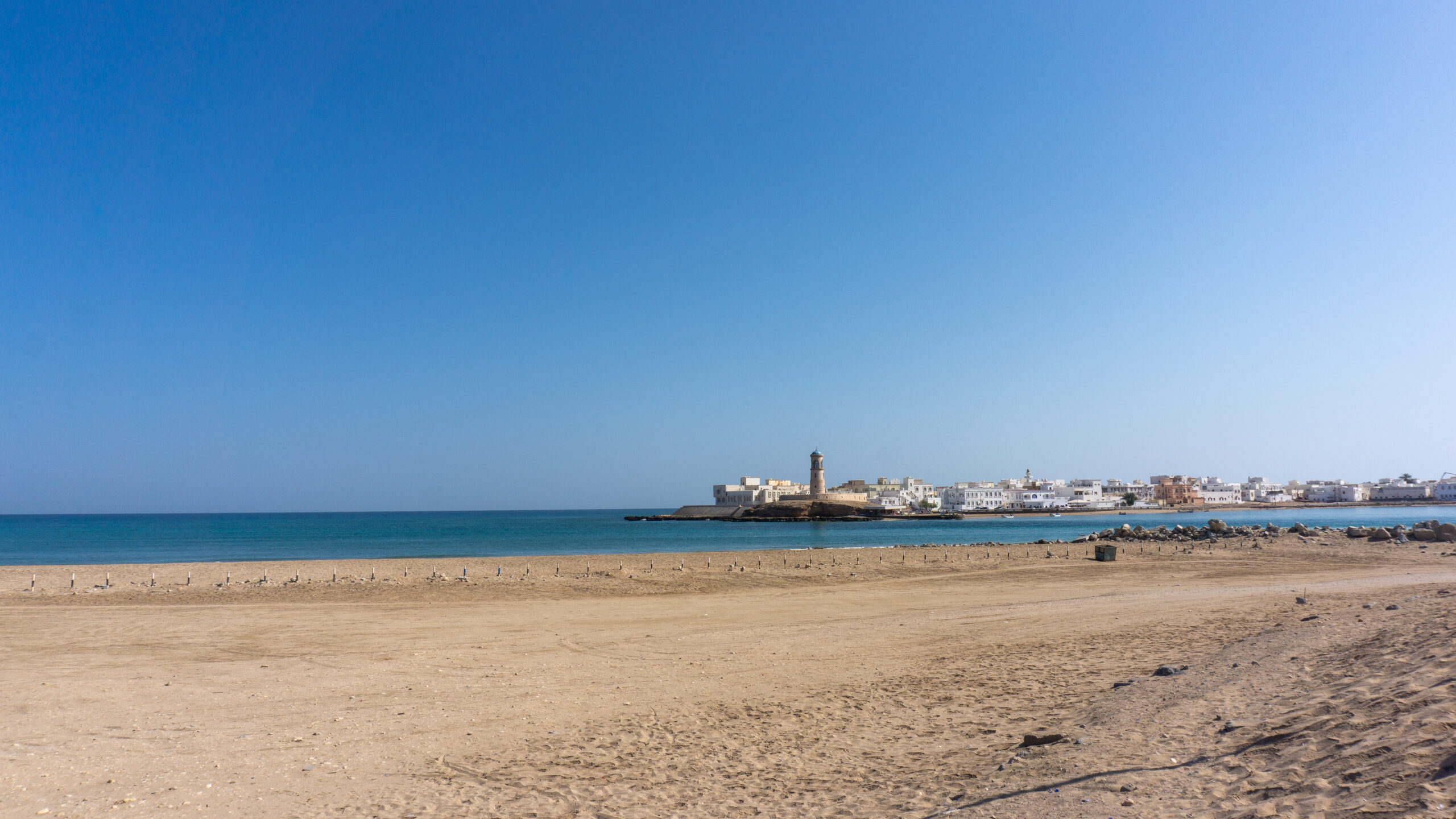
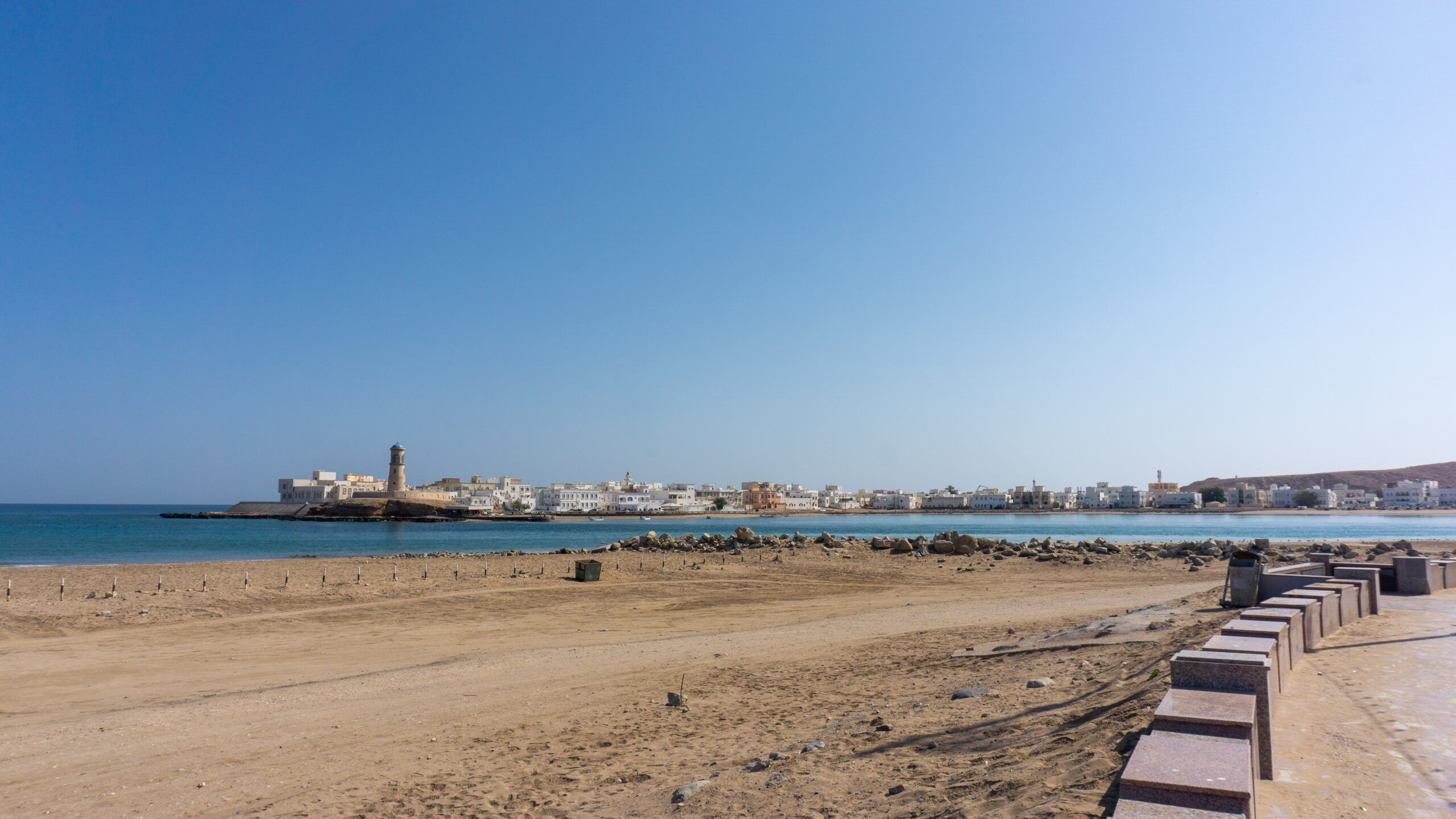
First we took a look at the village of Ras Al Hadd. We’re staying here because we didn’t want to stay in Sur. Most tourists come here for the turtles though (but it’s not the season right now). We visit the fort (the 3 OMR aren’t worth it) and drive along the great beaches. Endless great beaches with nobody around (probably because of Ramadan or because it’s so warm), the water is beautiful. In the afternoon we headed to Sur, about 40 kilometres away. Sur had already looked quite nice and cosy on the way in, so we wanted to take a closer look. We set off a bit later on purpose so we’d be there right on time for the breaking of the fast. The shops slowly open again and things get livelier. We wandered around the lanes and streets a bit and then stopped at a juice bar (at that time you can only eat and drink inside). There we asked the two waiters for a restaurant tip. We followed it and ended up at Zaki’s restaurant. We’re a bit early and have to be patient. The tables are already set – a big tour group must be expected. Far from it – all those tables had been laid nicely for the staff. Shortly after 6 pm the big “feast” began, and a little later we were allowed to start too. A lovely moment that we got to experience live.
The evening before, Naseer gave us a 20-litre bottle of water. So we won’t run out of water. Today’s plan is a visit to Wadi Tiwi. A quick word on that from our friend AI:
Wadi Tiwi is a breathtaking canyon valley about 40 km north of Sur, known for its steep cliffs, emerald-green pools and lush date palm groves, often called the “Valley of Palms”. It carries water all year round, has waterfalls and picturesque villages and is easy to reach via a narrow road
When we arrive at the entrance to the wadi, a “guide” is already waiting for us. On offer today: a chauffeur service to the wadi. Even though we have a 4×4, he advises us not to drive ourselves, because the road is supposedly “steep, narrow and dangerous”. We stop an oncoming car and ask whether the tour is possible without a “guide”. The two German gentlemen leave no doubt that it’s easily doable without a driver. That’s the short version, because the “guide” had made us doubt (it’s always the same trick all over the world, although we had read that it can get very tight). We decide to rock it ourselves and are rewarded with an adventurous drive. The climbs are absolutely OK, but the narrow lanes in the 2–3 little villages really are something. We drive the 7 kilometres without any oncoming traffic and are glad we got through so easily.
At the car park we head down the steps to the pools. Not much going on here, but they’re quite small. The water is super super beautiful and the landscape breathtaking once again. We could have hiked and swum further through the canyon, but unfortunately common sense says “better head back, because if it gets busier later we’ll have real problems in the narrow lanes”. At the end of the tour – despite oncoming traffic – we make it back to the entrance safe and sound. We say: doing it on your own is no big deal – switch off “common sense” and just go for it. Even if it gets a bit dicey, the Omanis are mega helpful.
Our next stop is Ras Al Hadd. We’ll stay there for 2 days (and visit Sur from there too). Our place is about 200 metres from the sea. Here too we’re staying in a villa rented out by an Omani. And here too we can’t find our room right away, so we simply walk into the house and have a look around. After several attempts to reach the landlord by phone, a sleepy guy turns up, pockets the money and shows us the brand-spanking-new room. He gives us a few tips and then heads off again. All very relaxed and uncomplicated, just the way we like it. In the evening we go to the landlord’s restaurant tip and enjoy a lovely, relaxed dinner. Welcome to Ras Al Hadd.
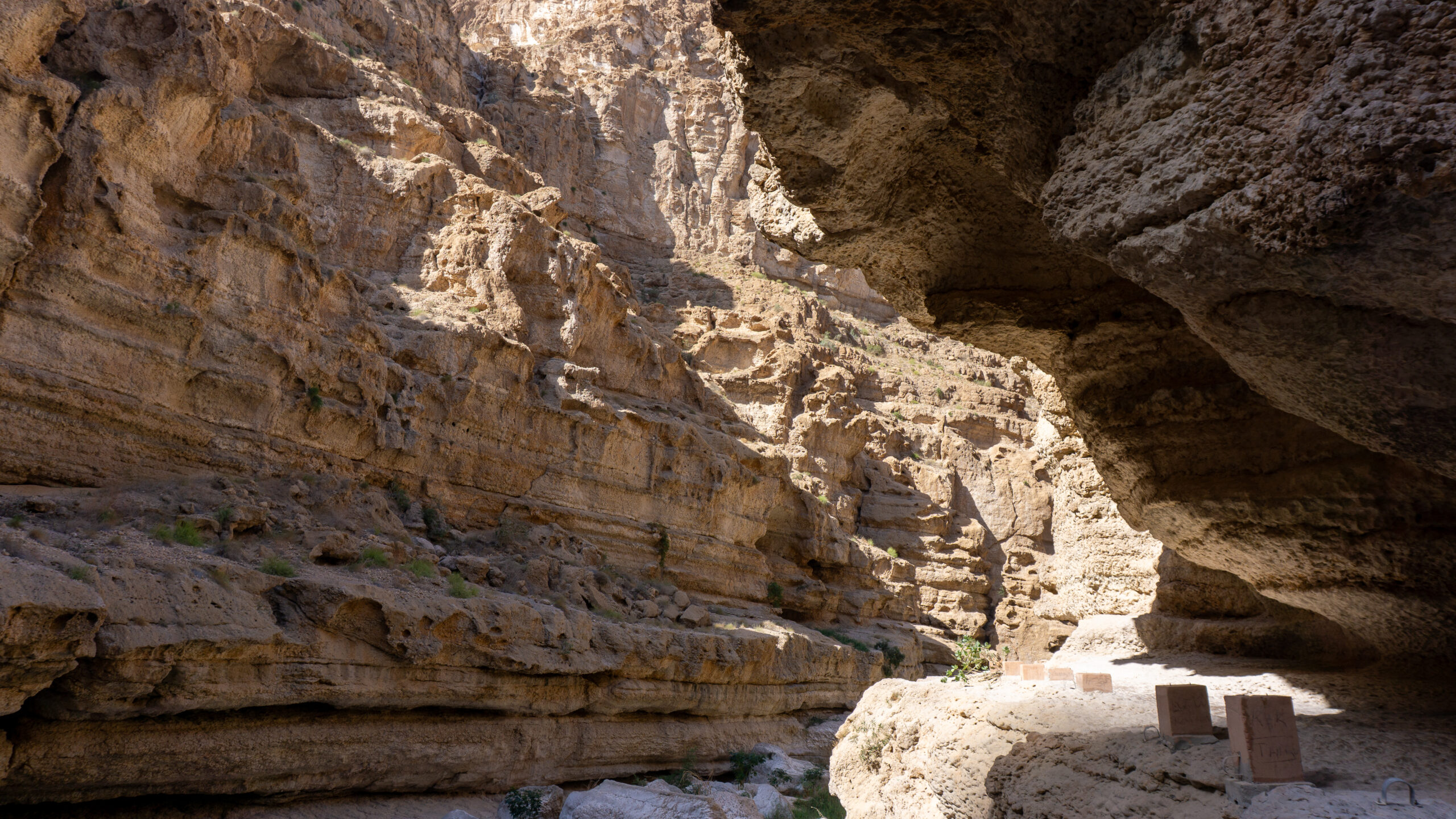
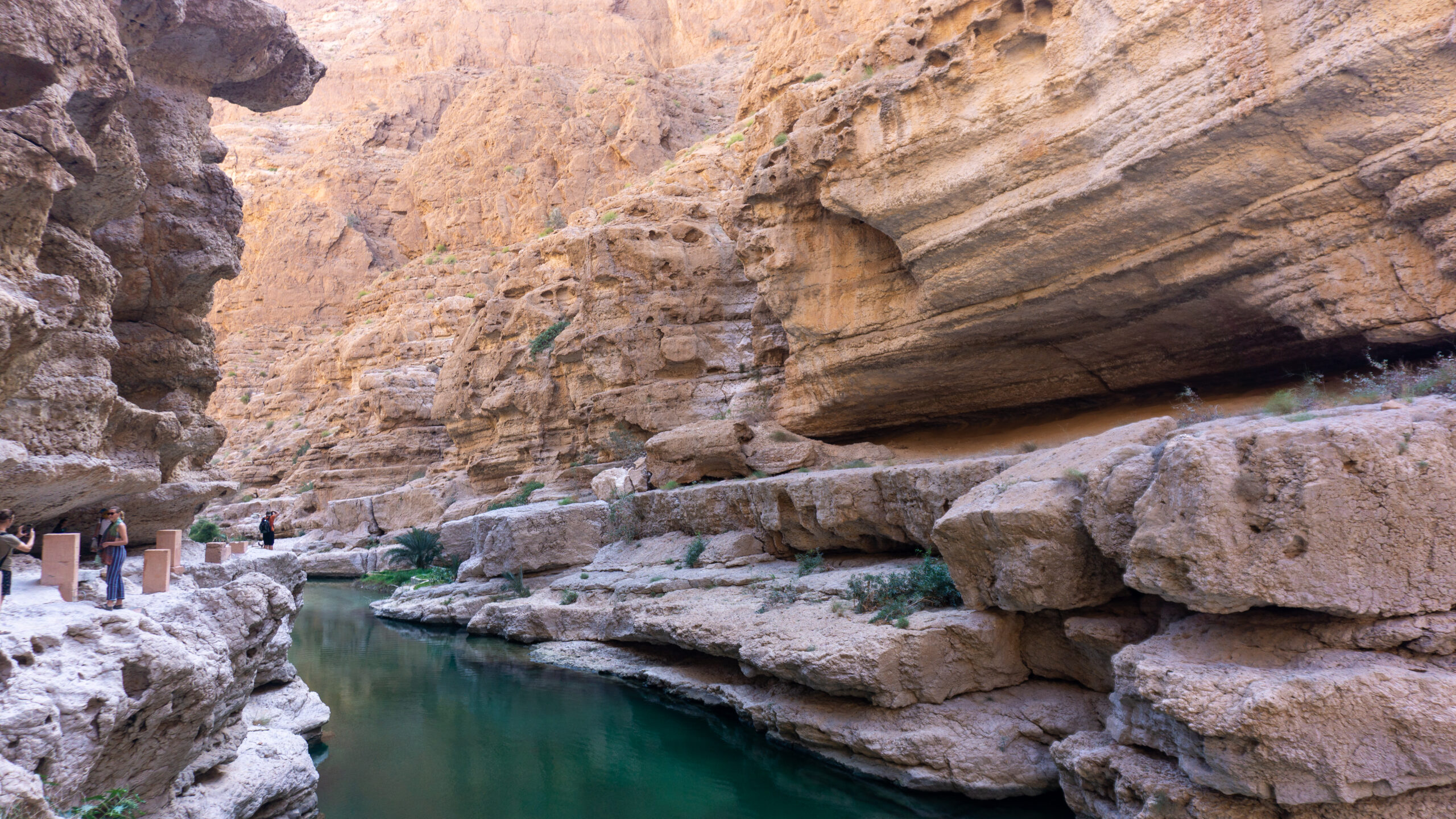
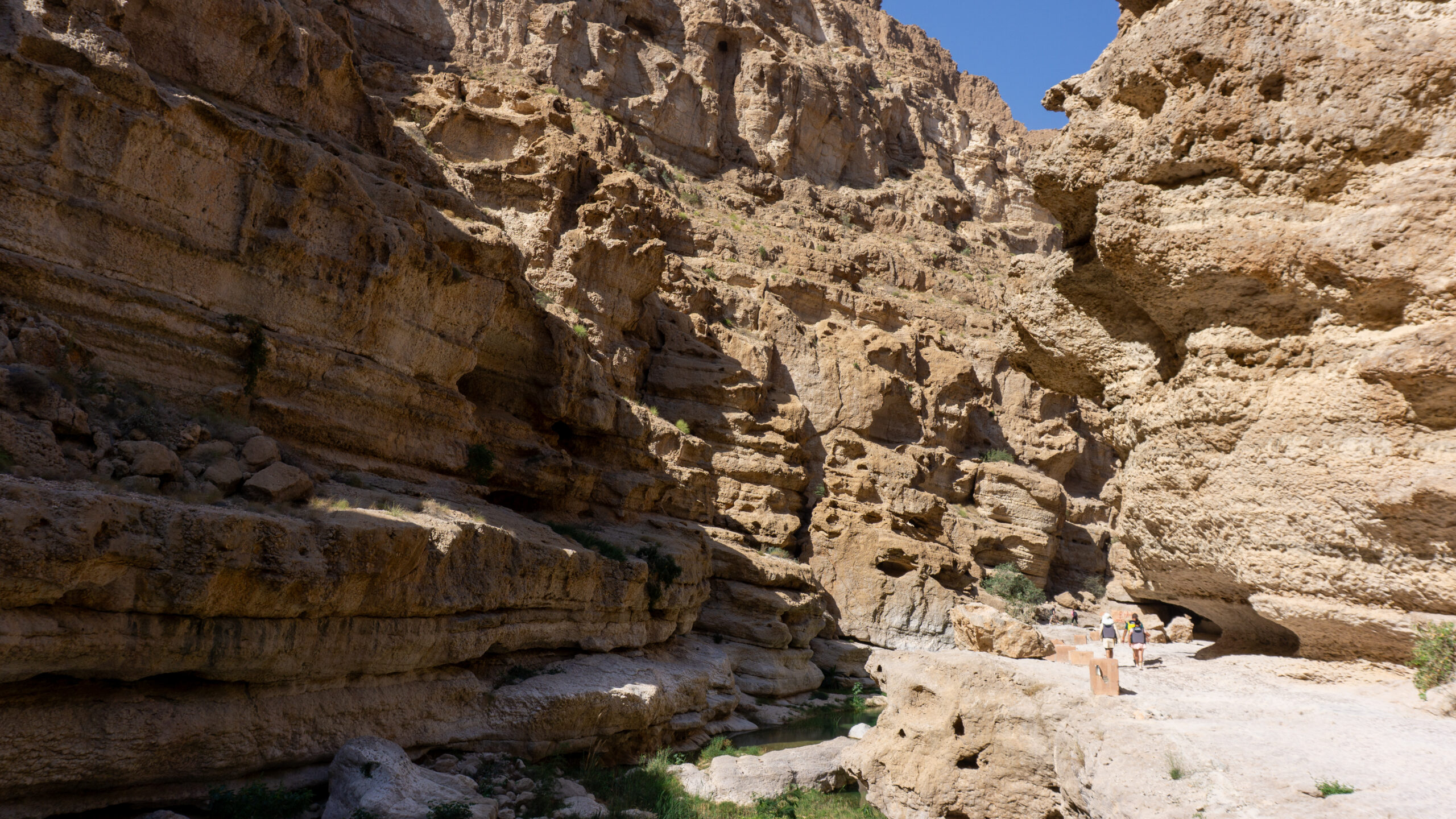
Thanks, AI / Wadi Shab, about 1.5–2 hours from Muscat, is a spectacular gorge known for its emerald-green pools, waterfalls and a hidden cave. The trip includes a short boat ride, a hike of about 45 minutes and some swimming. It’s considered a top attraction, especially for adventurers.
Just a few metres from our place is the next wadi, a real tourist hotspot. But before we set off, it’s time to eat, because Ramadan starts today. Not a big deal – as a tourist you just have to adjust to it.
A quick word on Ramadan / Thanks, AI Ramadan is the ninth and holiest month of the Islamic lunar calendar, during which Muslims around the world fast from dawn to sunset. It is a time of reflection, prayer, charity and community, to come closer to God, practise self-discipline and show compassion for those in need.
The most important aspects of Ramadan:
Fasting (Sawm): As one of the five pillars of Islam, fasting is compulsory for believing Muslims (except the sick, pregnant women, children and travellers). They abstain from eating, drinking, smoking and sexual intercourse.
Spiritual meaning: Ramadan is a time for looking inward, for cleansing heart and soul and for intensive reading of the Quran. According to Islamic belief, the Quran was revealed in this month.
Community (Iftar): Breaking the fast after sunset, called “Iftar”, is often celebrated with family and friends or in the community.
Timing: Because it follows the lunar calendar, the start of the 30-day fasting month shifts every year. In 2026 Ramadan is expected to begin on 18 February.
Ending: The fasting month ends with the three-day Festival of Breaking the Fast (Sugar Feast/Eid al-Fitr). Wikipedia +8
Apart from the physical abstinence, it’s above all about strengthening faith and reflecting on social responsibility.
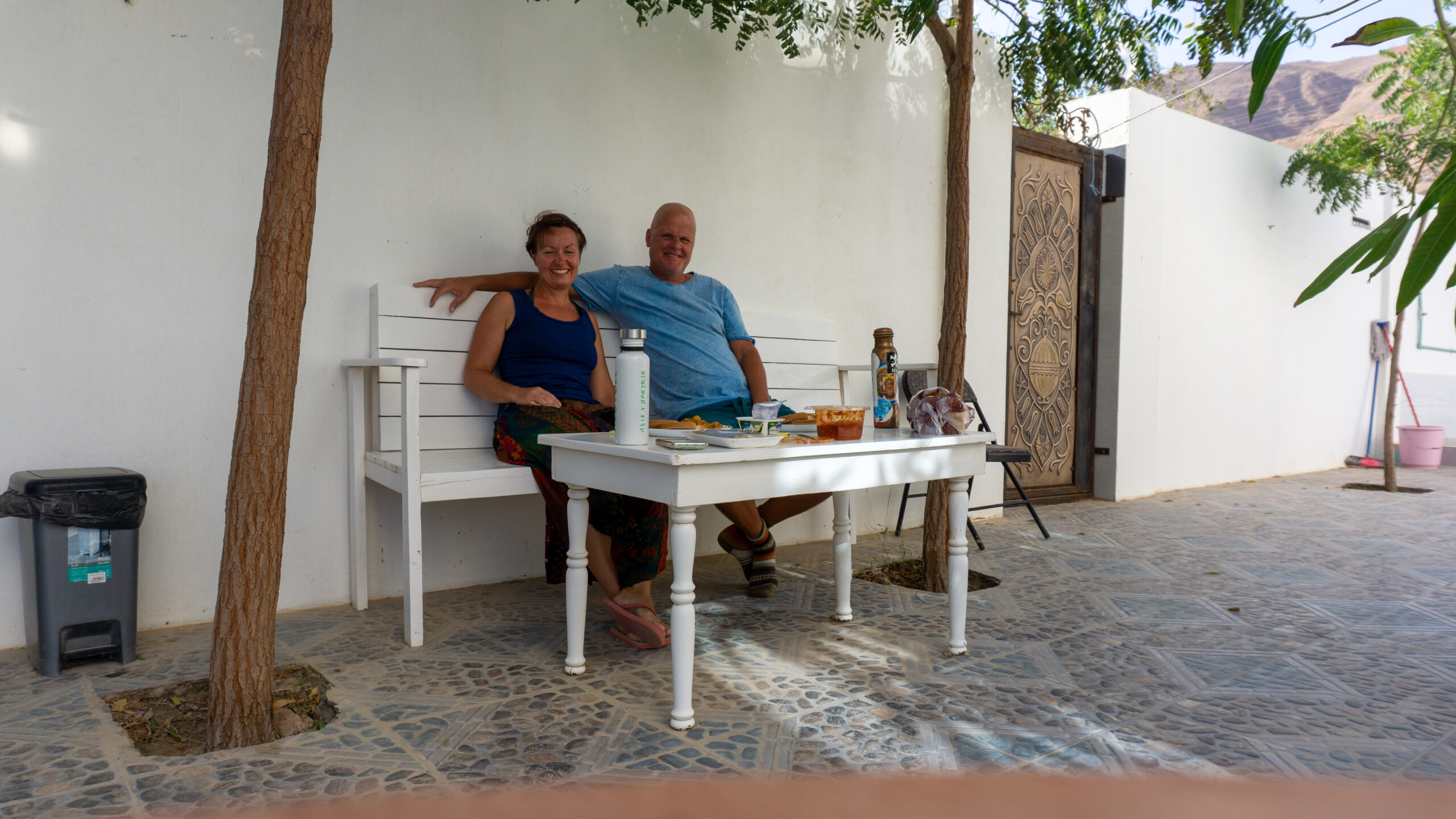
The evening before we did a bit of shopping. Our place has a great kitchen, so we can adjust to Ramadan. Today there’s plenty of scrambled eggs with spreads and toast. That will keep us going until late afternoon (restaurants and cafés are closed, but the supermarkets and corner shops are open). Only in the evening – around 5:30 pm – do the restaurants etc. open again. Food is available all day in the hotels, but since we haven’t stayed in any hotels so far – and don’t really plan to – we’re adjusting accordingly. The bigger supermarkets also have hot/fresh takeaway dishes all day. Otherwise dates, muesli bars and co. will get us through the day.
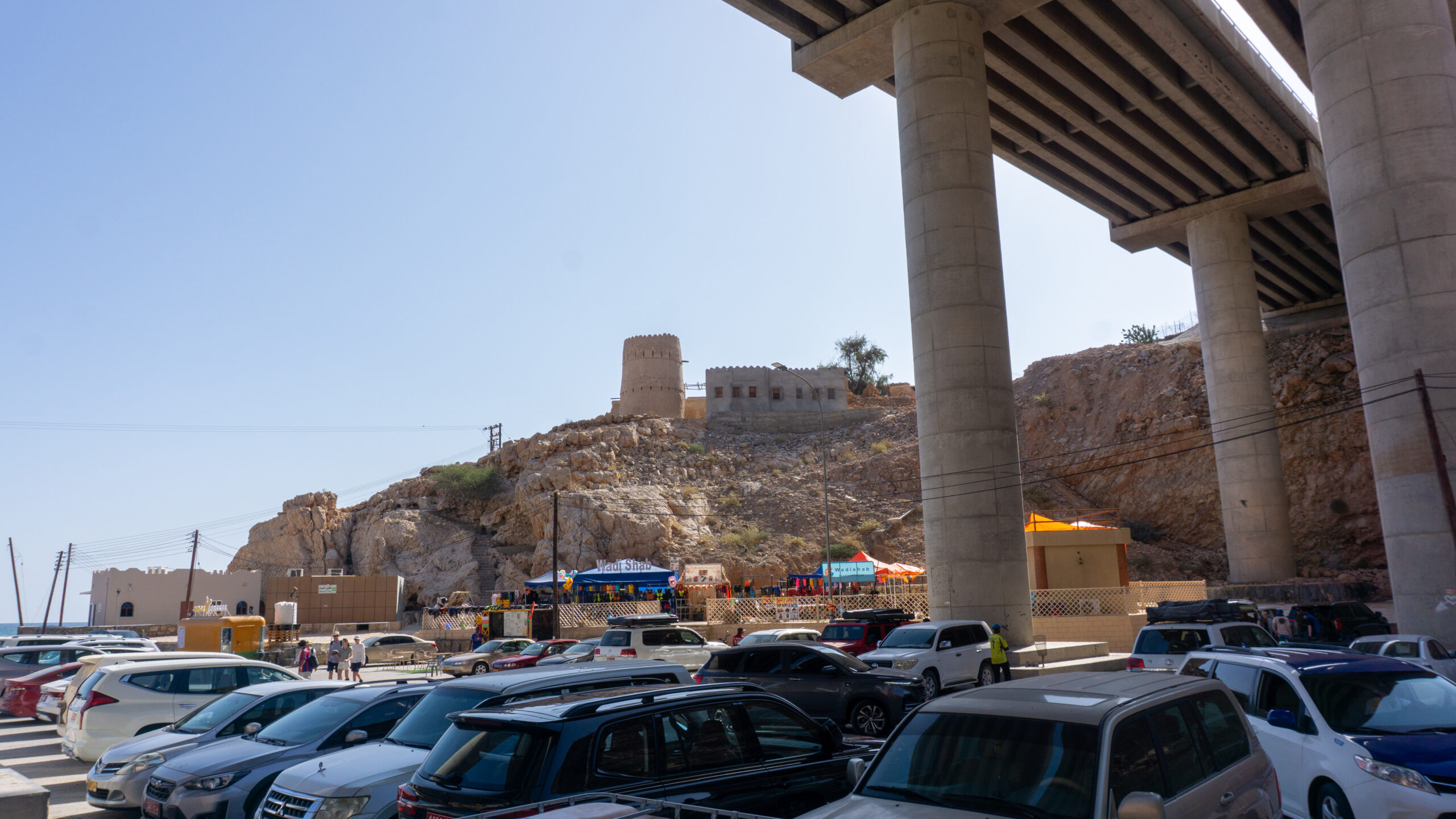
So after a hearty breakfast off we went. After just a few minutes we reached the car park. Compared to the previous wadi, it’s already quite busy here. To get to the WHT (Wadi Hiking Trail) we first have to take a motorboat – the ride takes about 23 seconds – across to the other bank. After getting off, we reach the first pools after only a few metres. We ignore them for now, because there are already quite a few visitors around. After about 30 minutes we reach the “main pool”, and what we see here really shocks us… women in very skimpy swimwear (bikinis, thongs, the lot). How ignorant people can be…
We pack our things into our dry bags and head for the last stop, the cave. A great swimming route that ends in a small cave. Great water and mega nature. Unfortunately a bit too crowded and too loud here, but that can’t be avoided at a sight like this. We head back to the main pool to relax and sunbathe. The water isn’t as nice anymore and it’s getting more and more crowded/loud. We make our way back and take another swimming break here and there. What amazing nature – just a bit too crowded, but then again we’re part of it too. In the evening we went to a phone repair shop, because my phone had swallowed water. Rookie mistake – the dry bag wasn’t closed properly. Diagnosis: phone broken. The guy at the phone shop even offered to drive to SUR, about 60 kilometres away (to save the phone). We thought that was a bit over the top. For dinner we went to a simple restaurant around the corner. Another great day comes to an end.
Wadi Al Arbeieen in Oman is a spectacular, unspoilt gorge near Muscat, known for its dramatic cliffs, emerald-green pools and an impressive waterfall. Thanks, AI 😉
Finally we’re on the road. We’re looking forward to nice people and lots and lots of nature. Our next destination: Wadi Al Arbeieen. A quick explanation of what a wadi is. A wadi (Arabic for “valley” or “gorge”) is a mostly dry riverbed or valley in the desert regions of North Africa and the Middle East that only carries water from time to time. After rare but heavy rainfall they quickly turn into raging torrents. Some wadis, especially in Oman, carry water all year round and form green oases with pools.
An early start today. No problem, as we went to bed early the night before. For a little snack along the way we grabbed a few veggie sandwiches from our favourite bakery around the corner. Out of the city and off to Wadi Al Arbeieen, about 120 kilometres away. Oman is more for the leisurely driver – the maximum speed is 120 km/h, and plenty of speed cameras and speed bumps make sure everyone sticks to it. For the last 15 kilometres we switch to “off-road” mode, as the road turns into a gravel track. The drive to the wadi: mega awesome, and our first little off-road adventure. At the car park we carry on towards the wadi. After a short stretch the first “guide” offered us his services. After tough negotiations – we shared the guide with a very nice Swiss family – we set off towards the wadi (about 45 minutes). Taking a guide was quite OK, but you can easily find the way on your own. Along an irrigation channel, over rocks and stones, we finally reached the last pool. Then it was just: into the cool water – simply wonderful here. Nice and quiet, with only a few other tourists around us. At the very end of the pool, lukewarm, sun-warmed mountain water flowed in. And of course we couldn’t miss jumping into the water from a rock about 3–4 metres high. A great experience at our first wadi with 4×4 action. We’re already looking forward to many more “adventures” here in Oman.
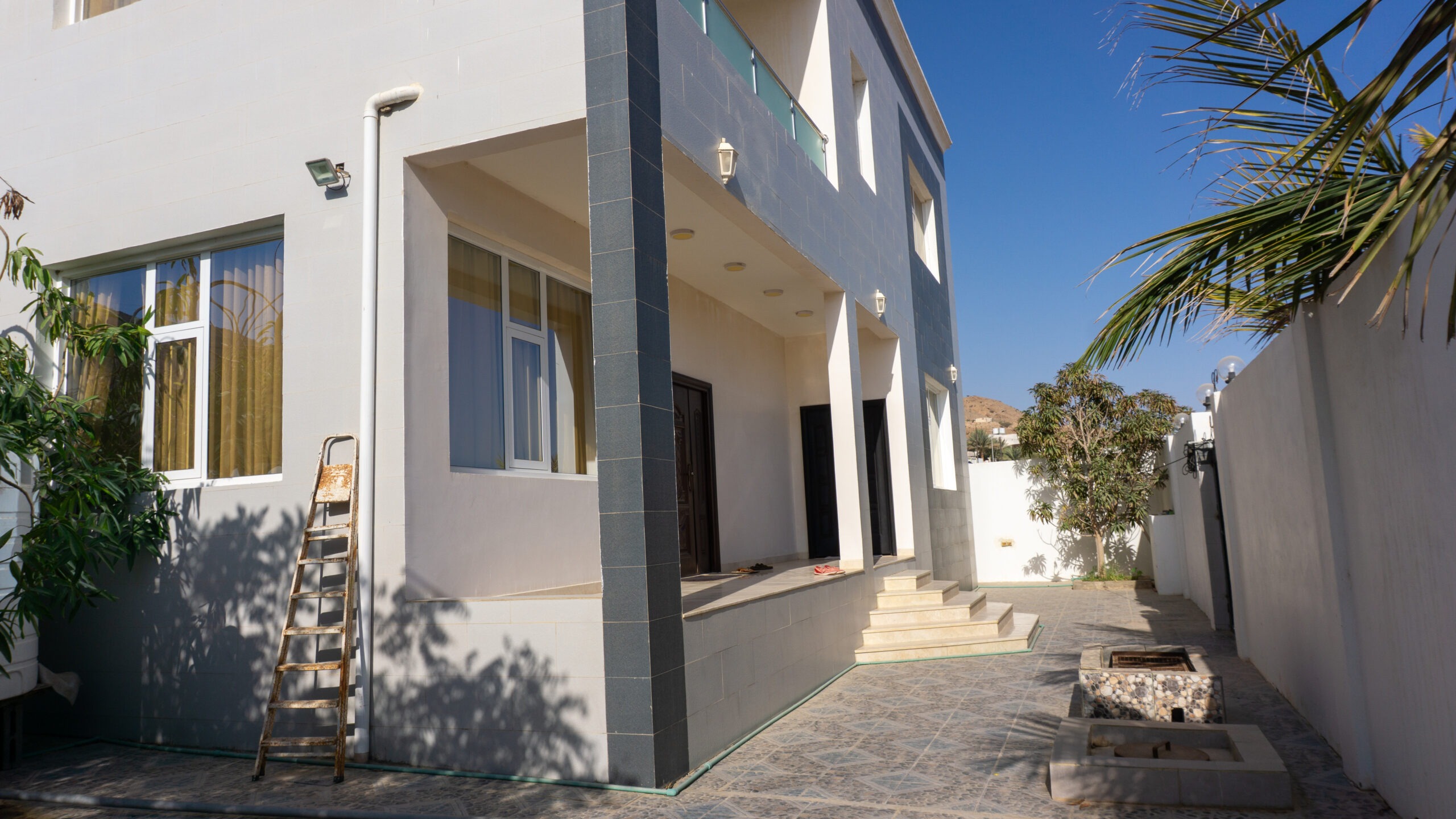
Our next destination is the village of Tiwi, where we booked a room on the way. When we arrived in Tiwi we first had to look for our place, because nobody was around. We called the landlord, Naseer, and he said: “You have room number 1, the house is open, just move in.” A few minutes later our Omani, Naseer, turned up. His brother is currently studying in Canada, and while he’s away Naseer rents out three rooms on the ground floor of the villa. We can use everything from the garden to the kitchen. We sat together with Naseer for a while and swapped a few stories. A very, very friendly guy and a great place to stay. In the evening we went to one of the three or four village restaurants for dinner. Welcome to Tiwi!